FAQ
Onsen FAQ
Glossary of onsen terms
12 ARTICLES
Onsen pH Explained | Acidic to Alkaline Bands and How to Read the Analysis Sheet
The pH on an onsen analysis sheet shows how acidic or alkaline the water is on a 0–14 scale. Japan's mineral spring analysis guidelines use five bands, from acidic (below pH 3) to alkaline (pH 8.5 and above) — a useful hint at how the water will feel on your skin.
Spring Temperature Explained | Cold to Hot Bands vs. the Bath Temperature
The spring temperature on an onsen analysis sheet is the temperature of the water as it emerges. It falls into four bands, from cold mineral springs below 25°C to hot springs of 42°C and above. Bath water is heated or cooled, so it is not the same as the source temperature.
Total Dissolved Solids in Onsen | The 1 g/kg Threshold and Osmotic Bands
Total dissolved solids is the combined amount of substances (excluding gases) dissolved in 1 kg of onsen water — a measure of how "strong" the water is. Whether it reaches 1 g/kg (1,000 mg/kg) decides how the spring type is named, and 8 g/kg and 10 g/kg mark the osmotic bands.
Total Sulfur in Onsen | Hydrogen Sulfide, Hydrosulfide and Thiosulfate, and the 2 mg/kg Sulfur Spring Threshold
Total sulfur is the sum of an onsen's sulfur components — hydrosulfide ions, thiosulfate ions and free hydrogen sulfide — converted to the amount of sulfur. At 2 mg/kg or more, a therapeutic spring is called a "sulfur spring".
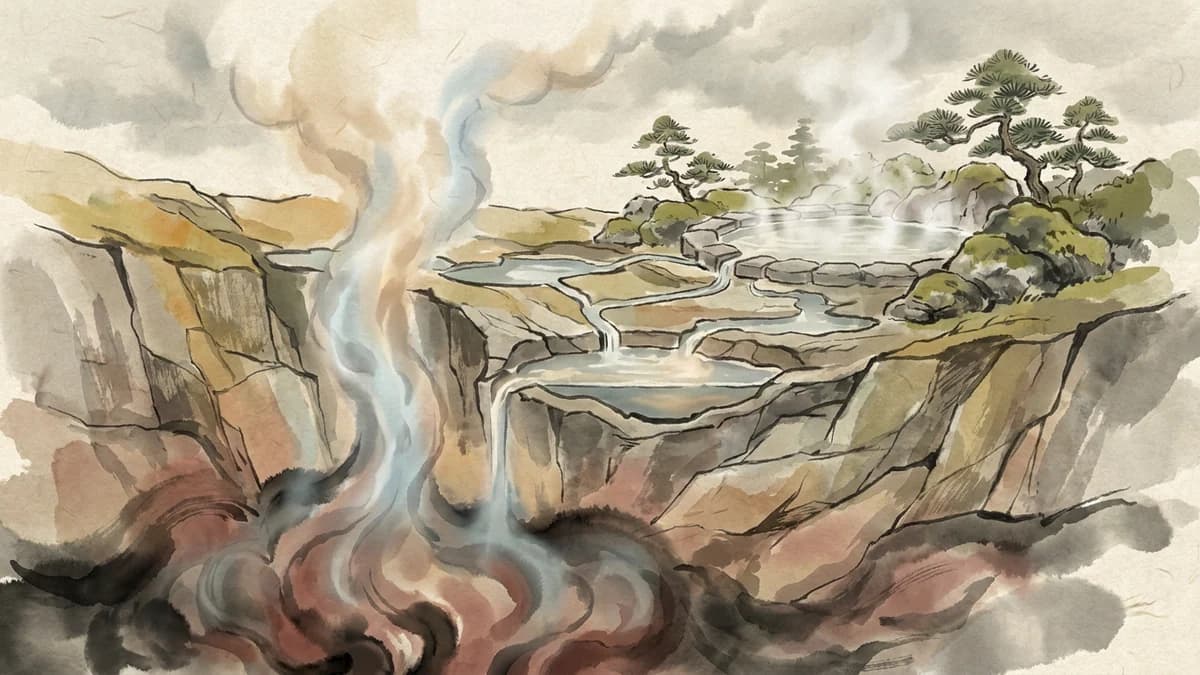
What Is an Onsen? | Japan's Hot Spring Definition & 3 Legal Conditions Explained
In Japan, the term 'onsen' is strictly defined by the Hot Spring Act. A natural spring must meet at least one of three conditions — temperature, dissolved solids, or specific minerals — to qualify.
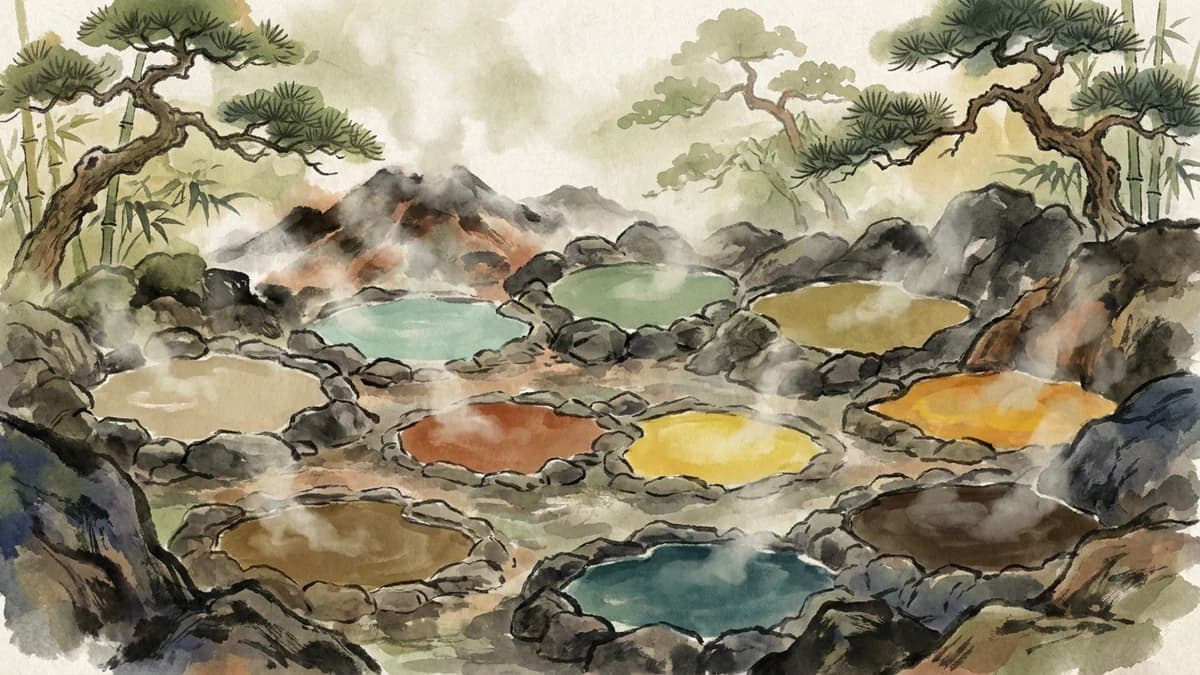
What Is Spring Type (Senshu)? | Japan's 10 Hot Spring Classifications Explained
Spring type (泉質, senshu) classifies hot springs by their dominant dissolved minerals. Japan's Ministry of the Environment recognises 10 types, each with specific health indications and contraindications.
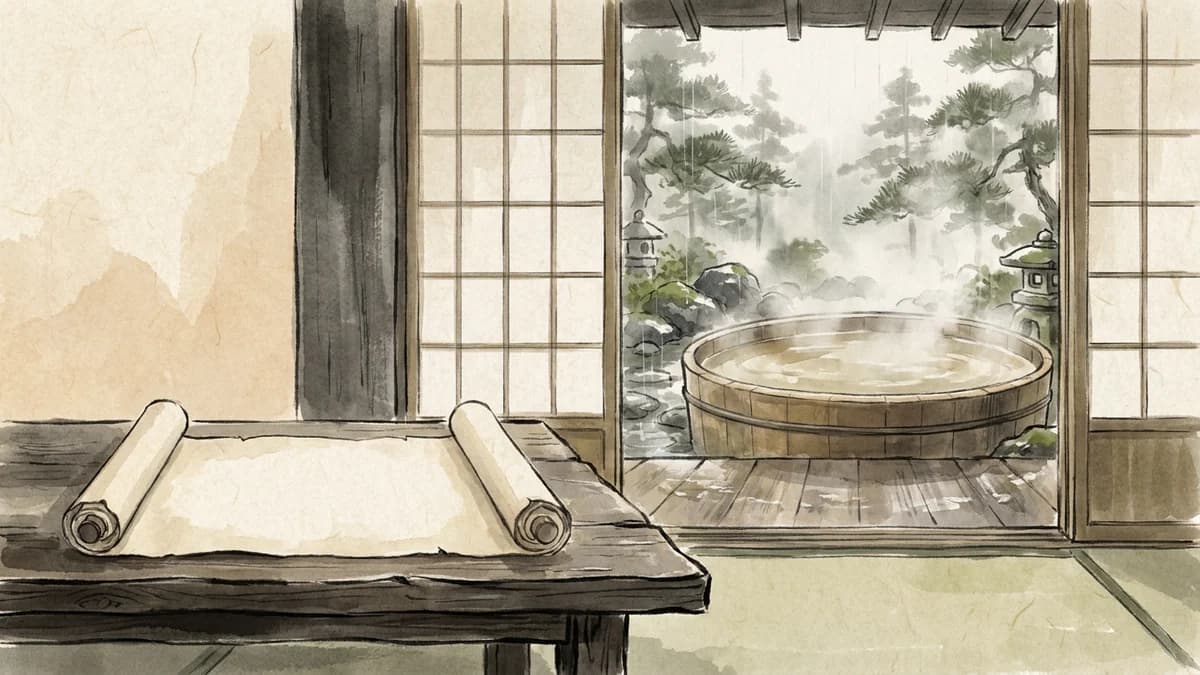
What Is a Hot Spring Analysis Certificate? | Legal Requirements & How to Read It
Every licensed onsen facility in Japan is required by law to display an official hot spring analysis certificate (温泉分析書). It documents the spring's chemistry, pH, spring type, and health indications — here's what to look for.
What Are General Indications? | Health Benefits Common to All Hot Spring Types
General indications are health benefits officially recognised for all hot spring types, regardless of spring chemistry. They arise from the physical effects of hot water — heat, buoyancy, and hydrostatic pressure.
What Are Contraindications for Onsen? | Conditions & Diseases That Prohibit Bathing
Contraindications are medical conditions or states where hot spring bathing may worsen symptoms or cause serious harm. Japanese onsen facilities are legally required to post contraindication lists.
What Is Insatsu (Drinking Onsen Water)? | Culture, Benefits & Safety
Insatsu (飲泉) — drinking natural mineral spring water — is an ancient form of spa therapy popular in Europe and practised in select Japanese onsen facilities licensed by prefectural governments.
What Is a 'Beauty Spring' (Bijin-no-yu)? | Why Metasilicic Acid Makes Skin Glow
'Beauty spring' (美肌の湯, bijin-no-yu) is a popular label for hot springs containing 50 mg/kg or more of metasilicic acid, a compound associated with collagen synthesis and skin hydration.
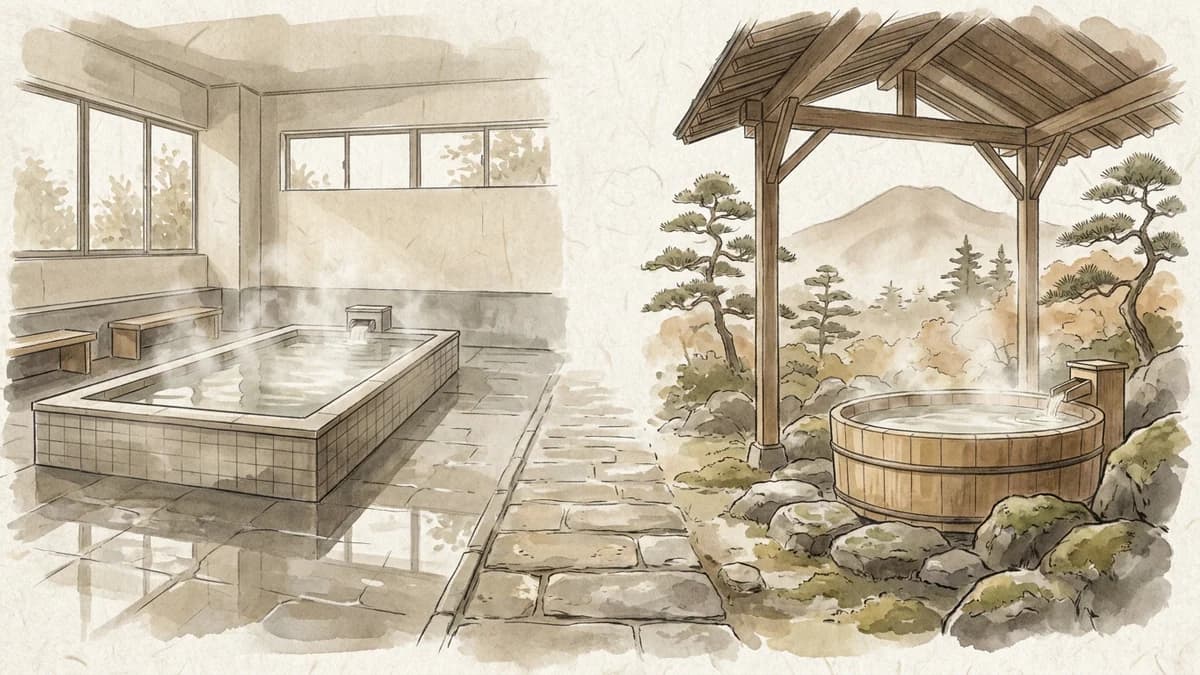
Onsen vs. Sentō: What's the Difference? | Japan's Hot Spring Law Explained
In Japan, 'onsen' (hot spring) and 'sentō' (public bathhouse) are legally distinct. Onsen use natural mineral water that meets the Hot Spring Act's requirements; sentō heat tap or well water.