Q & A
Frequently Asked Questions
Tap any question to expand the answer
Is a super sentō an onsen?
A super sentō that uses natural spring water meeting the Hot Spring Act criteria qualifies as an onsen. One that heats tap water is legally a public bathhouse (sentō). Check the "天然温泉使用" signage.
If it says "onsen", is it the real thing?
Japanese law requires that any facility calling itself "onsen" must meet the Hot Spring Act's requirements. However, loopholes exist, so the most reliable check is the posted spring analysis certificate (bunsekisho).
| Item | Onsen | Sentō (Public Bathhouse) |
|---|---|---|
| Governing law | Hot Spring Act (1948) | Public Bath Act (1948) |
| Water source | Natural spring water (geological) | Tap water, well water, etc. |
| Temperature / mineral requirements | 25 °C or above OR mineral criteria | None (heating permitted) |
| Price regulation | None (set by facility) | Prefecture sets maximum price |
| Analysis certificate posting | Required (for bathing/drinking use) | Not required |
| Primary purpose | Therapeutic, recreational, tourism | Daily bathing |
What Is Gensen Kakenagashi (Free-Flow Spring Water)?
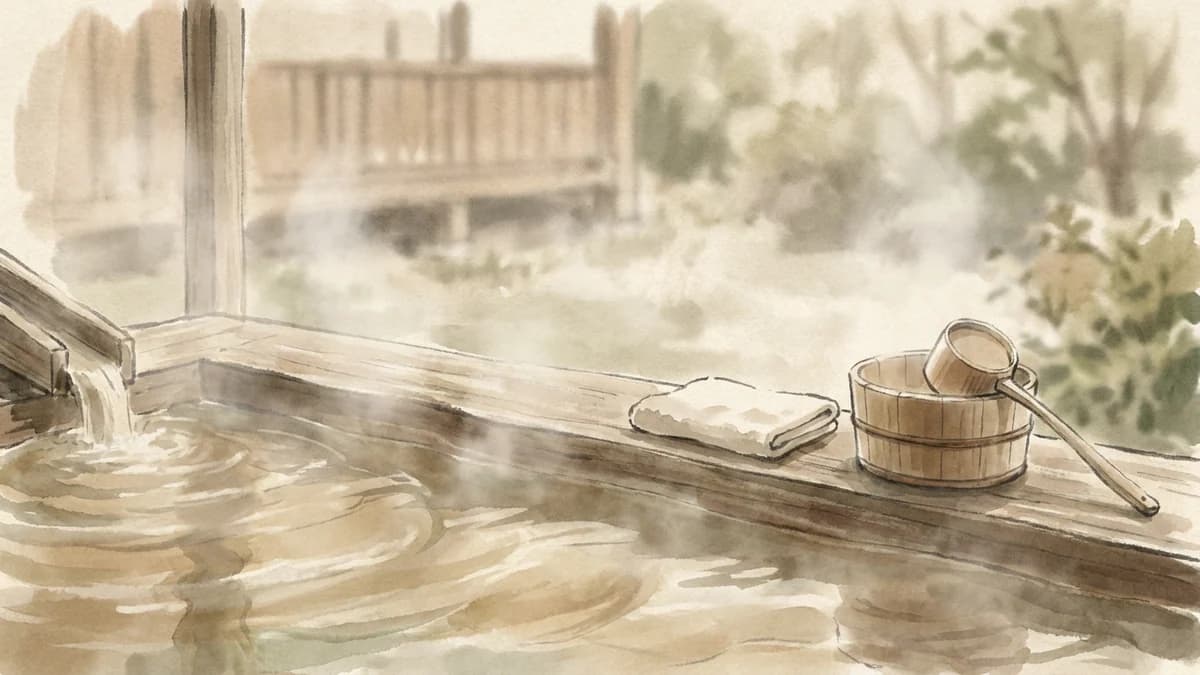
Gensen kakenagashi means the spring water flows directly and continuously into the bath from the source, without dilution, recirculation, or disinfection. A facility displaying "加水なし・循環なし・消毒なし" (no dilution, no recirculation, no disinfection) provides the purest onsen experience.
Choose a ryokan by how you bathe
Plan your onsen trip
Onsen towns are often rural with patchy Wi-Fi and limited public transport. Sort out data, tours and a car before you go.
- Japan eSIMAiralo
- Japan eSIMYesim
- Tours, passes & transfersGetYourGuide
- Tours, passes & transfersKKday
- Car rentalDiscover Cars
Includes affiliate links
References
EXPLORE RELATED TOPICS
Related Articles