Bind your hot spring memories
into a single notebook.
Find your perfect onsen in 4 simple steps
Tap your way through symptoms, area, stay style, and water temperature. Our database of 10 spring types and therapeutic indications picks the single hot spring that fits you best.
No sign-up · Free · About 30 seconds
- 1Symptom
- 2Region
- 3Day trip / Overnight
- 4Temperature
Browse onsens across Japan
Featured onsen town this week
Discover Asama Onsen, a historic hot spring with over 1,300 years of history, once cherished by the lords of Matsumoto Castle. Its clear, gentle alkaline simple spring water promotes deep relaxation and rejuvenation, making it an ideal retreat for body and soul. It's the perfect base for exploring the castle town's rich culture.

Read the latest analyses in the live viewer

Spring water that is gentle on the skin with a very low likelihood of irritation. Safe for bathing infants and those with sensitive skin.
See features & indications▾
Analyzed in 2020, this is a relatively new spring on the shore of Tara, where the slopes of Mount Tara run down to the Ariake Sea. It emerges as a cool 22.8°C mineral spring; bicarbonate makes up about 80 percent of the anions, while magnesium, calcium and sodium share the cations almost evenly. At just 0.18 g/kg it is soft, almost like fresh water, yet 69.5 mg/kg of metasilicic acid gives it its character as an onsen, a quiet water to sink into while watching the great tides of the Ariake Sea.
Analyzed in 2020, this is a relatively new spring on the shore of Tara, where the slopes of Mount Tara run down to the Ariake Sea. It emerges as a cool 22.8°C mineral spring; bicarbonate makes up about 80 percent of the anions, while magnesium, calcium and sodium share the cations almost evenly. At just 0.18 g/kg it is soft, almost like fresh water, yet 69.5 mg/kg of metasilicic acid gives it its character as an onsen, a quiet water to sink into while watching the great tides of the Ariake Sea.
Scores are calculated from mineral analysis data based on the Mineral Spring Analysis Guidelines (Ministry of Environment, Japan). They are unrelated to facility atmosphere or service quality.

Do ga Shima New Ginsuei
Said to carry moisture to the skin and form a protective film, leaving the skin feeling soft after bathing. Indications include cuts and grazes for bathing, and biliary tract disease and constipation for drinking.
See features & indications▾
※ Only at facilities permitted to serve drinking water. 200–500 mL/day recommended.
On the Dogashima coast of western Izu, famed for sculpted rocks and sea caves, two Nishina sources are blended at the town's distribution station and piped in. Calcium makes up about 70 percent of the cations and sodium about 30, while sulfate exceeds 90 percent of the anions: a classic Izu gypsum-type sulfate spring. Alkaline at pH 8.8 yet moderately rich at 2.290 g/kg, the 52.4°C water wraps a body chilled by Suruga Bay breezes, an honest water to sink into as the sea turns gold at sunset.
On the Dogashima coast of western Izu, famed for sculpted rocks and sea caves, two Nishina sources are blended at the town's distribution station and piped in. Calcium makes up about 70 percent of the cations and sodium about 30, while sulfate exceeds 90 percent of the anions: a classic Izu gypsum-type sulfate spring. Alkaline at pH 8.8 yet moderately rich at 2.290 g/kg, the 52.4°C water wraps a body chilled by Suruga Bay breezes, an honest water to sink into as the sea turns gold at sunset.
Scores are calculated from mineral analysis data based on the Mineral Spring Analysis Guidelines (Ministry of Environment, Japan). They are unrelated to facility atmosphere or service quality.

Shima Onsen Kashiwaya Ryokan
Salt content is said to form a protective film on the skin, helping the body retain moisture and warmth after bathing. Traditionally called a "heat bath", it keeps you warm long after bathing.
See features & indications▾
※ Only at facilities permitted to serve drinking water. 200–500 mL/day recommended.
Shima Onsen is said to take its name from healing "forty thousand ailments," and this water blends two naturally flowing sources from its Yamaguchi district in a mixing tank. Sodium (about 59 percent) and calcium (about 38 percent) lead the cations, while chloride (64 percent) and sulfate (30 percent) dominate the anions. It pairs the warmth of salt with the moist softness of sulfate, clear and easy-going at a gentle 1.42 g/kg, a quietly embracing water beside the Shima River gorge.
A natural moisturizer also used in skincare lotions. Forms a thin veil on the skin to reduce moisture loss after bathing.
Shima Onsen is said to take its name from healing "forty thousand ailments," and this water blends two naturally flowing sources from its Yamaguchi district in a mixing tank. Sodium (about 59 percent) and calcium (about 38 percent) lead the cations, while chloride (64 percent) and sulfate (30 percent) dominate the anions. It pairs the warmth of salt with the moist softness of sulfate, clear and easy-going at a gentle 1.42 g/kg, a quietly embracing water beside the Shima River gorge.
Scores are calculated from mineral analysis data based on the Mineral Spring Analysis Guidelines (Ministry of Environment, Japan). They are unrelated to facility atmosphere or service quality.
A natural moisturizer also used in skincare lotions. Forms a thin veil on the skin to reduce moisture loss after bathing.

Salt content is said to form a protective film on the skin, helping the body retain moisture and warmth after bathing. Traditionally called a "heat bath", it keeps you warm long after bathing.
See features & indications▾
※ Only at facilities permitted to serve drinking water. 200–500 mL/day recommended.
This spring sits high in Kankaiji, one of Beppu's eight hot spring districts, and blends two sources through a mixing valve: the Sugi-2 well and a source at the Minamitateishi geothermal power plant, a very Beppu way of using the earth's heat for both power and bathing. Emerging at 91.4°C, its anions are 64 percent chloride and 21 percent sulfate with plenty of carbonate, giving a mildly alkaline water. Clear and faintly salty, its abundant metasilicic acid lends a soft, gentle feel.
A natural moisturizer also used in skincare lotions. Forms a thin veil on the skin to reduce moisture loss after bathing.
This spring sits high in Kankaiji, one of Beppu's eight hot spring districts, and blends two sources through a mixing valve: the Sugi-2 well and a source at the Minamitateishi geothermal power plant, a very Beppu way of using the earth's heat for both power and bathing. Emerging at 91.4°C, its anions are 64 percent chloride and 21 percent sulfate with plenty of carbonate, giving a mildly alkaline water. Clear and faintly salty, its abundant metasilicic acid lends a soft, gentle feel.
Scores are calculated from mineral analysis data based on the Mineral Spring Analysis Guidelines (Ministry of Environment, Japan). They are unrelated to facility atmosphere or service quality.
A natural moisturizer also used in skincare lotions. Forms a thin veil on the skin to reduce moisture loss after bathing.

Spring water that is gentle on the skin with a very low likelihood of irritation. Safe for bathing infants and those with sensitive skin.
See features & indications▾
Kidachi Onsen Yugashima No. 23 takes its name from a legend that Minamoto no Yoritomo, spotting steam among the rocks while hunting, pried them up with a wooden sword and released the water. Set beside the Kano River in literary Amagi-Yugashima, its calcium and sodium share the cations almost equally while sulfate and bicarbonate balance the anions. Clear, tasteless and odorless, it is a quiet, unassuming water.
Kidachi Onsen Yugashima No. 23 takes its name from a legend that Minamoto no Yoritomo, spotting steam among the rocks while hunting, pried them up with a wooden sword and released the water. Set beside the Kano River in literary Amagi-Yugashima, its calcium and sodium share the cations almost equally while sulfate and bicarbonate balance the anions. Clear, tasteless and odorless, it is a quiet, unassuming water.
Scores are calculated from mineral analysis data based on the Mineral Spring Analysis Guidelines (Ministry of Environment, Japan). They are unrelated to facility atmosphere or service quality.
The 10 great spring types
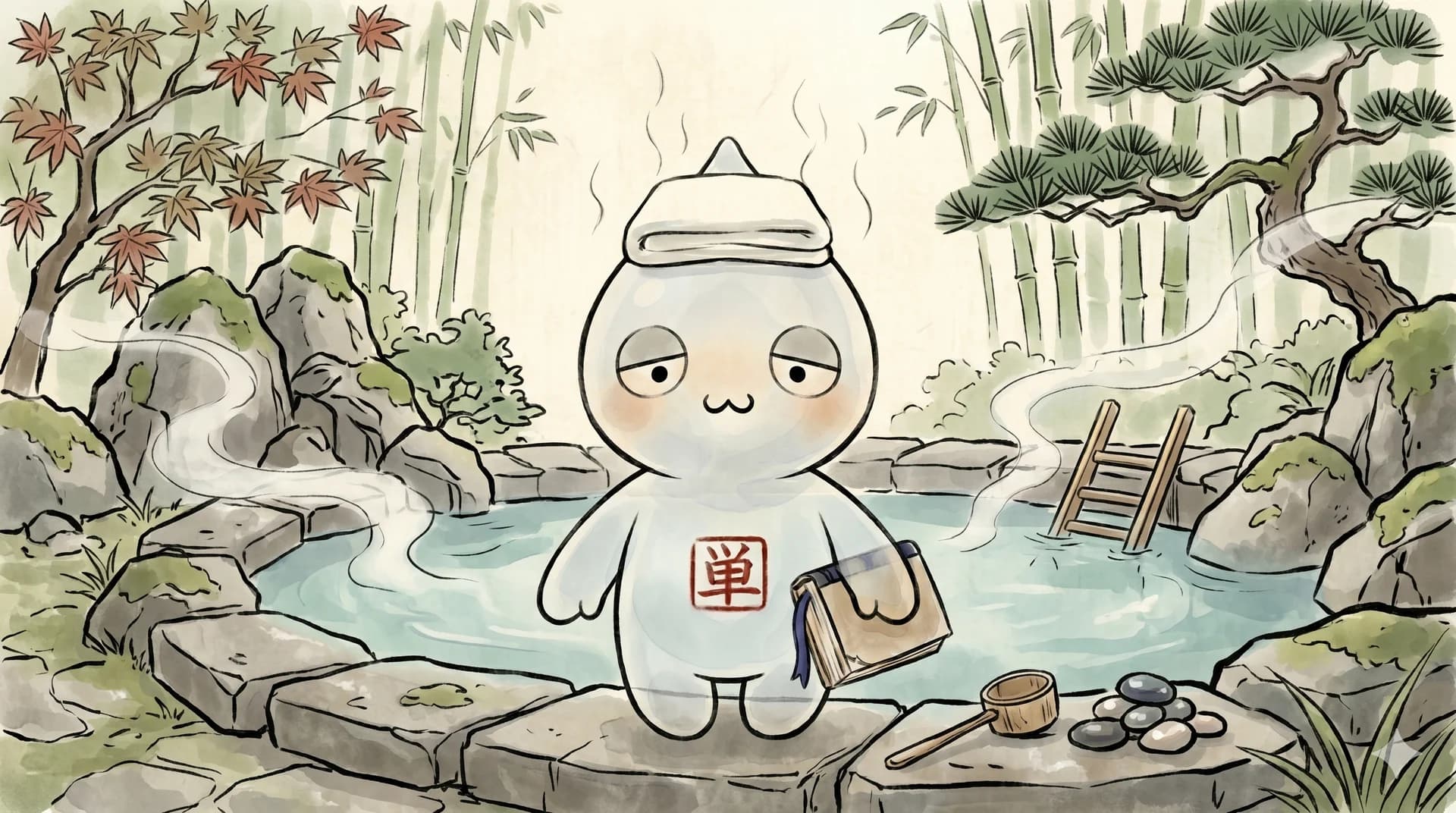
- SIMPLE単Simple SpringGentle on everyone, the family bath
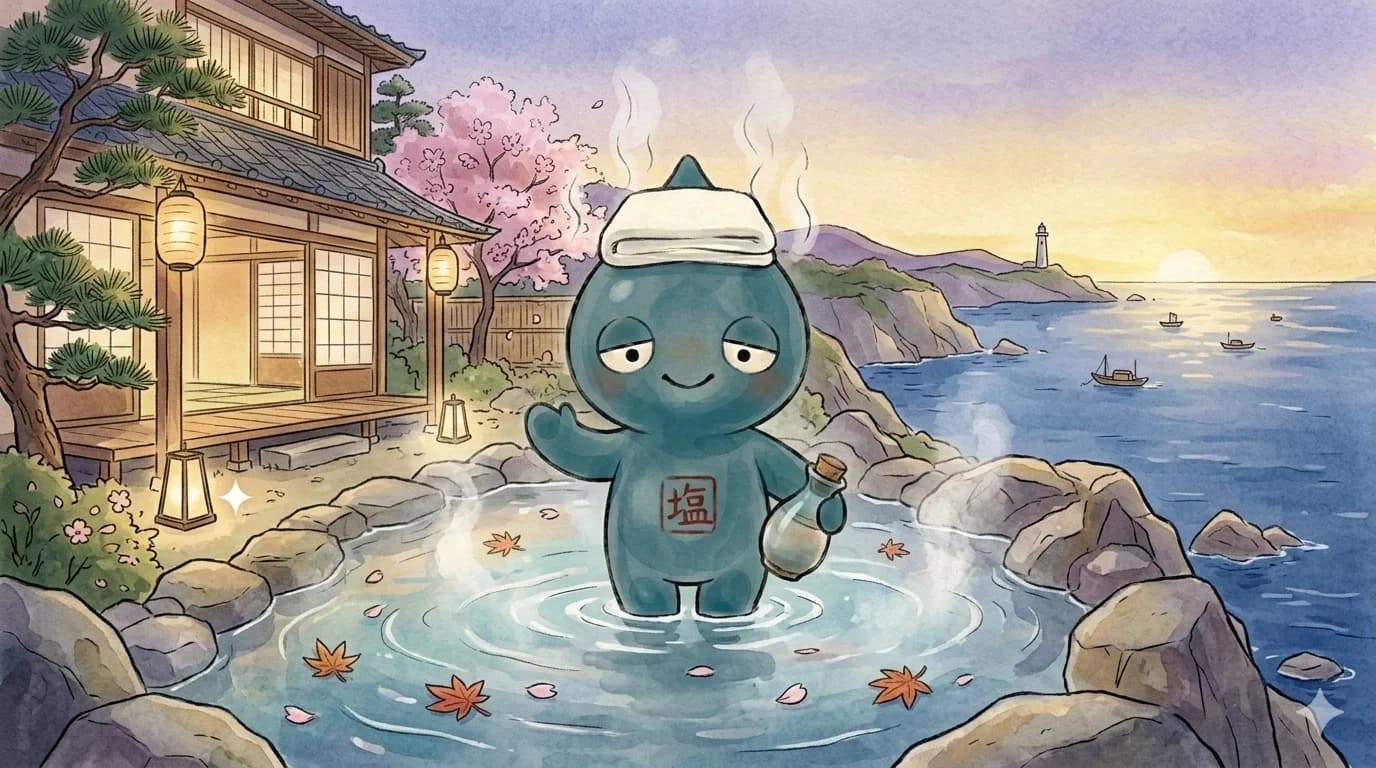 CHLORIDE塩Chloride SpringLocks in heat — the warming bath
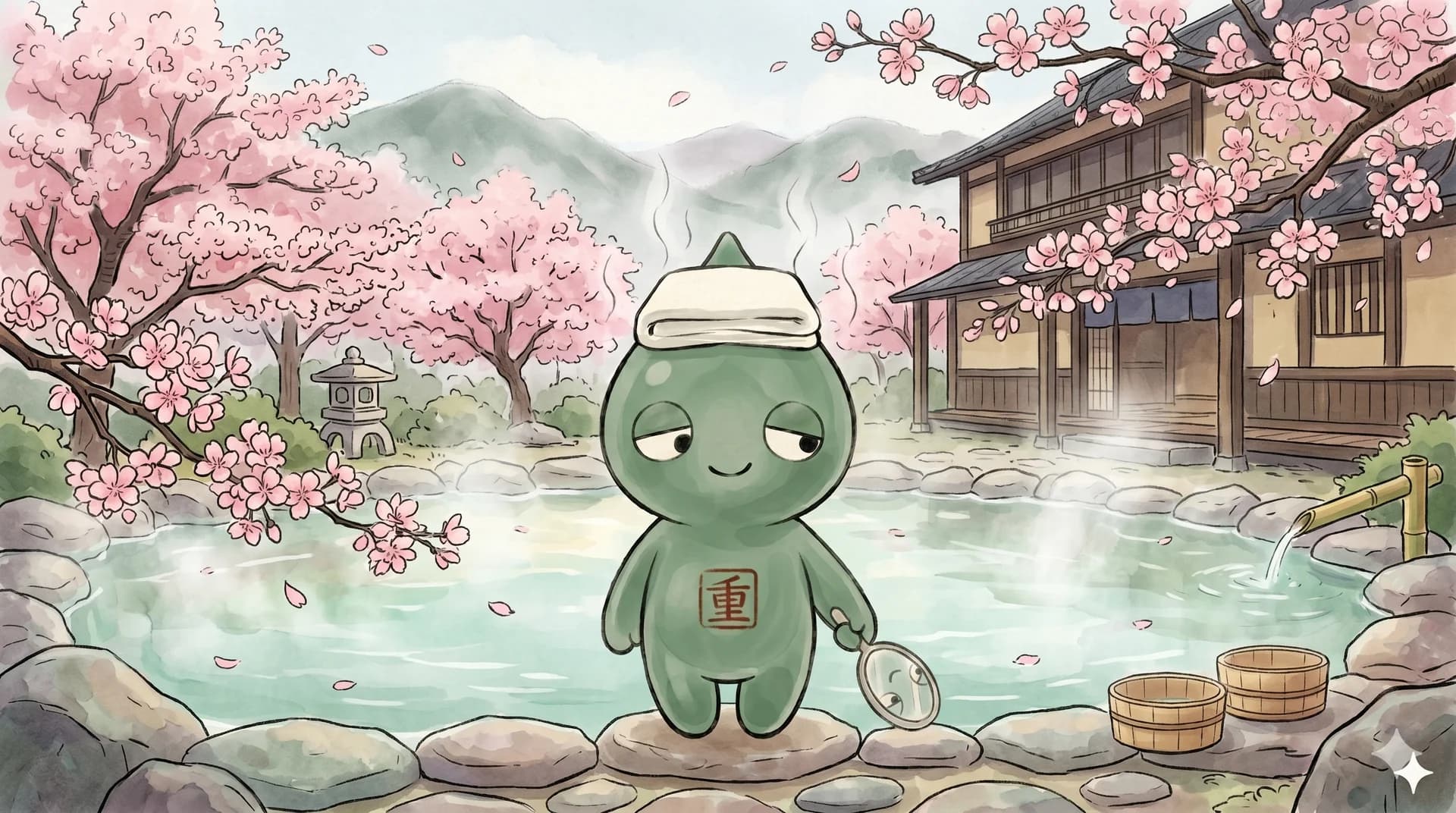 BICARBONATE重Carbonated SpringSilky skin — the beauty bath
 SULFATE硫Sulphate SpringThe healing & stroke bath
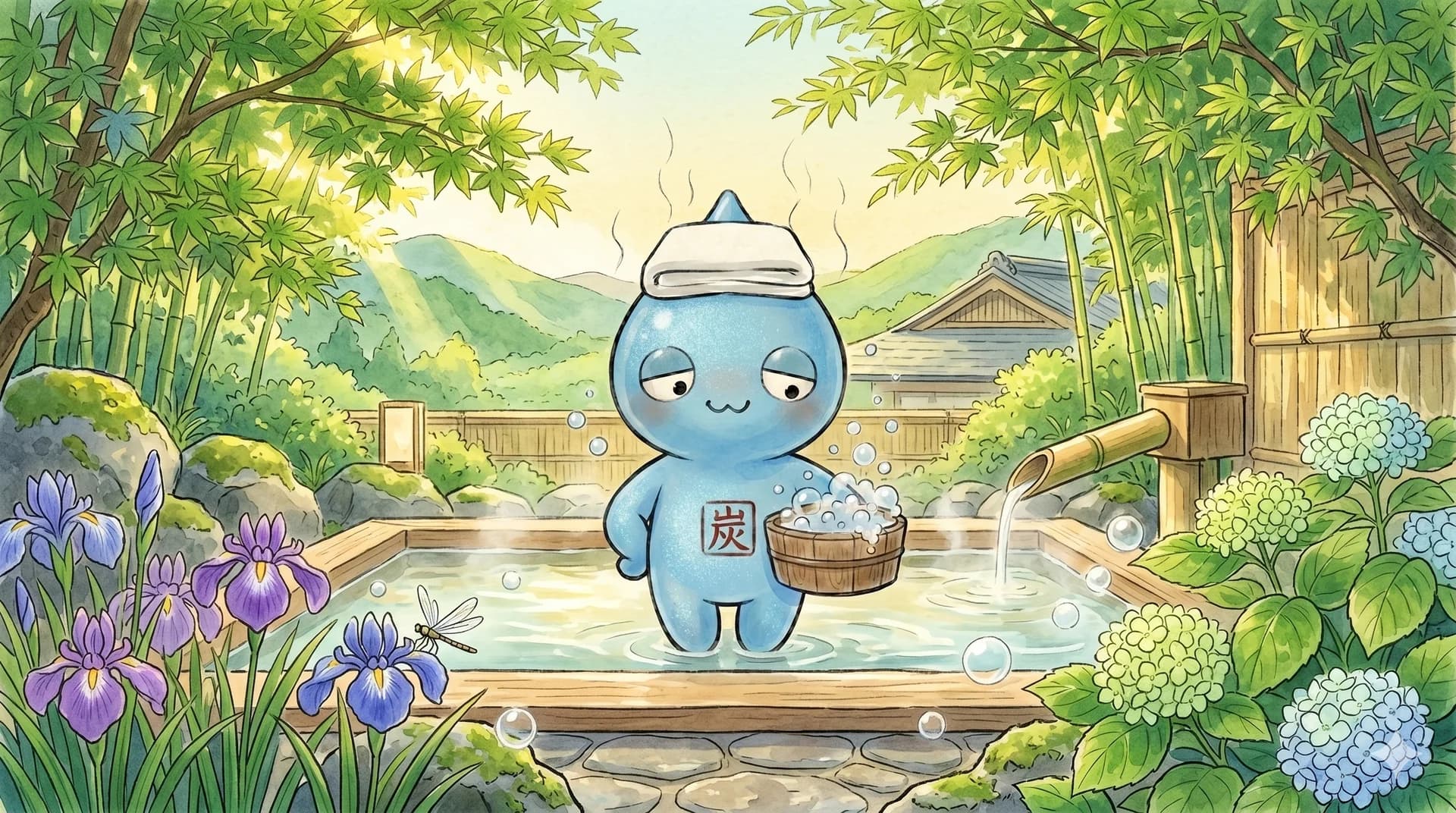 CO2炭Carbon Dioxide SpringThe heart & sparkling bubble bath
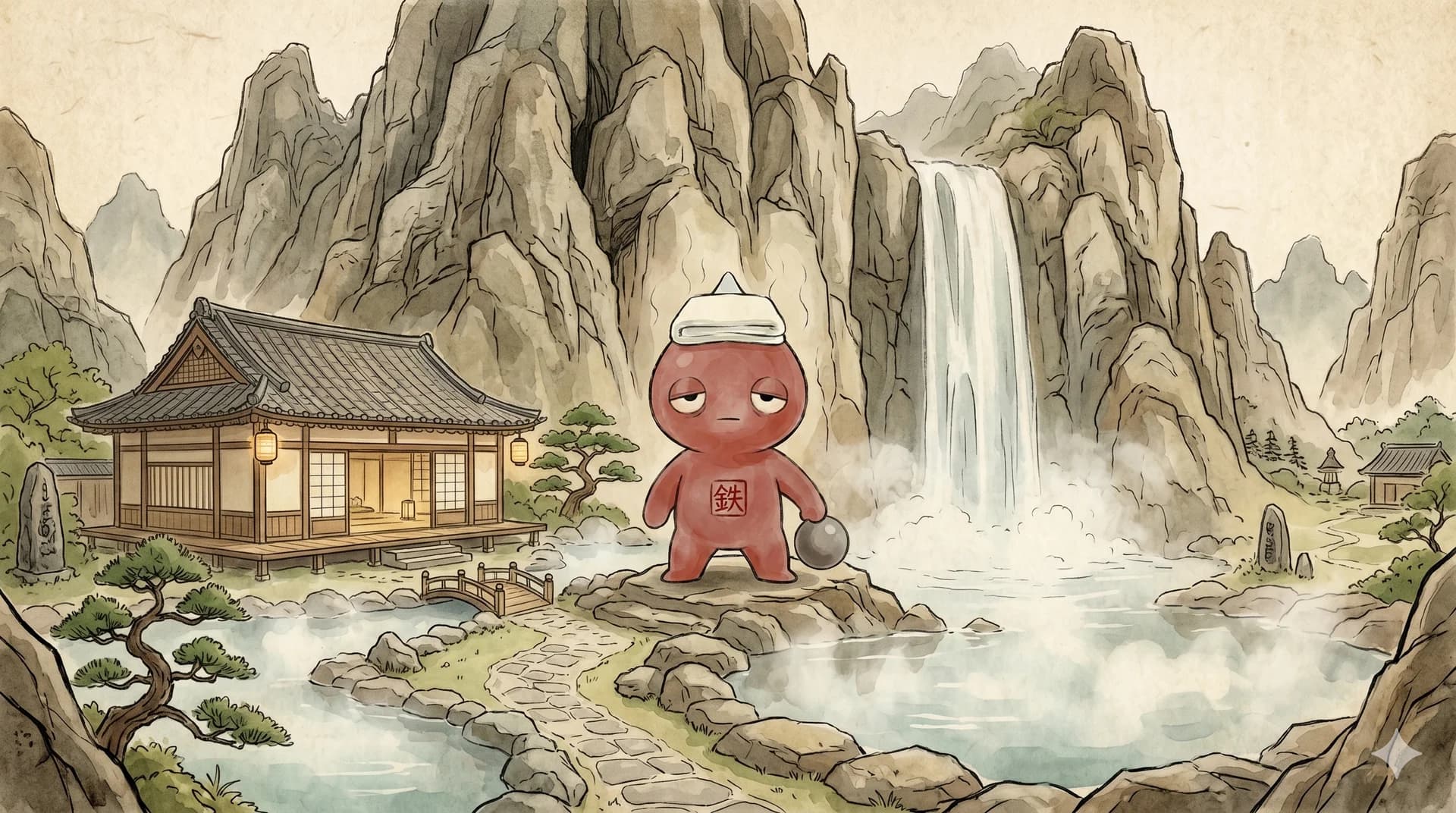 IRON鉄Ferruginous SpringReddish-brown bath for anemia
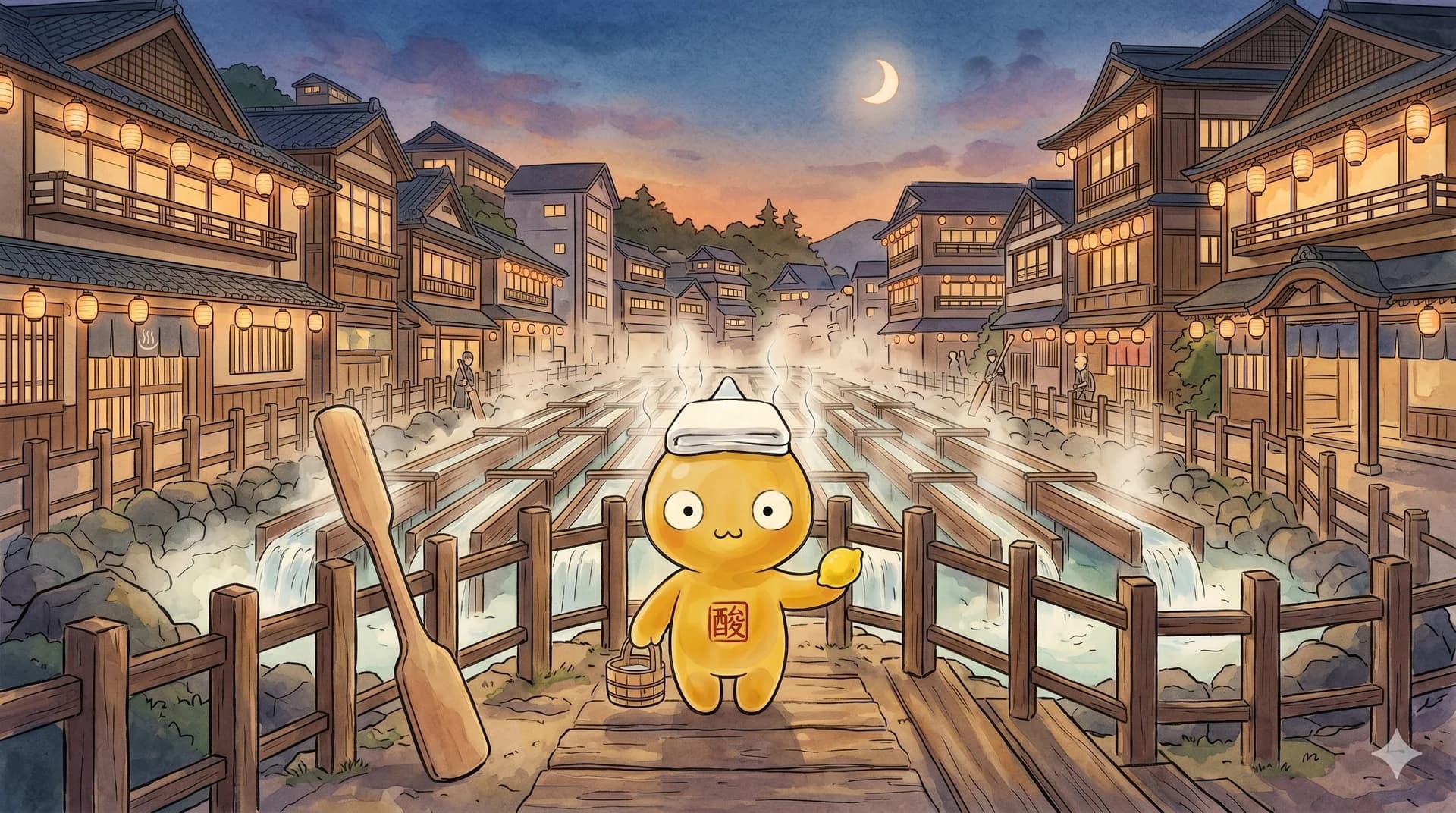 ACIDIC酸Acidic SpringSharp, strongly antibacterial
 IODINE沃Iodine Containing SpringRare amber-brown spring
 SULFUR黄Sulphur SpringSulphur-scented, lifestyle-disease bath
 RADON放Radioactive SpringRare "cure-all" spring
Featured columns
- 塩SPRING TYPEMay 5, 2026· 2min read
Chloride Springs: Benefits, Indications & Recommended Onsen
Chloride springs (Cl⁻ as the main anion) are known as "the hot-retaining waters" because the salt coating on your skin keeps body heat from escaping after bathing. Cold sensitivity and dry skin are among its official indications.
- 郷famous-onsenMay 28, 2026· 2min read
Kakeyu Onsen: A Healing Retreat in Nagano for Mind and Body
Discover Kakeyu Onsen, a tranquil hot spring village in Nagano, said to have been revealed by a deer. Known as the "spring where you forget your cane," its waters are used for rehabilitation. Experience deep relaxation and pain relief on a wellness journey to restore your balance.
- SiO₂MINERALMay 5, 2026· 2min read
Metasilicic Acid: The "Beauty Spring" Standard Mineral & Top 5 Onsen
Metasilicic acid (H₂SiO₃) is a natural moisturizer also found in skincare lotions. Hot springs containing more than 50mg/kg are called "beauty springs" — leaving skin hydrated long after bathing. This is one of the therapeutic spring criteria in Japan's Mineral Spring Analysis Guideline (Table 1-1).
- 症SYMPTOMSMay 6, 2026· 1min read
Hot Springs for Cold Sensitivity | 4 Spring Types Explained
Discover which hot spring types are officially indicated for cold sensitivity and peripheral circulatory disorders, based on Japan's Ministry of the Environment guidelines. Chloride springs form a heat-retaining salt film on the skin, while carbon dioxide springs dilate blood vessels directly through the skin without stressing the heart.
- 礼ETIQUETTEMay 6, 2026· 2min read
Japanese Onsen Etiquette Guide | Washing, Towels & Bathing Rules
Japan's hot spring culture places high value on cleanliness and consideration for others. Here's everything first-time onsen visitors need to know — from the changing room to the bath.
- 単SPRING TYPEMay 5, 2026· 1min read
Simple Springs (Tanjun Onsen): Gentle Waters for Everyone
Simple springs have dissolved components below 1,000 mg/kg and a source temperature of 25°C or above. Mild and non-irritating, they are safe for all ages. Alkaline simple springs (pH 8.5+) are famous for leaving skin silky smooth.