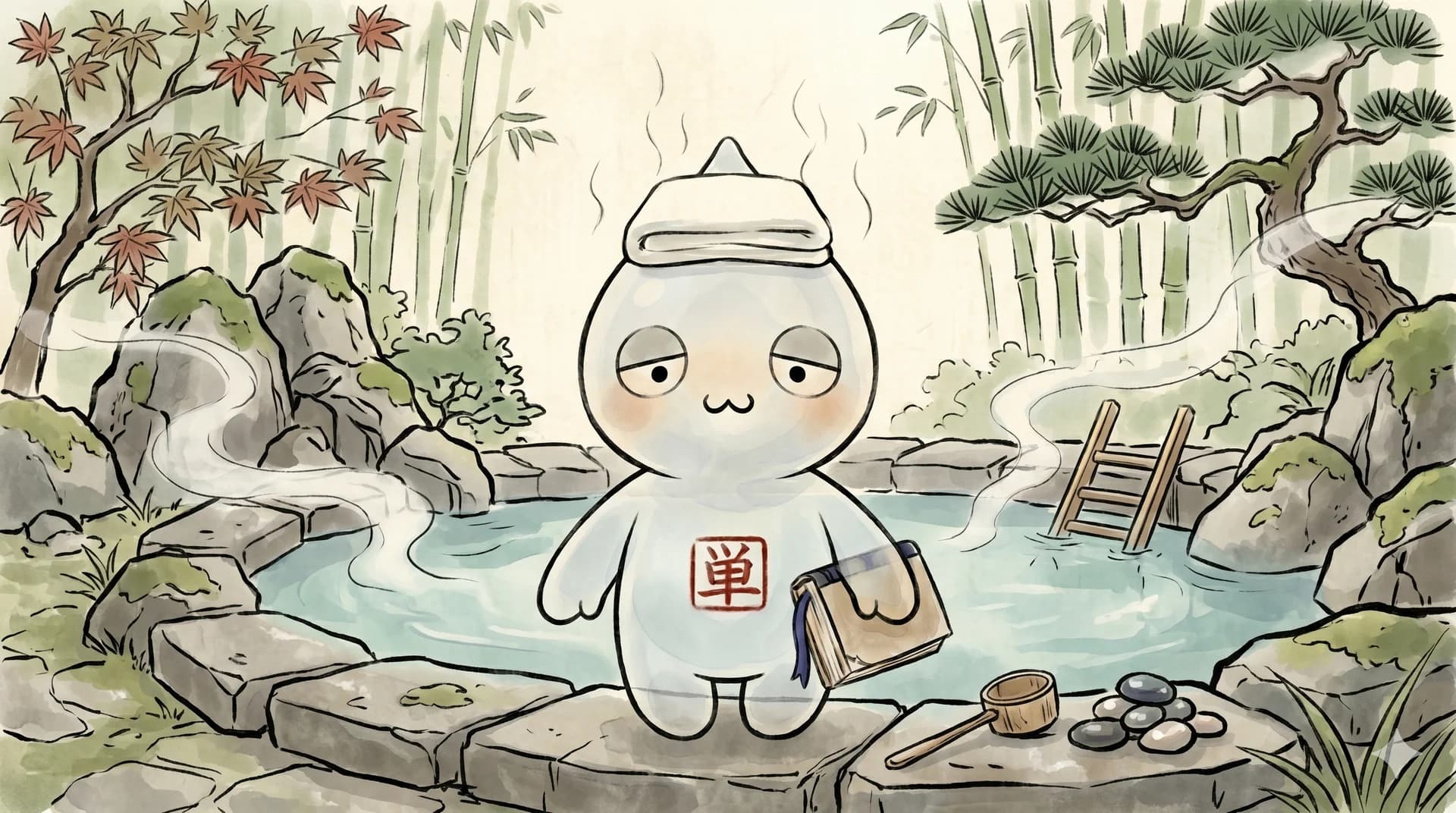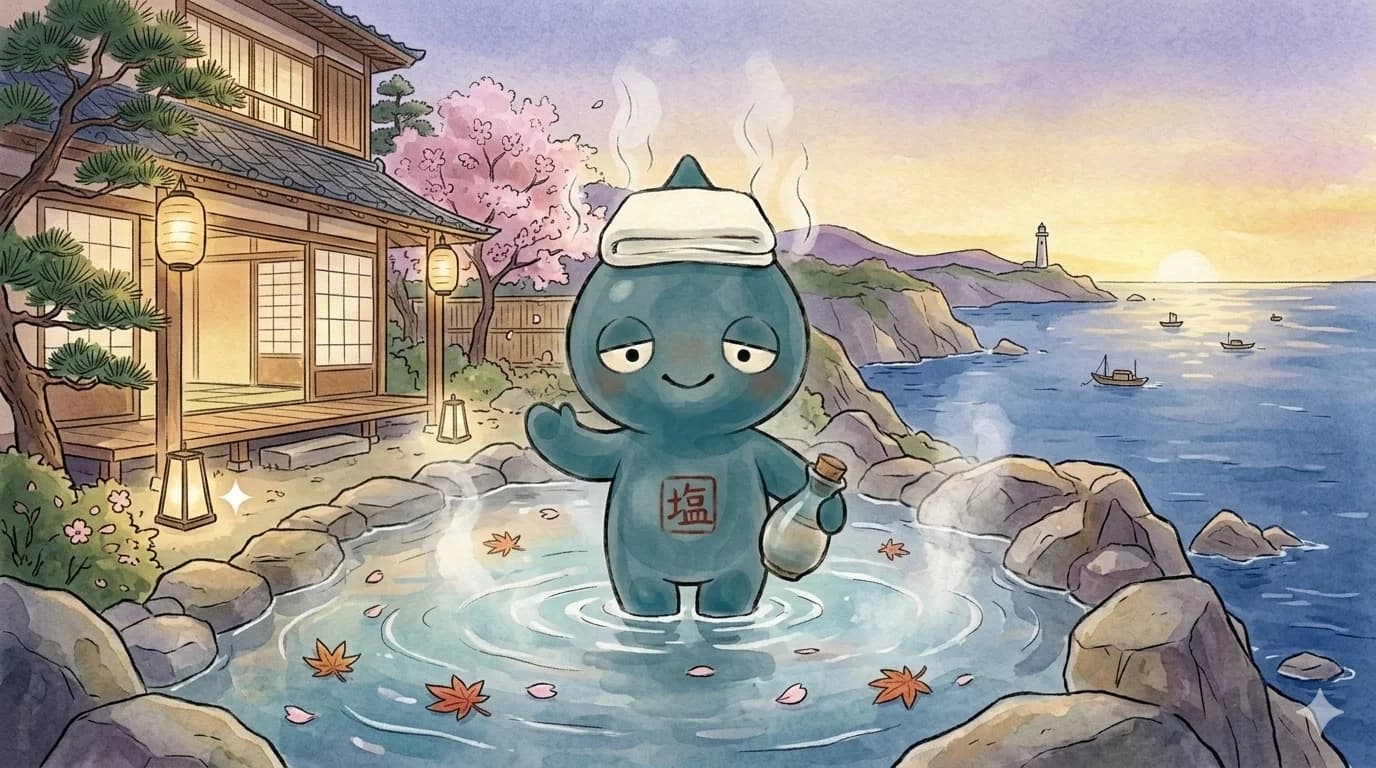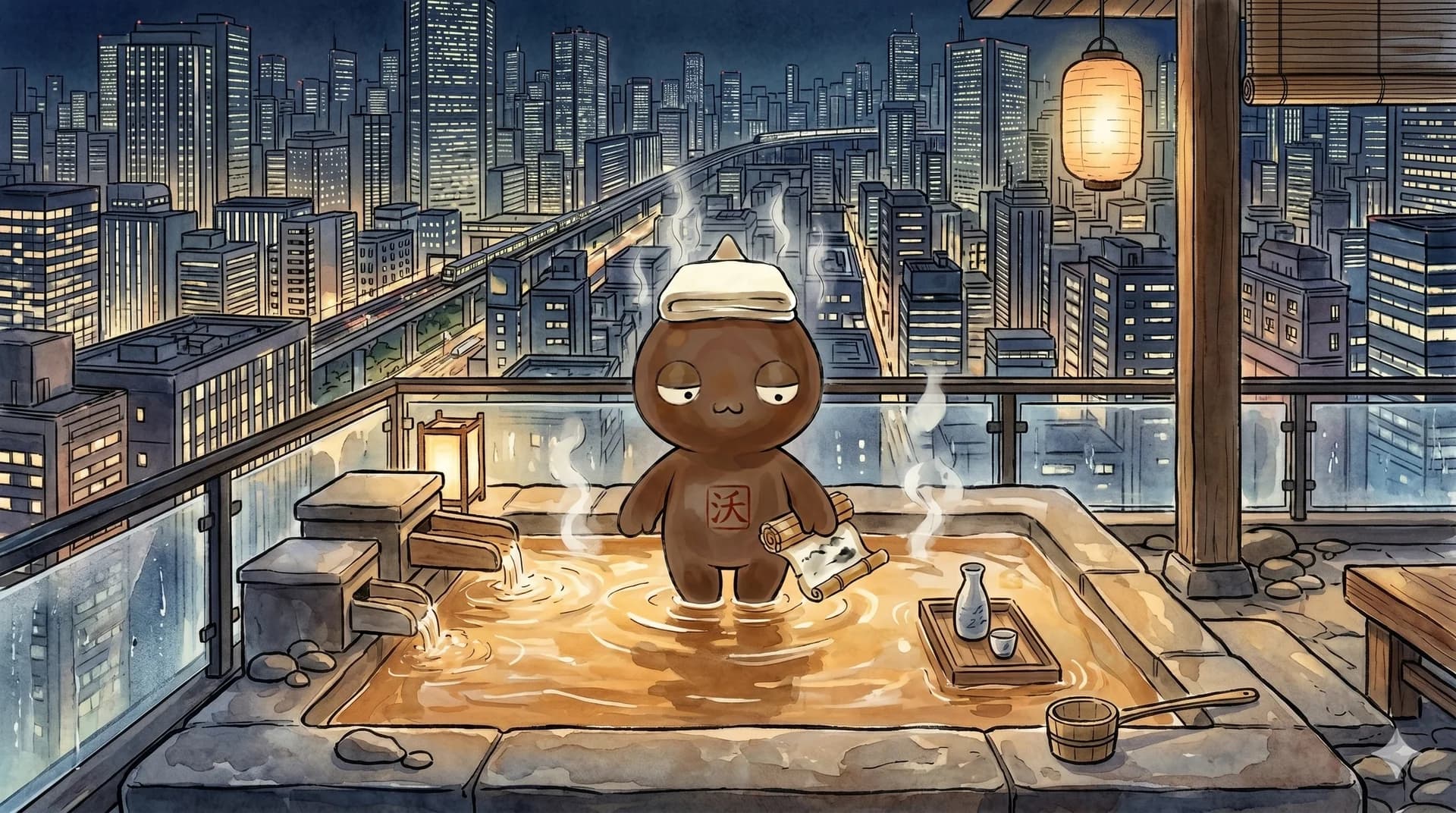

What is an Iodine-Containing Spring?
An iodine-containing spring holds iodide ions (I⁻) at 10 mg per kilogram of spring water. Unlike most hot springs, these emerge from non-volcanic geological strata (sedimentary layers), and notable examples are found in Chiba and Niigata prefectures.
Clear when fresh, they turn yellow to brownish when left standing as iodide oxidizes. They have a medicinal aroma reminiscent of iodine antiseptic solution, with a distinctive bitter taste.
Japan is one of the world's largest iodine producers; much of it is extracted from the iodine-rich brine (saline groundwater) found in these same geological formations.
Indications for Drinking
- Dyslipidemia (high cholesterol)Iodine is an essential component of thyroid hormones, such as thyroxine. High cholesterol is listed among the indications for drinking iodine-containing spring water.
How to Bathe in an Iodine-Containing Spring
- Yellow color indicates freshness — deeper color means more oxidation has occurred.Iodine-containing spring water is colorless when it first emerges but turns yellow as it oxidizes upon contact with air. A lighter yellow indicates the water is fresher, while a darker, brownish hue suggests it has been exposed to air longer.
- Remove silver and brass jewelry before bathing — iodine can cause discoloration.The dissolved iodine is chemically reactive and can cause metals, particularly silver and brass, to tarnish or discolor. To prevent permanent damage to your accessories, it is essential to remove them before entering the bath.
- If drinking, strictly follow the facility's posted daily limit.Iodine directly affects the production of thyroid hormones, which regulate metabolism. While high cholesterol is listed among the drinking indications for these springs, excessive intake can disrupt thyroid function. Always adhere to the facility's posted daily limit for safe use.
Related Onsen Facilities

Choose a ryokan by how you bathe
Onsen towns are often rural with patchy Wi-Fi and limited public transport. Sort out data, tours and a car before you go.
- Japan eSIMAiralo
- Japan eSIMYesim
- Tours, passes & transfersGetYourGuide
- Tours, passes & transfersKKday
- Car rentalDiscover Cars
Includes affiliate links
References
Related Articles