SPRING TYPES
Spring Types
10 hot spring types and their benefits
10 ARTICLES

Chloride Springs: Benefits, Indications & Recommended Onsen
Chloride springs (Cl⁻ as the main anion) are known as "the hot-retaining waters" because the salt coating on your skin keeps body heat from escaping after bathing. Cold sensitivity and dry skin are among its official indications.
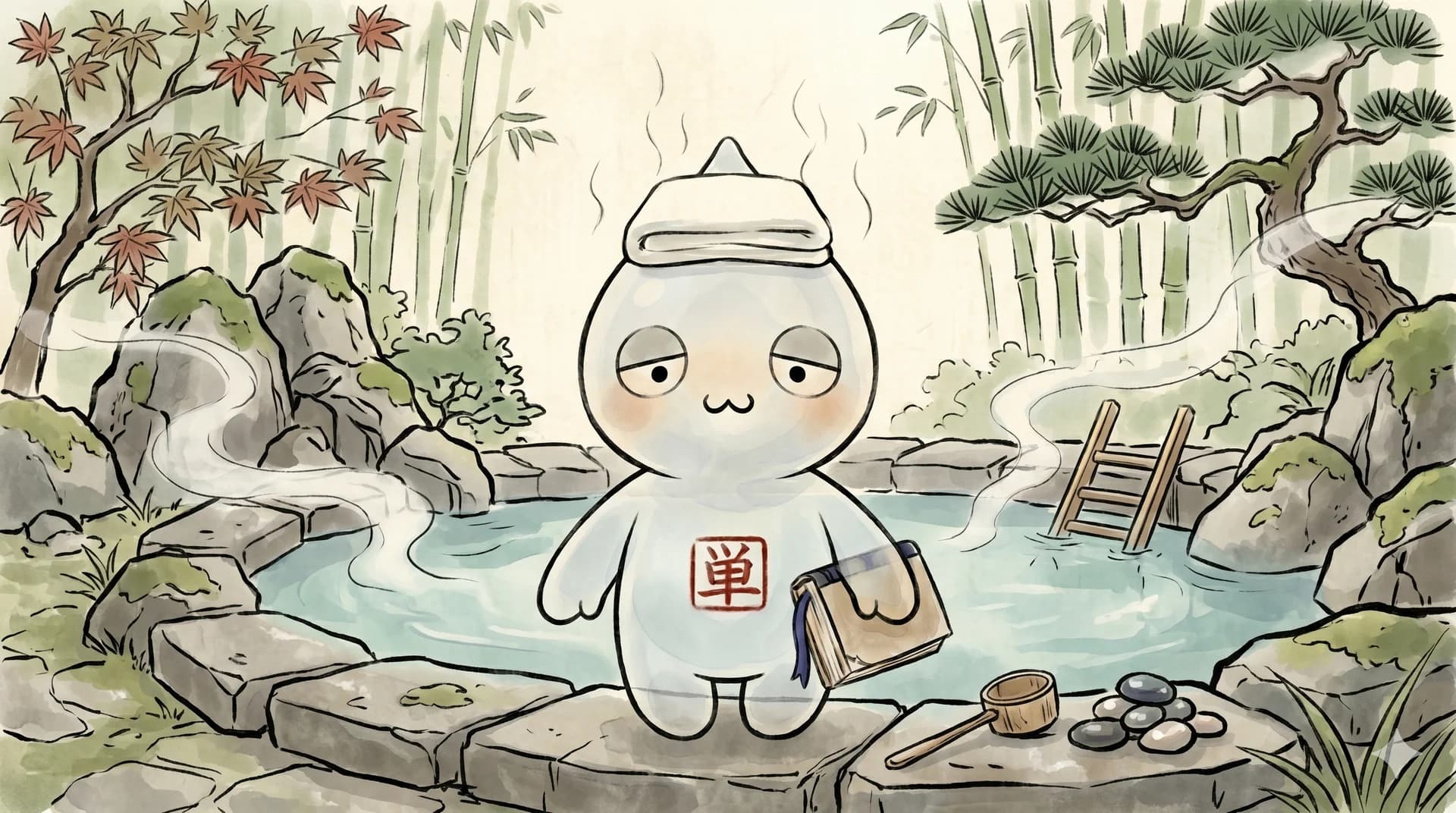
Simple Springs (Tanjun Onsen): Gentle Waters for Everyone
Simple springs have dissolved components below 1,000 mg/kg and a source temperature of 25°C or above. Mild and non-irritating, they are safe for all ages. Alkaline simple springs (pH 8.5+) are famous for leaving skin silky smooth.
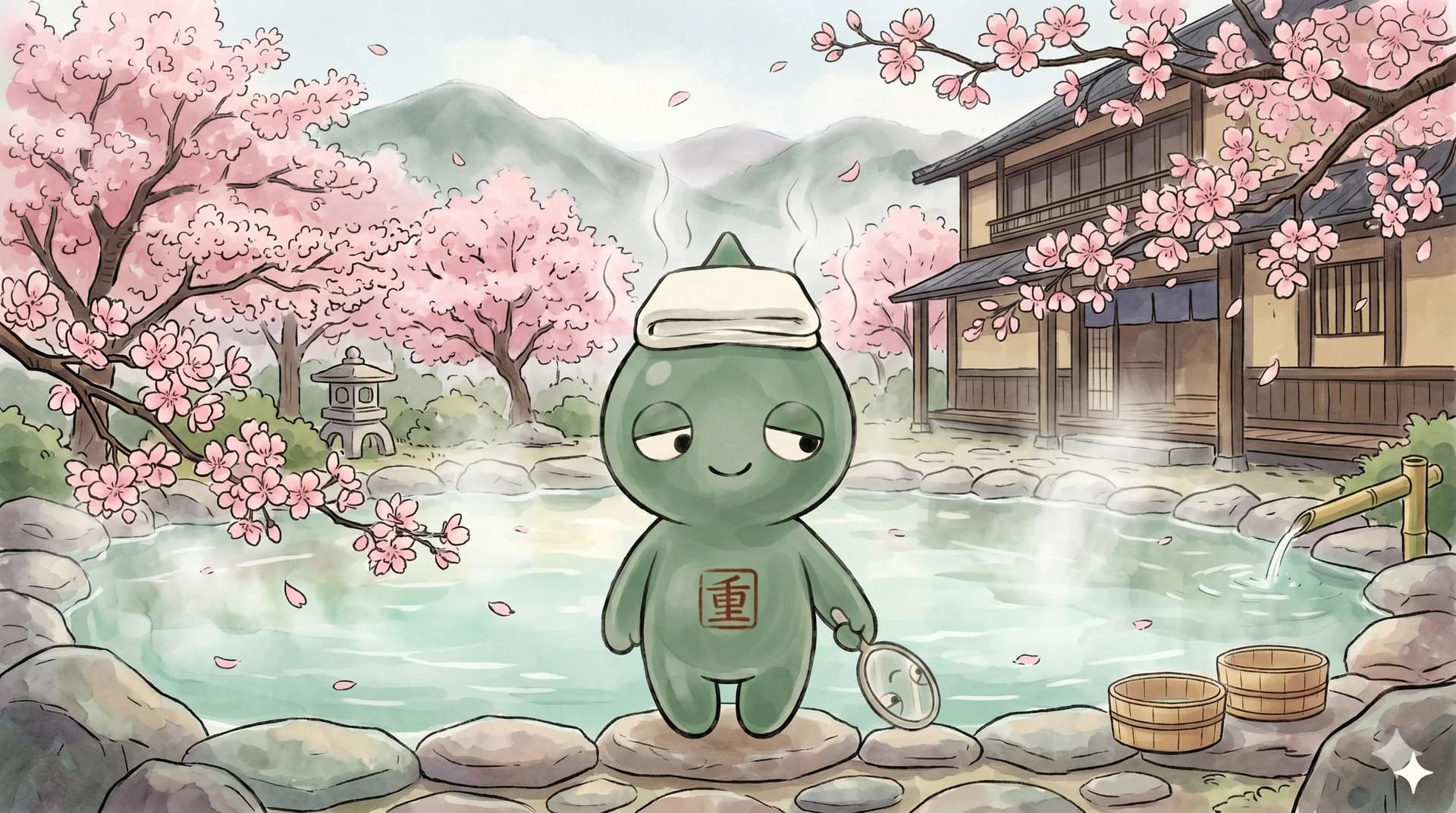
Bicarbonate Springs: "Beauty Waters" for Smooth, Glowing Skin
Bicarbonate springs (HCO₃⁻ as the main anion) are known as "the beauty waters" because bicarbonate gently removes dead skin cells and sebum, leaving skin silky smooth. Indicated for bathing (cuts, cold sensitivity, dry skin) and drinking (gastroduodenal ulcers, diabetes, gout).

Sulphate Springs: "The Healing Waters" — Indications for Bathing & Drinking
Sulphate springs (SO₄²⁻ as the main anion) are called "the healing waters" for their traditional use on cuts and bruises, and are known for a moisturizing feel. Indicated for bathing (cuts, cold sensitivity, dry skin, depression) and drinking (biliary dysfunction, dyslipidemia, constipation).
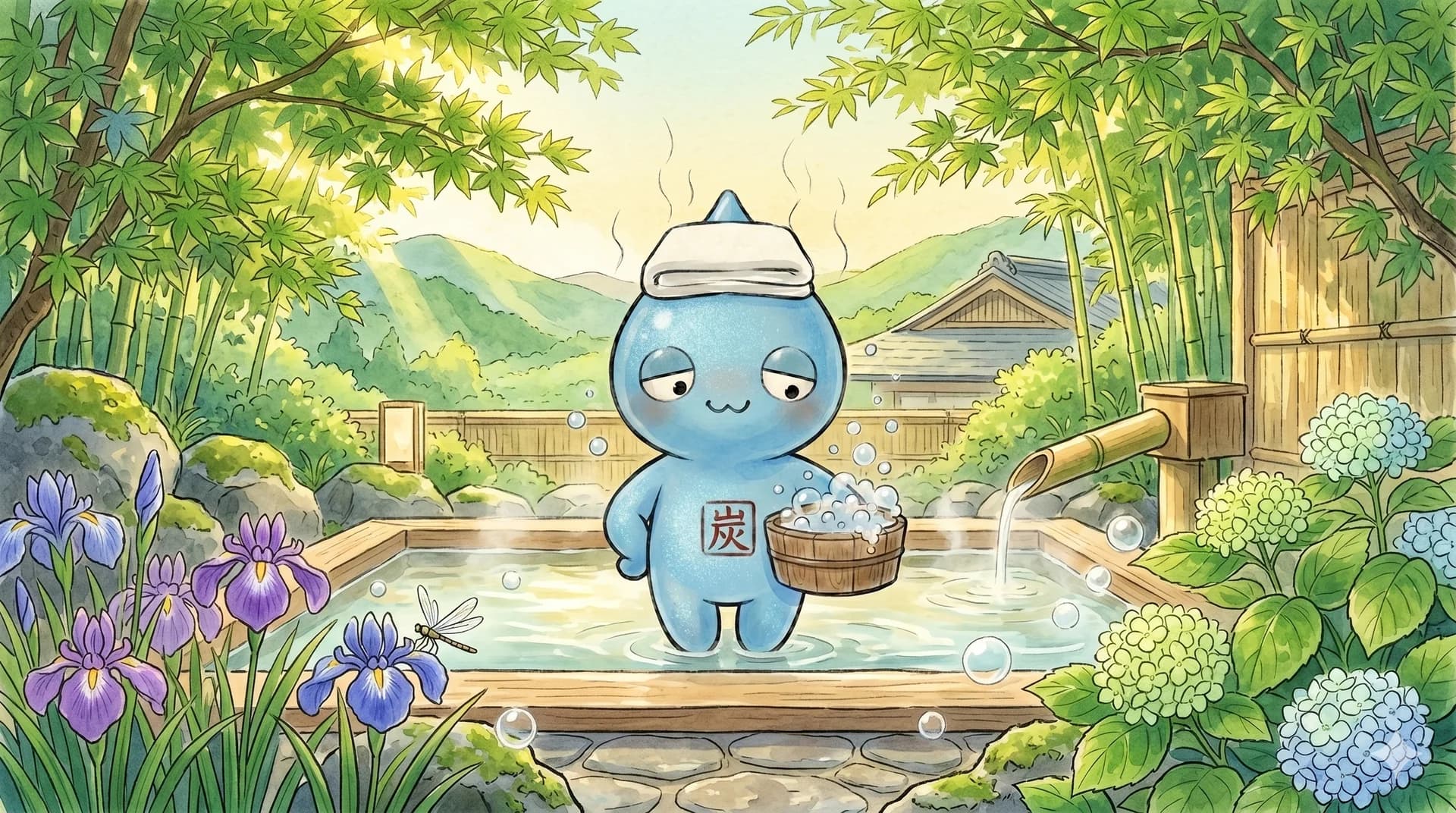
Carbon Dioxide Springs: "The Bubble Waters" — Indications & How to Bathe
Carbon dioxide springs contain CO₂ at 1,000 mg/kg or more — bubbles adhere to skin on bathing, earning the nickname "the bubble waters." CO₂ absorbed through skin is said to dilate capillaries, warming the body even in lukewarm water (35–38°C) with less cardiac strain.

Ferruginous Springs: Iron-Rich, Rust-Red Waters & Their Drinking Indication
Ferruginous springs contain iron ions (Fe²⁺ + Fe³⁺) at 20 mg/kg or more. Clear at the source, they turn reddish-brown or golden on contact with air. Iron-deficiency anemia is its official drinking indication.

Acidic Springs: Strongly Antibacterial Waters & Their Skin Indications
Acidic springs contain hydrogen ions at 1 mg/kg or more (typically pH 2–3). Their strong antibacterial action is indicated for atopic dermatitis, plaque psoriasis, and epidermoid suppuration. Note: contraindicated for sensitive skin and elderly guests with dry skin — always confirm before bathing.

Iodine-Containing Springs: A Non-Volcanic Rarity & Its Drinking Indication
Iodine-containing springs hold iodide ions (I⁻) at 10 mg/kg or more, mainly found in non-volcanic geological strata. Clear at first, they turn yellow when left to stand. Drinking is indicated for dyslipidemia. Note: persons with hyperthyroidism should be cautious.

Sulphur Springs: Milky White Waters & Their Skin Indications
Sulphur springs contain total sulphur at 2 mg/kg or more. Their signature milky-white color and boiled-egg aroma (hydrogen sulphide) are icons of Japanese onsen culture. Indicated for atopic dermatitis, plaque psoriasis, and chronic eczema. The hydrogen sulphide type is also indicated for peripheral circulatory failure.

Radioactive Springs: Traditional Radon Waters & Their Indications
Radioactive springs contain radon (Rn) at 30×10⁻¹⁰ Ci/kg (8.25 Mache units) or more. Indicated for hyperuricemia (gout), rheumatoid arthritis, and ankylosing spondylitis. The trace radioactivity levels are comparable to natural background radiation in daily life, and the short radon half-life (3.8 days) means it does not accumulate in the body.