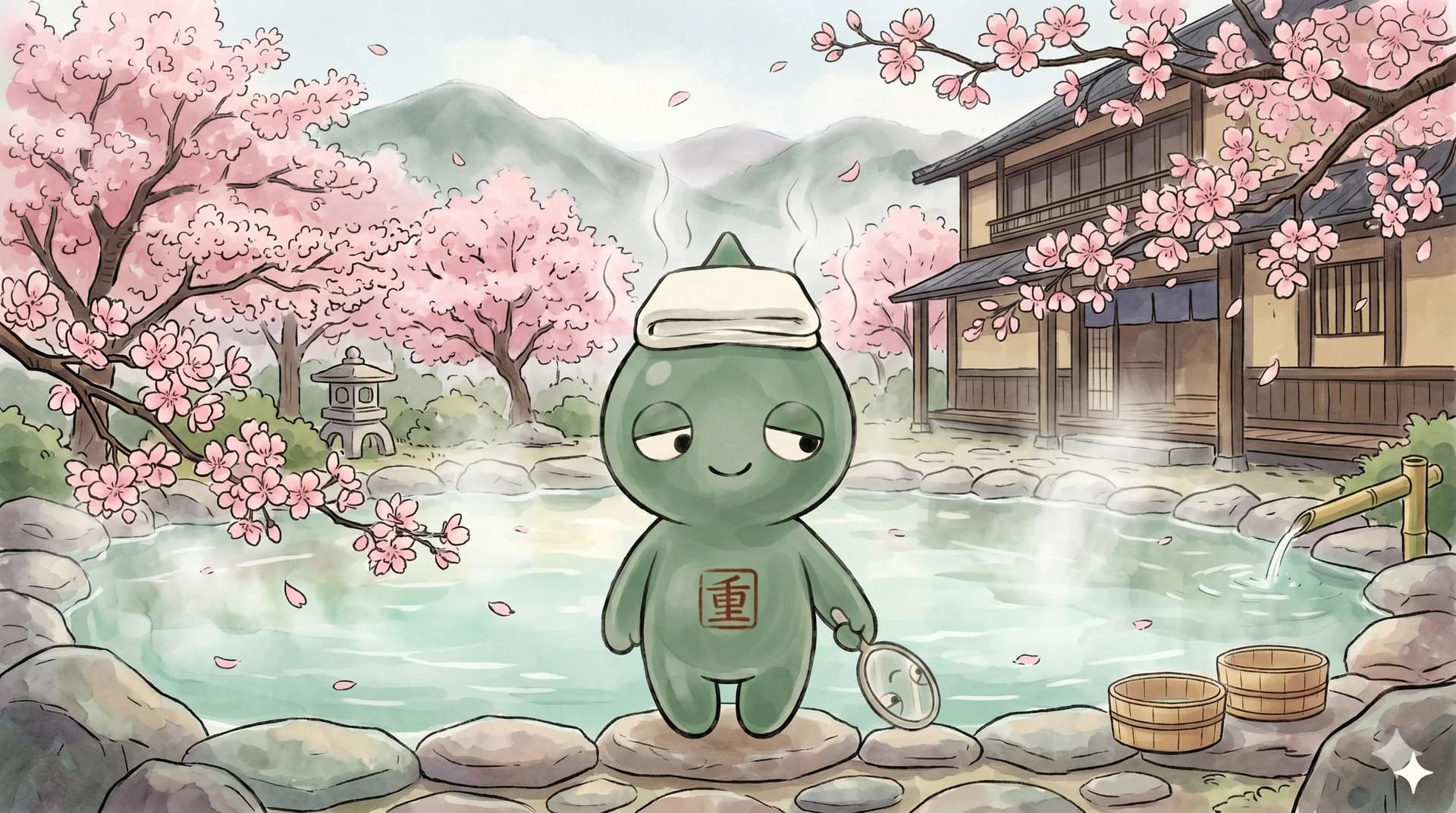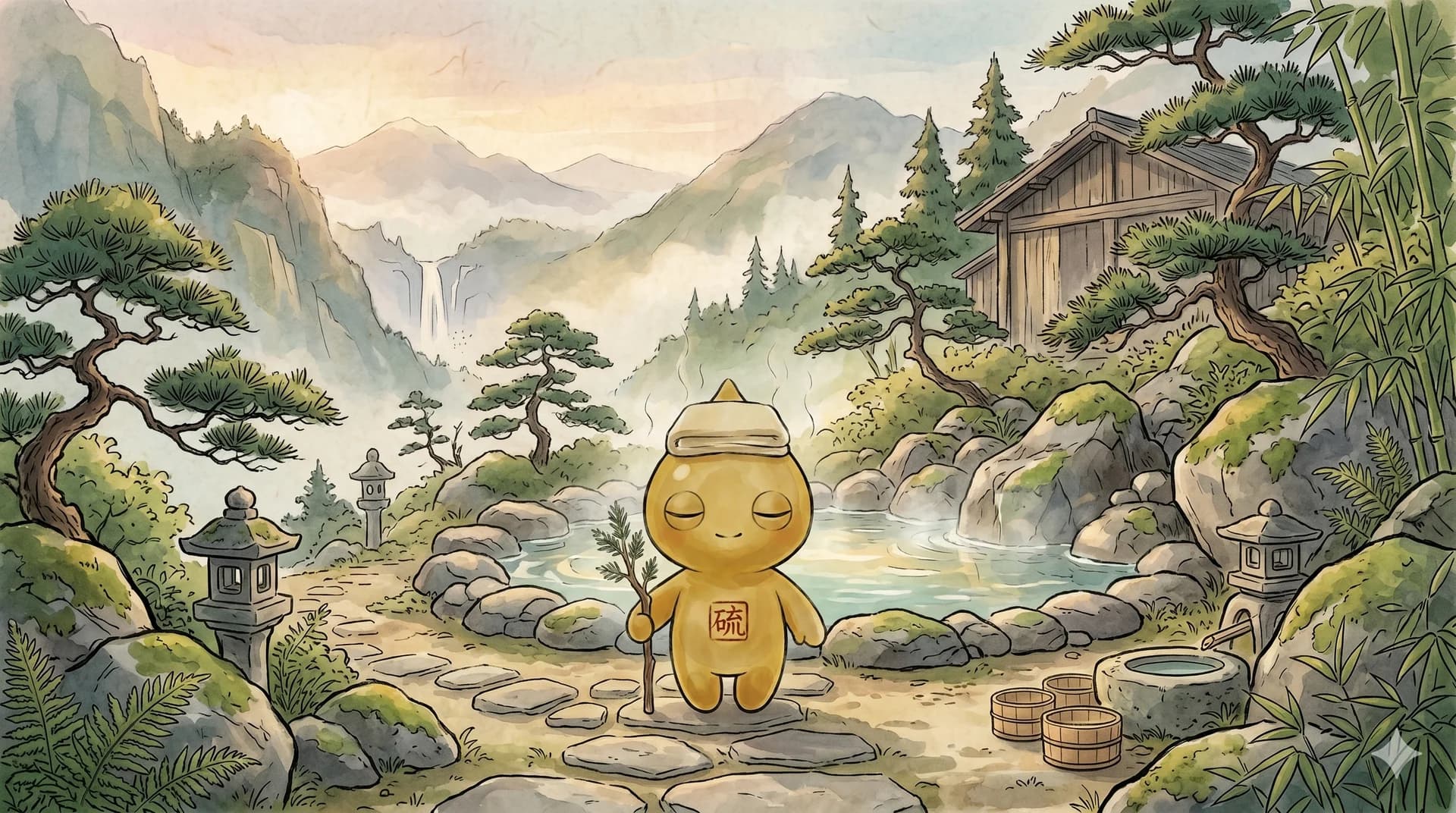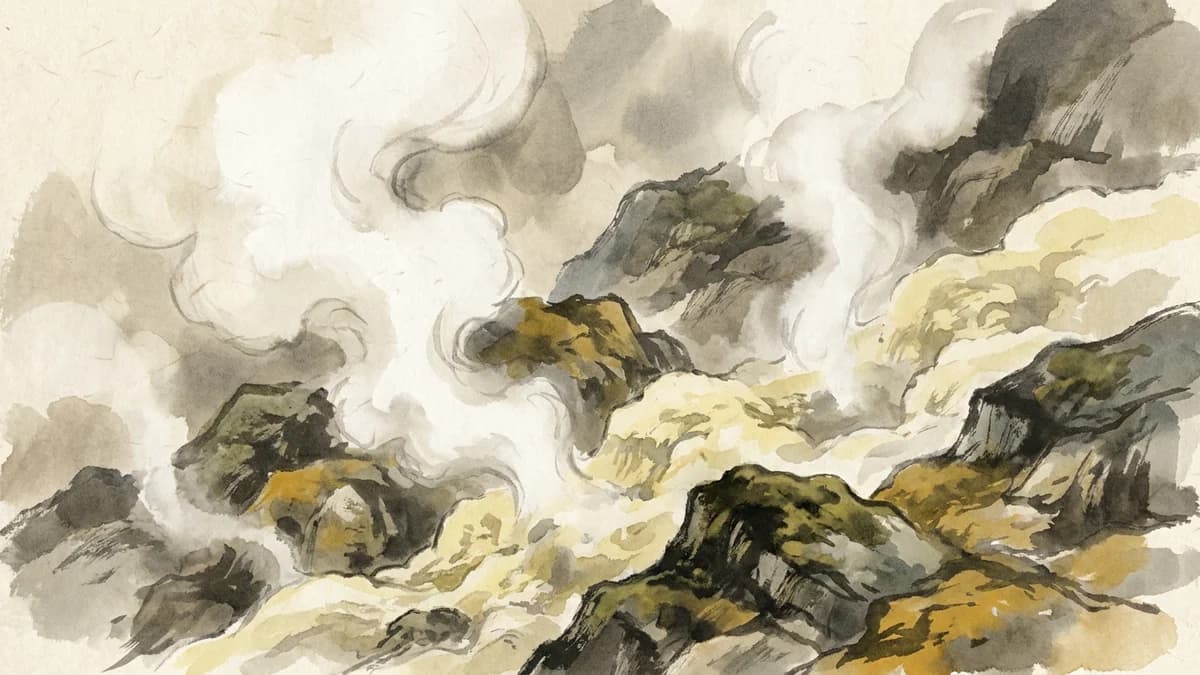
What is a Sulphur Spring?
A sulphur spring contains total sulphur (S) at 2 mg or more per kilogram of spring water. Two subtypes exist: the hydrogen sulphide type (H₂S dominant) and the sulphur type (HS⁻ dominant).
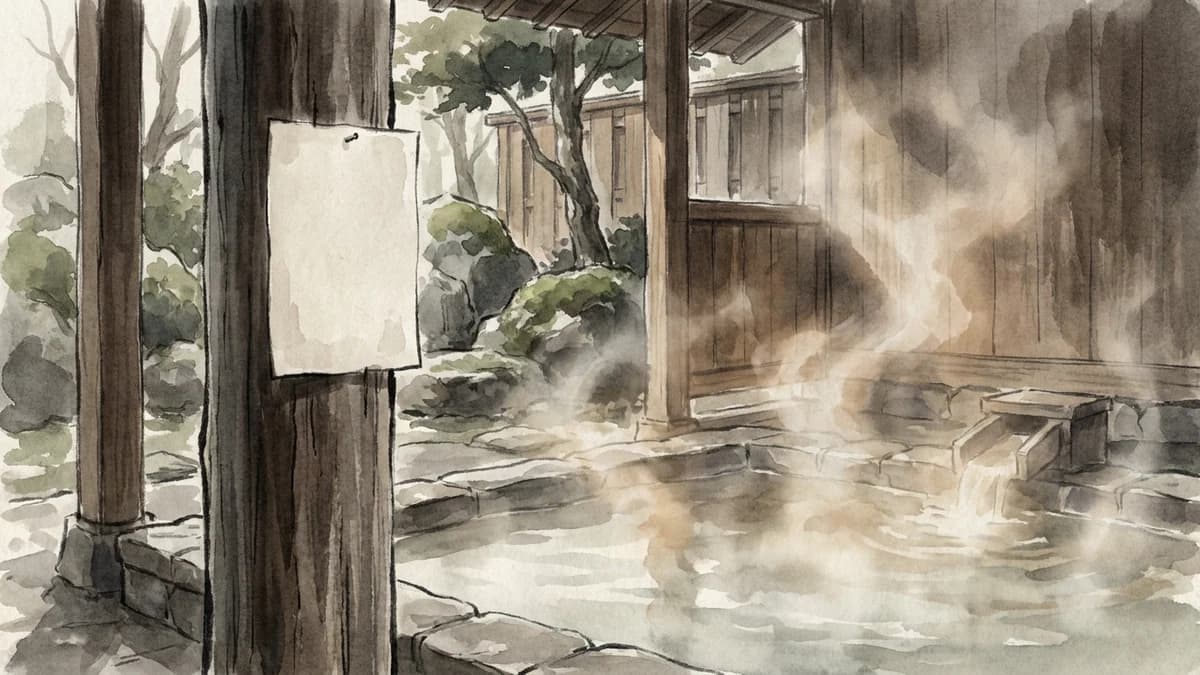
Although clear at the source, the water oxidizes in air to produce milky-white, blue, or greenish turbidity. The unmistakable boiled-egg smell of hydrogen sulphide is a beloved hallmark of Japanese hot springs — Manza Onsen (Gunma) and Shiobara Onsen (Tochigi) are famous examples.
Indications for Bathing
- Atopic dermatitisThe hydrogen sulfide in these springs is said to have bactericidal properties, and bathing is said to leave the skin feeling smooth. This condition is listed among the indications for these springs. Bathing is best during remission, as it can be irritating during severe flare-ups.
- Plaque psoriasisThe sulfur components in the water are said to have bactericidal properties, and psoriasis is listed among the indications for sulfur springs. Bathing is also said to leave the skin feeling smooth.
- Chronic eczemaChronic skin inflammation is listed among the indications for sulfur springs. The water is said to have bactericidal properties, and bathing is said to leave the skin feeling smooth.
- Epidermoid suppurationThis refers to pyoderma, or pus-forming bacterial skin infections, which is listed among the indications for sulfur springs. The sulfur components are said to have a strong bactericidal effect.
For the hydrogen sulphide type*, peripheral circulatory failure is added to the above indications.
Indications for Drinking
- Impaired glucose tolerance (diabetes)Impaired glucose tolerance (diabetes) is a recognized drinking indication for sulfur springs under Japan's Ministry of the Environment guidelines.
- Dyslipidemia (high cholesterol)Drinking water from sulfur springs is also officially indicated for those with high cholesterol. The dissolved sulfur compounds are believed to have a positive effect on lipid metabolism.
How to Bathe in a Sulphur Spring
- Remove silver jewelry (rings, necklaces, watches) before bathing — sulphur causes blackening (silver sulphide).The sulfur compounds in the water, such as hydrogen sulfide, will chemically react with silver, causing it to tarnish and turn black. This process forms silver sulfide, which is difficult to remove. Be sure to take off any silver accessories to prevent permanent discoloration.
- Traditionally, bathers seeking skin therapy pat dry without rinsing — rinse off if you feel irritation.
- Hydrogen sulphide collects at low levels — even outdoors, be mindful of ventilation.Hydrogen sulfide gas, the source of the characteristic 'rotten egg' smell, is heavier than air and can pool in low-lying, poorly ventilated spaces. Inhaling it in high concentrations can be dangerous, so always be aware of air circulation, even in outdoor baths, to ensure safety.
Related Onsen Facilities
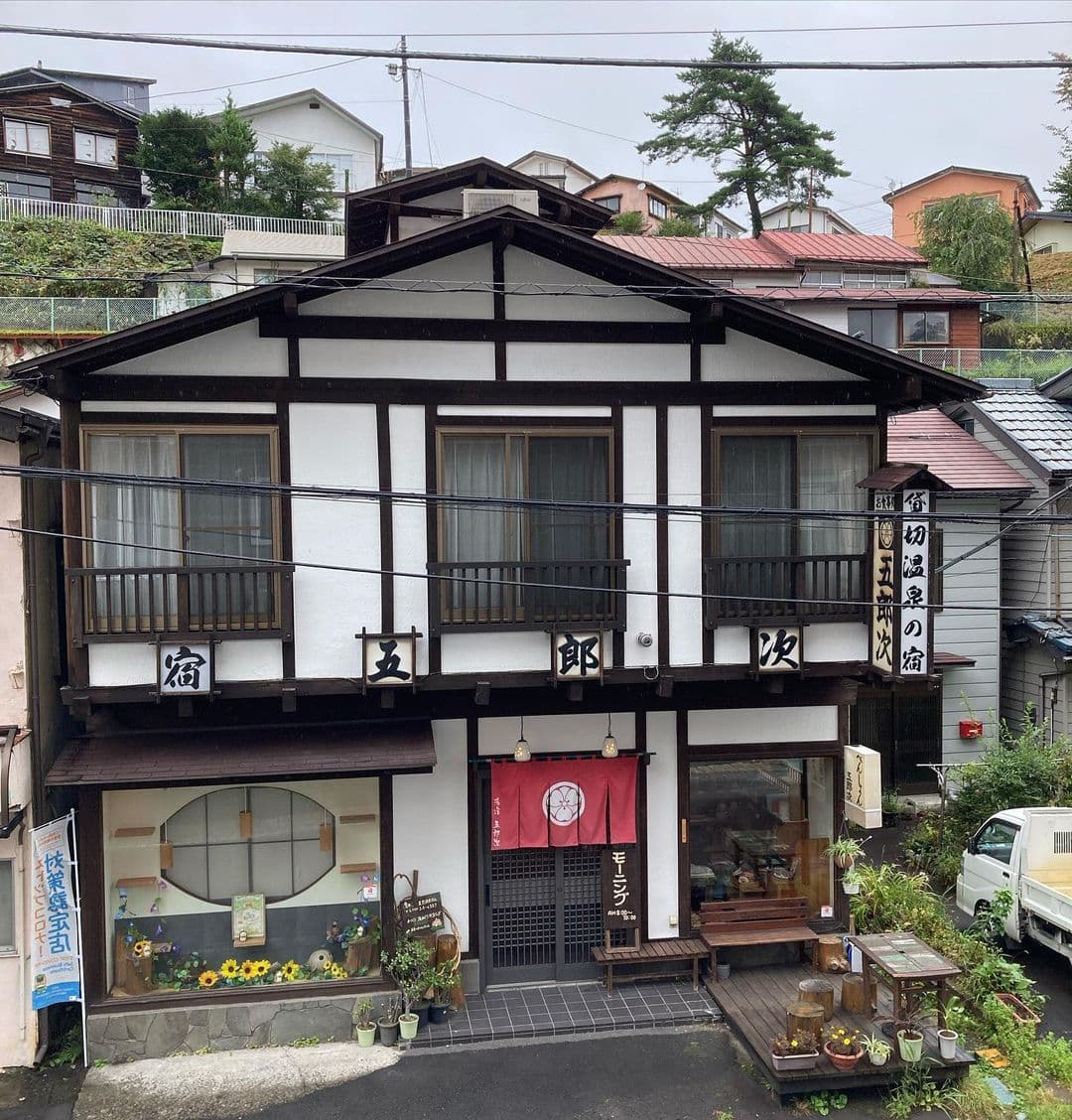


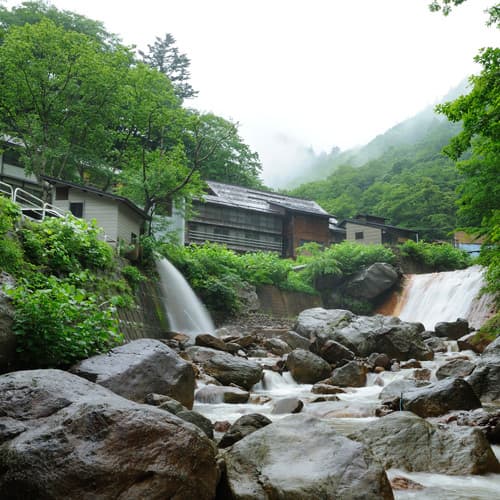

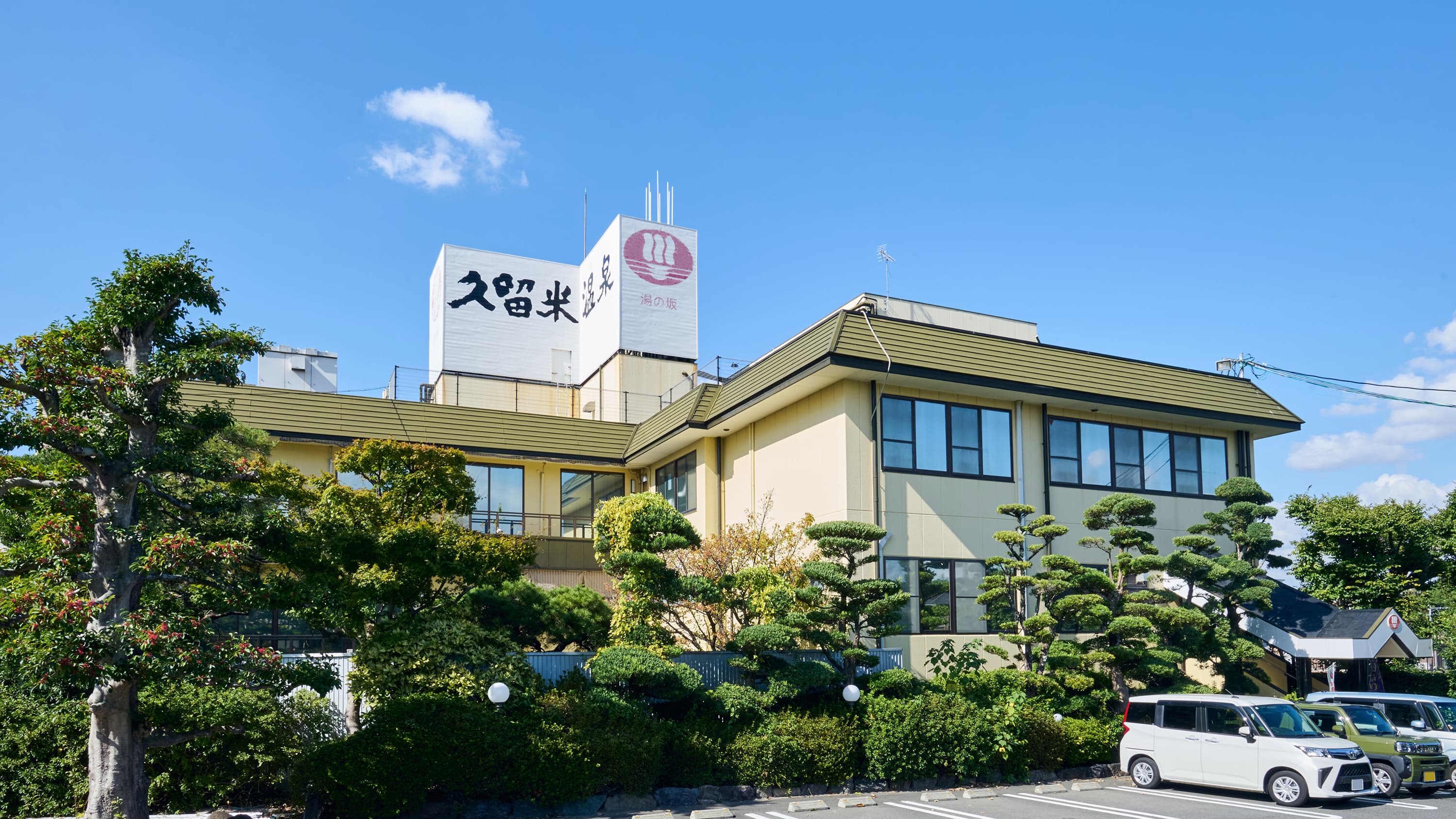


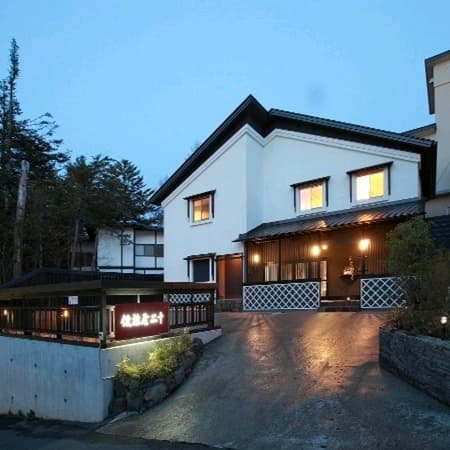

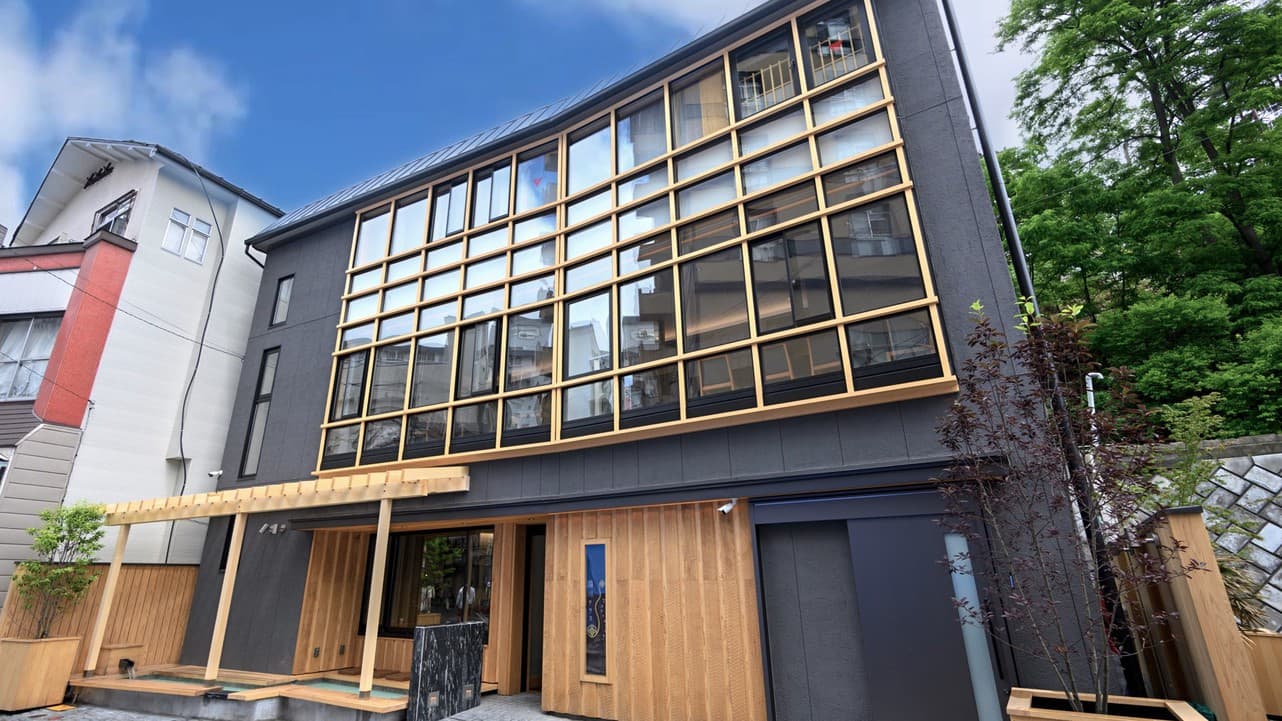





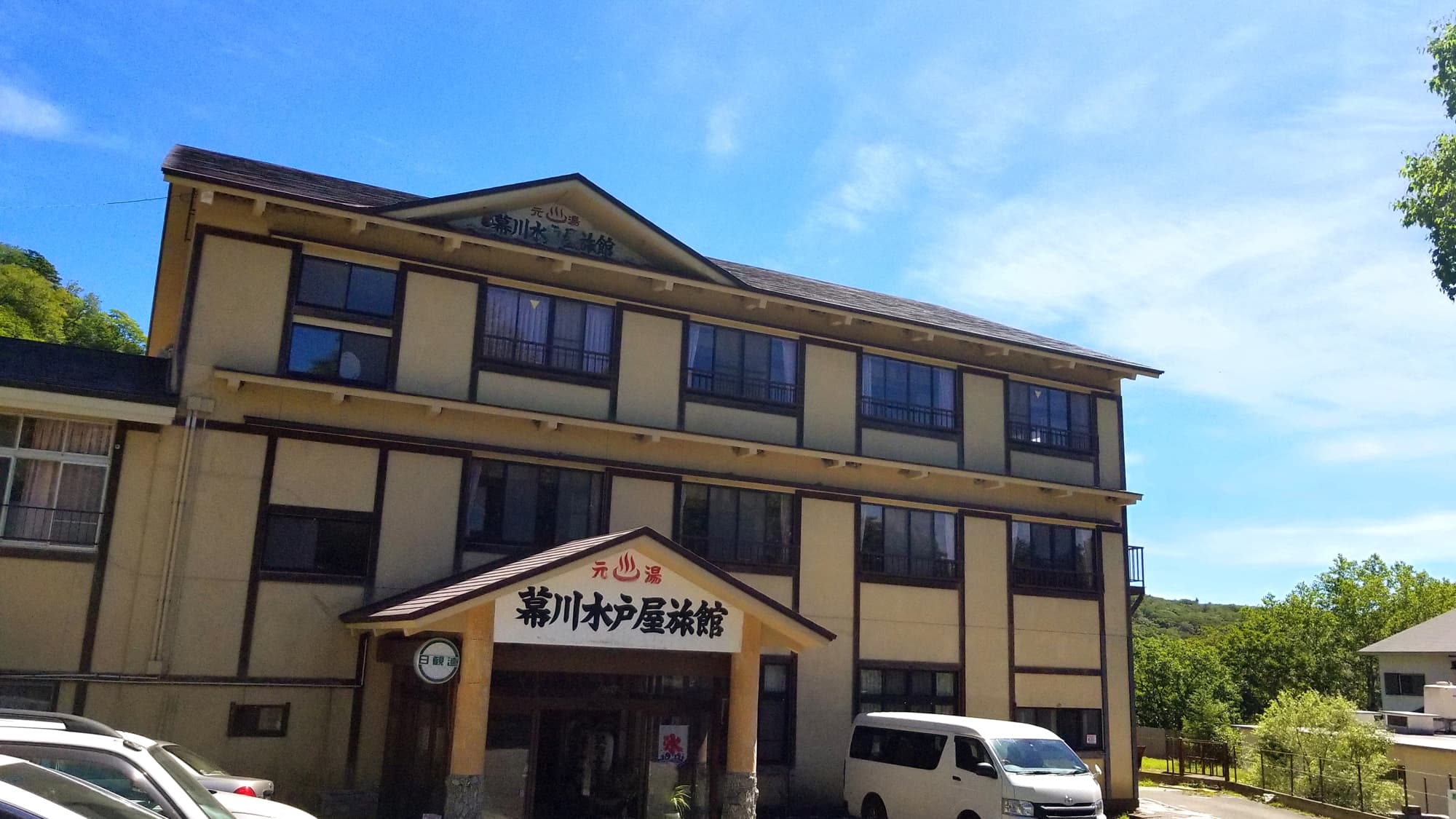


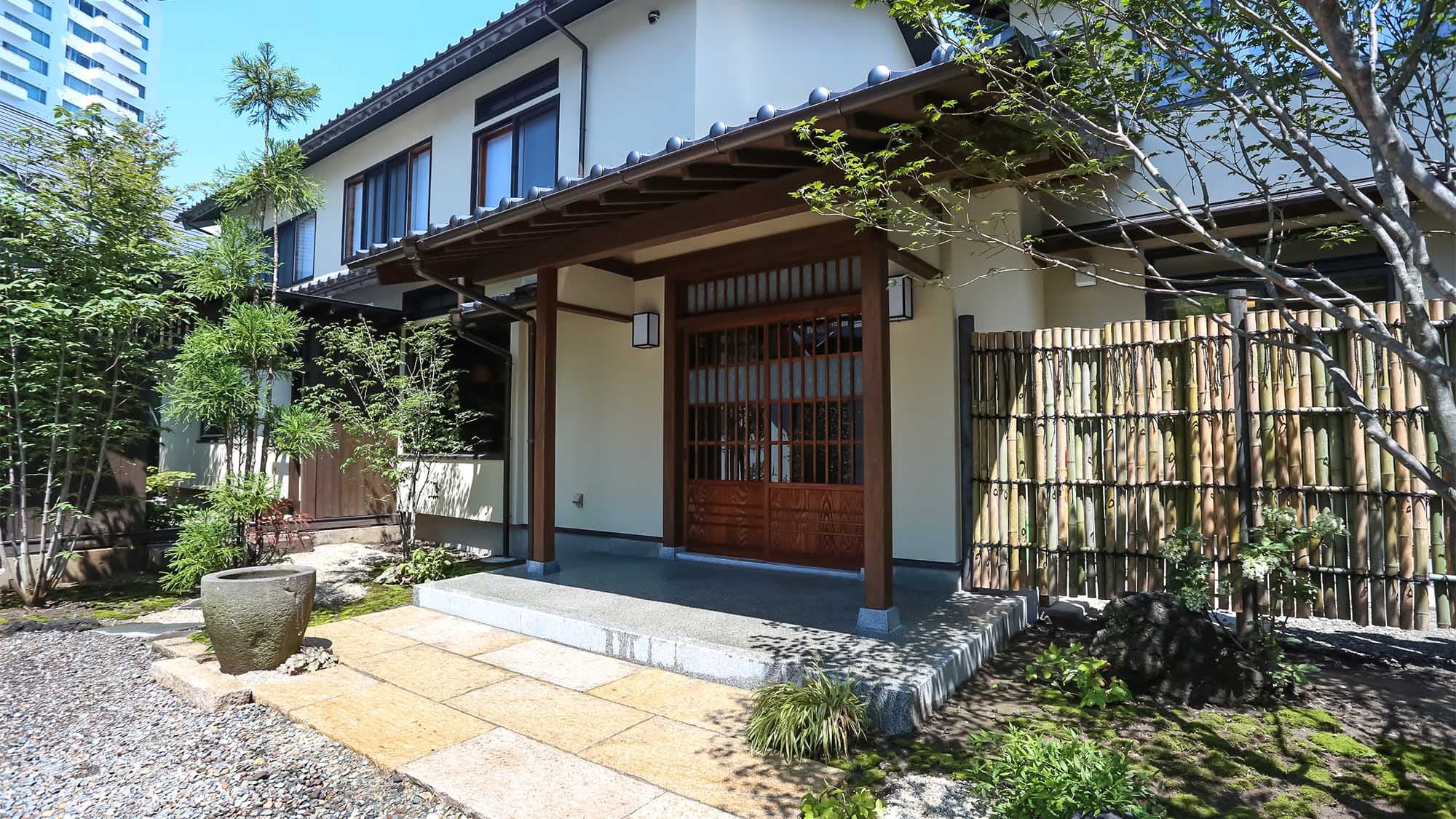
Choose a ryokan by how you bathe
Onsen towns are often rural with patchy Wi-Fi and limited public transport. Sort out data, tours and a car before you go.
- Japan eSIMAiralo
- Japan eSIMYesim
- Tours, passes & transfersGetYourGuide
- Tours, passes & transfersKKday
- Car rentalDiscover Cars
Includes affiliate links
References
Famous Onsen Areas with Sulphur Spring
Check access and tourist information on each onsen area column
Related Articles