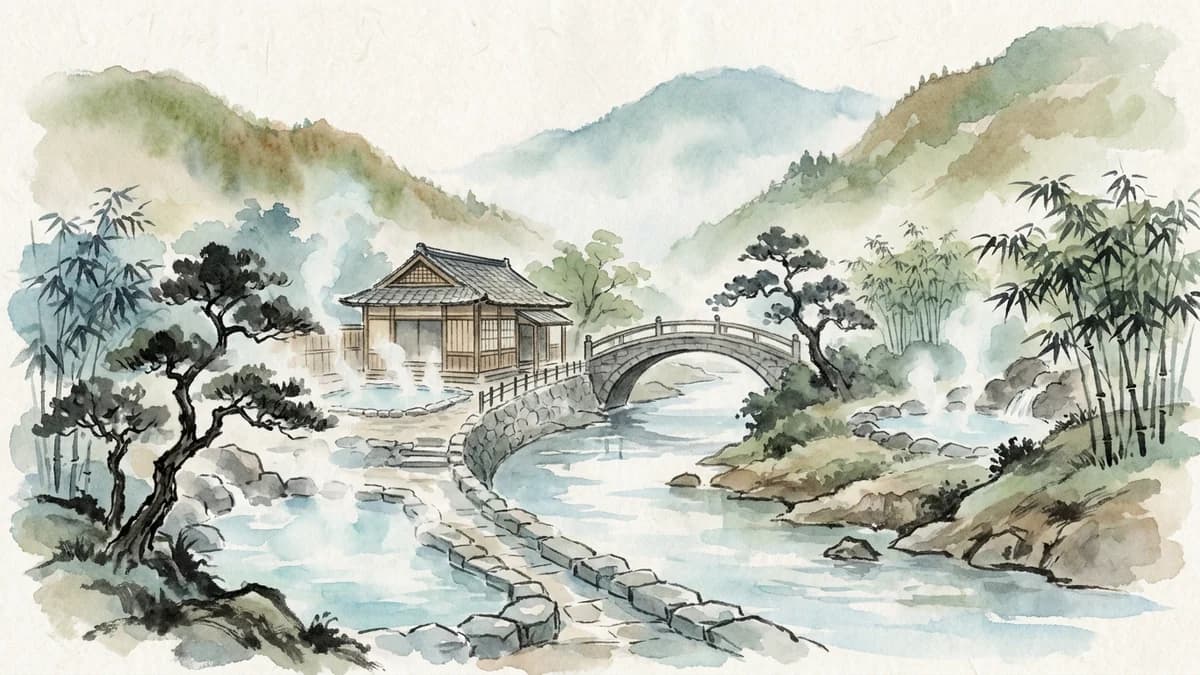
Hinagu Onsen is known for its Simple Hot Spring; listed indications for this spring type include Fatigue, Insomnia. Choose an inn by spring type, benefits and amenities, and book directly.
See inns in Hinagu OnsenOn this page you can filter Hinagu Onsen inns by spring type, benefits, tattoo-friendly, private bath and in-room open-air bath, and book on each property's Agoda or Rakuten page.
Compare & book inns in Hinagu Onsen
Awaiting analysis(1)
Overview
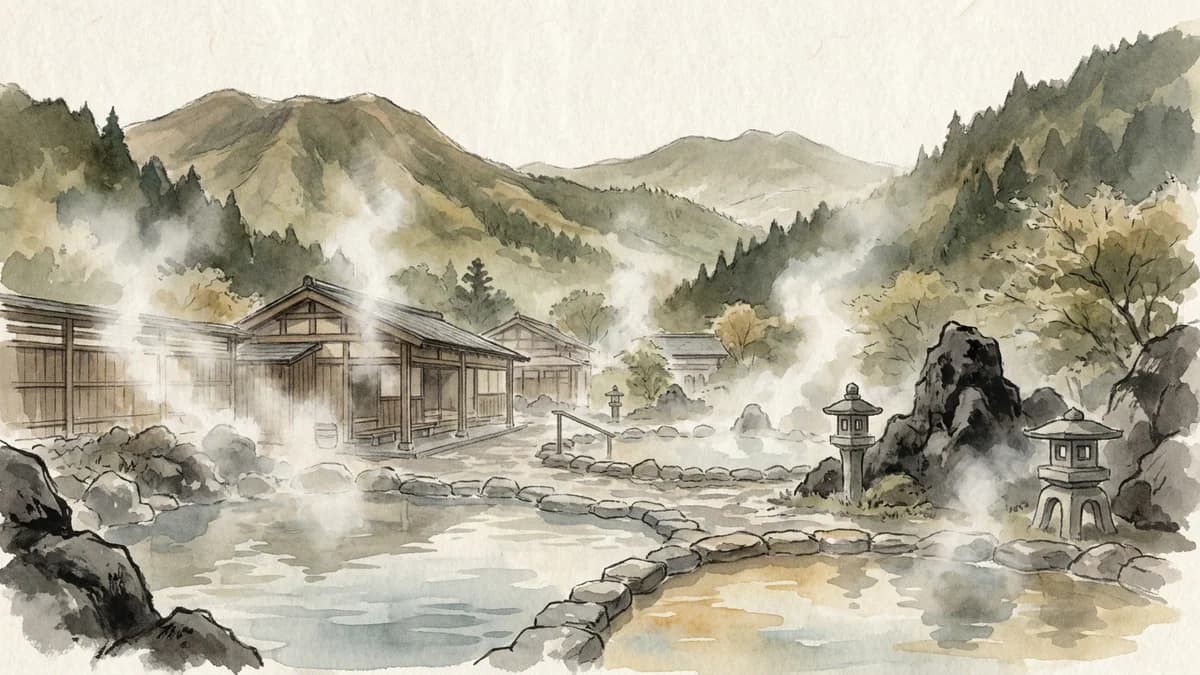
Hinagu Onsen, one of Kumamoto Prefecture's oldest hot spring areas, is said to have been discovered in 1409 during the Muromachi period. According to legend, a samurai named Rokuro Hamada found the spring after a divine revelation in a dream while searching for a cure for his father's sword wound.
During the Edo period, it flourished as an official spa (ochaya) of the Hosokawa clan of the Higo domain, serving as a retreat for the feudal lord and a rest stop during their 'sankin-kotai' journeys to Edo (present-day Tokyo). This historical background has left the town with a charmingly nostalgic, retro atmosphere reminiscent of the Showa era.
A key symbol of Hinagu Onsen is the Kinparo ryokan, a three-story wooden inn designated as a National Registered Tangible Cultural Property. The town's tranquil hot springs and streetscape have also attracted many literary figures, including the wandering haiku poet Santoka Taneda and the famous couple Akiko and Tekkan Yosano.
Signature Spring Qualities & Benefits
The main spring type is a weak alkaline simple thermal spring, which is very gentle on the skin. The water is clear and colorless, sometimes with a faint sulfur scent. Its mild properties make it suitable for everyone from babies to the elderly, and it is believed to promote deep relaxation.
- CutsHinagu Onsen is historically known as the "hot spring for wounds," a reputation stemming from a legend about healing sword injuries. The gentle, weakly alkaline simple spring water is low in irritants, which may help to soothe minor cuts and support the body's natural healing process.
- Poor circulation
- Depressive states
- Dry skinThe onsen's weakly alkaline water is famously smooth and gentle, earning it the nickname "hot spring for beautiful skin." This type of water may help to soften the outer layer of the skin and provide a moisturizing effect, making it suitable for those with dry skin conditions.
- Weak gastrointestinal function
- Autonomic instability
Water Characteristics & Best Season to Visit
The spring temperature is relatively high, ranging from 42°C to 51°C (108°F to 124°F), with an abundant flow. Many ryokans and public baths feature 'gensen kakenagashi'—free-flowing hot spring water straight from the source, allowing you to fully experience the natural benefits of the onsen.
Spring and autumn are highly recommended for their mild weather, perfect for strolling around town. Winter offers a unique experience, as some inns feature 'Banpeiyu-buro'—baths with the world's largest citrus fruit, a local Yatsushiro specialty, floating in the water. The refreshing citrus aroma combined with the warm spring water is an exceptional treat.
Access
Nearby Attractions & Local Cuisine
- Hinagu Chikuwa (a handmade fish cake, a local favorite)
- Banpeiyu (the world's largest citrus, a winter specialty)
- Kinparo Ryokan (a wooden inn and National Registered Tangible Cultural Property)
- Yatsushiro Castle Ruins (a castle park with remaining stone walls)
- Shohinken Garden (a beautiful garden at the site of a former lord's villa)
- Kumamon Port Yatsushiro (a port of call for large cruise ships)
- Hinagu Onsen Shrine (a shrine built in gratitude for the discovery of the onsen)
MORE WITH THE SAME SPRING TYPE
Loved the Simple Spring of Hinagu Onsen? Try these too
Picked from onsen across Japan where you can enjoy the same Simple Spring.




Q & A
Frequently Asked Questions
Tap any question to expand the answer
Can I narrow down to only inns with a hot-spring analysis in Hinagu Onsen?
Can I find tattoo-friendly inns with private baths or in-room open-air baths in Hinagu Onsen?
Onsen towns are often rural with patchy Wi-Fi and limited public transport. Sort out data, tours and a car before you go.
- Japan eSIMAiralo
- Japan eSIMYesim
- Tours, passes & transfersGetYourGuide
- Tours, passes & transfersKKday
- Car rentalDiscover Cars
Includes affiliate links
References
Famous Onsen Areas with Simple Spring
Check access and tourist information on each onsen area column
Related Articles