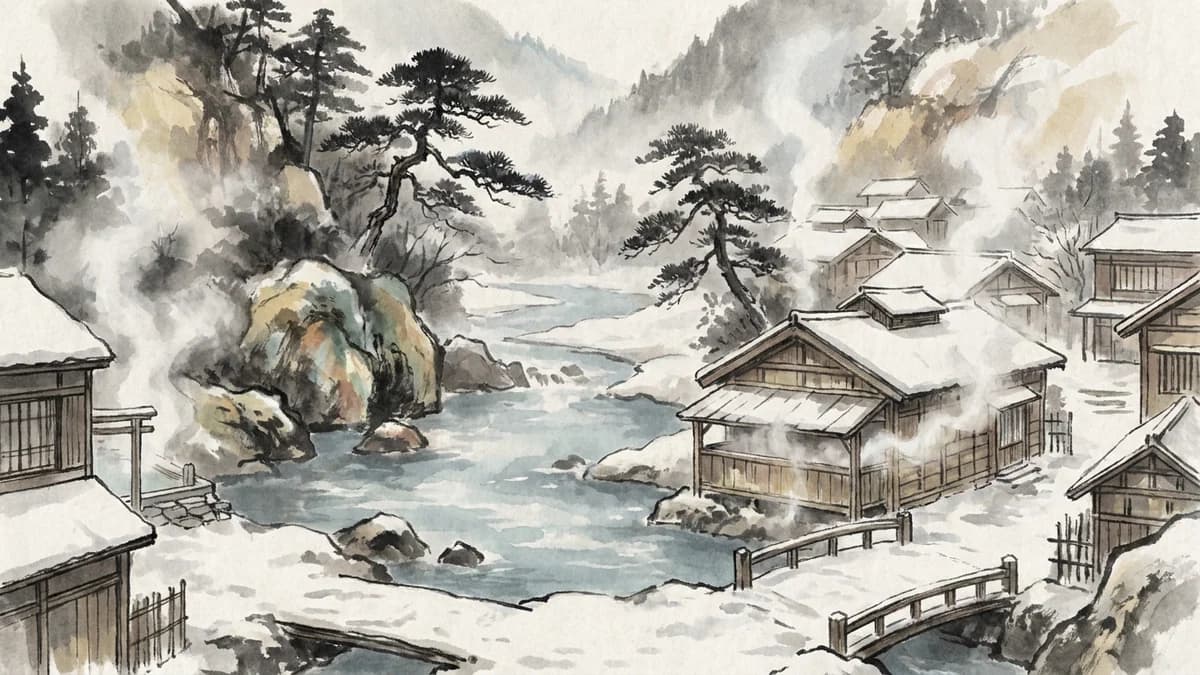
Bessho Onsen is known for its Sulfur Spring; listed indications for this spring type include Dry Skin / Atopy, Asthma. Choose from 1 inns with a hot-spring analysis on file, filtering by spring type, benefits and amenities, and book directly.
See inns in Bessho OnsenOn this page you can filter Bessho Onsen inns by spring type, benefits, tattoo-friendly, private bath and in-room open-air bath, and book on each property's Agoda or Rakuten page.
Compare & book inns in Bessho Onsen

Awaiting analysis(7)
Overview
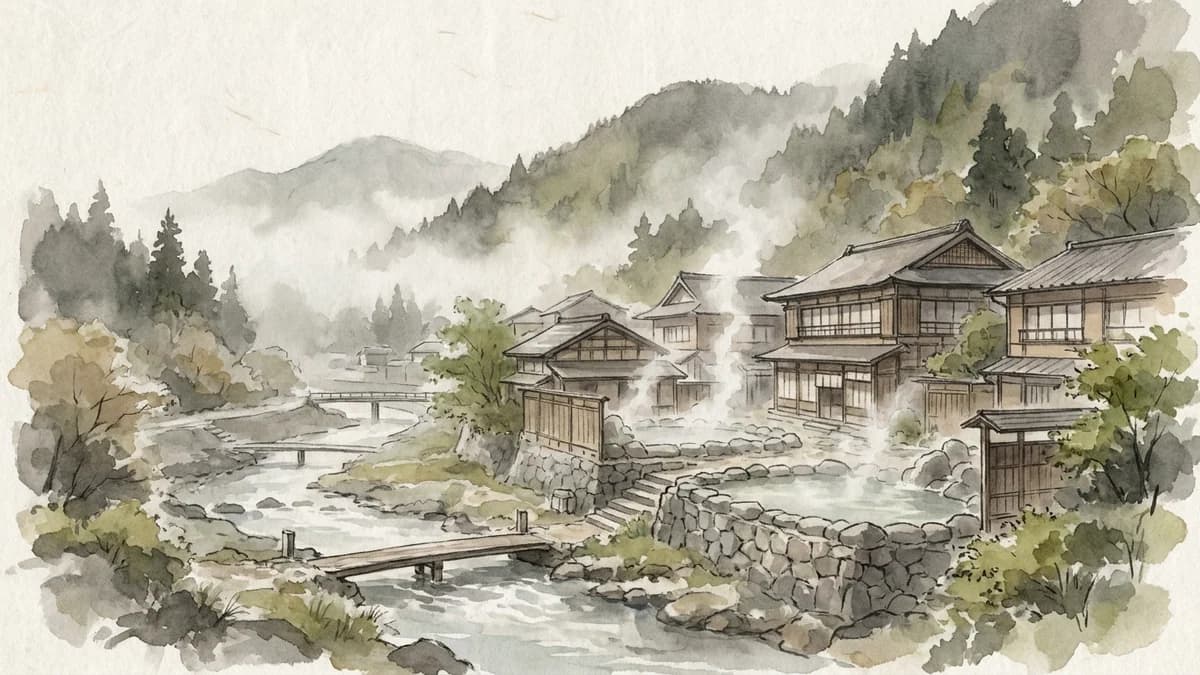
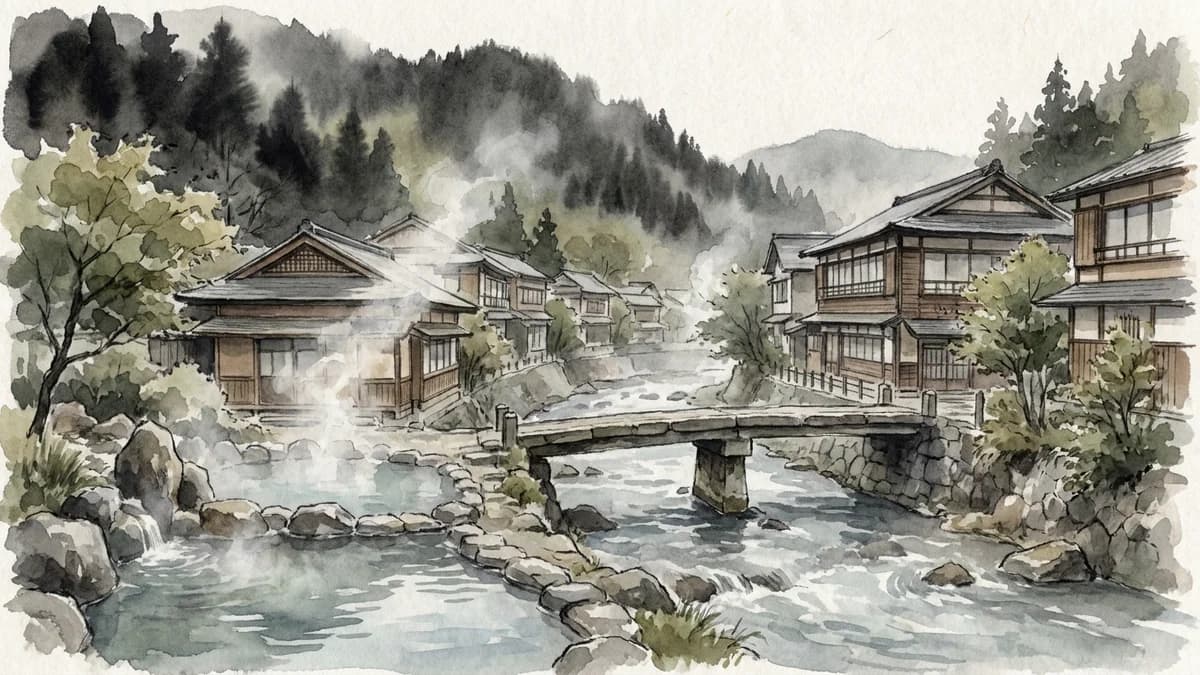
Bessho Onsen, located in Ueda, Nagano Prefecture, is the oldest hot spring resort in the Shinshu region, with a history stretching back over 1,400 years. Its ancient origins are even mentioned in Sei Shonagon's "The Pillow Book," a classic work of Japanese literature from the Heian period, where it was called "Nanakuri-no-yu."
Situated in the western part of the Shioda Plain, often called the "Kamakura of Shinshu," the town developed around Kitamuki Kannon, a temple famous for warding off evil. Visitors can still enjoy a traditional onsen experience by hopping between the three public bathhouses (soto-yu): Daishi-yu, Ishi-yu, and O-yu. The area is dotted with historic temples and shrines, creating a tranquil and charming atmosphere.
Signature Spring Quality and Benefits
The waters of Bessho Onsen are a mildly alkaline simple sulfur spring, which is quite rare in Japan. With a faint scent of sulfur, the water is known as a "bihada-no-yu" (beauty-enhancing water) because it leaves the skin feeling exceptionally smooth. The alkaline properties are believed to help exfoliate old skin cells, potentially promoting skin turnover.
- Atopic dermatitisAtopic dermatitis is listed among the indications for sulfur springs, and the weakly alkaline, simple sulfur water is said to leave the skin feeling smoother.
- Psoriasis vulgarisPsoriasis vulgaris is listed among the indications for sulfur springs, and Bessho's weakly alkaline water is said to leave the skin feeling soft.
- Chronic eczemaChronic eczema is listed among the indications for sulfur springs such as this simple sulfur spring. The weakly alkaline water is said to cleanse gently and leave the skin feeling smooth.
- Impaired glucose tolerance (diabetes)
Water Characteristics and Best Season
The source temperature is high at around 51°C (124°F), but it is cooled to a comfortable temperature at each facility. Many ryokans and public baths offer luxurious bathing in free-flowing spring water directly from the source. The most distinctive feature is the silky-smooth feeling on the skin after bathing. While enjoyable year-round, spring, when the new green leaves complement the historic temples, and autumn, with its beautiful foliage, are particularly wonderful times to visit for both hot springs and sightseeing.
Access
Nearby Sightseeing & Local Cuisine
- Kitamuki Kannon-do Temple: An ancient temple facing Zenko-ji Temple; it's said that praying at both brings greater blessings.
- Anraku-ji Temple: Famous for housing Japan's only wooden octagonal three-storied pagoda, a National Treasure.
- Joraku-ji Temple: A temple associated with the Hojo clan, featuring a thatched-roof main hall and a stone pagoda.
- Soto-yu Meguri (Public Bath Hopping): Enjoy visiting the three atmospheric public baths: Daishi-yu, Ishi-yu, and O-yu.
- Ueda Castle Ruins Park: The former stronghold of the Sanada clan, now a famous spot for cherry blossoms and autumn leaves.
- Oshibori Udon: A local specialty of the Ueda region, where udon noodles are dipped in the juice of grated spicy daikon radish.
- Shinshu Soba: A must-try dish, these fragrant buckwheat noodles are grown in the cool climate of the Shinshu region.
- Kurumi Ohagi: A sweet treat made with an abundance of locally grown walnuts.
MORE WITH THE SAME SPRING TYPE
Loved the Sulphur Spring of Bessho Onsen? Try these too
Picked from onsen across Japan where you can enjoy the same Sulphur Spring.




Q & A
Frequently Asked Questions
Tap any question to expand the answer
Can I narrow down to only inns with a hot-spring analysis in Bessho Onsen?
Can I find tattoo-friendly inns with private baths or in-room open-air baths in Bessho Onsen?
Onsen towns are often rural with patchy Wi-Fi and limited public transport. Sort out data, tours and a car before you go.
- Japan eSIMAiralo
- Japan eSIMYesim
- Tours, passes & transfersGetYourGuide
- Tours, passes & transfersKKday
- Car rentalDiscover Cars
Includes affiliate links
References
Famous Onsen Areas with Sulphur Spring
Check access and tourist information on each onsen area column
Related Articles