4 Spring Types Indicated for Skin Wounds
Japan's Ministry of the Environment lists cuts as a bathing indication for four spring types. Their mechanisms differ, but antiseptic action, skin softening, and blood-flow promotion are common threads.
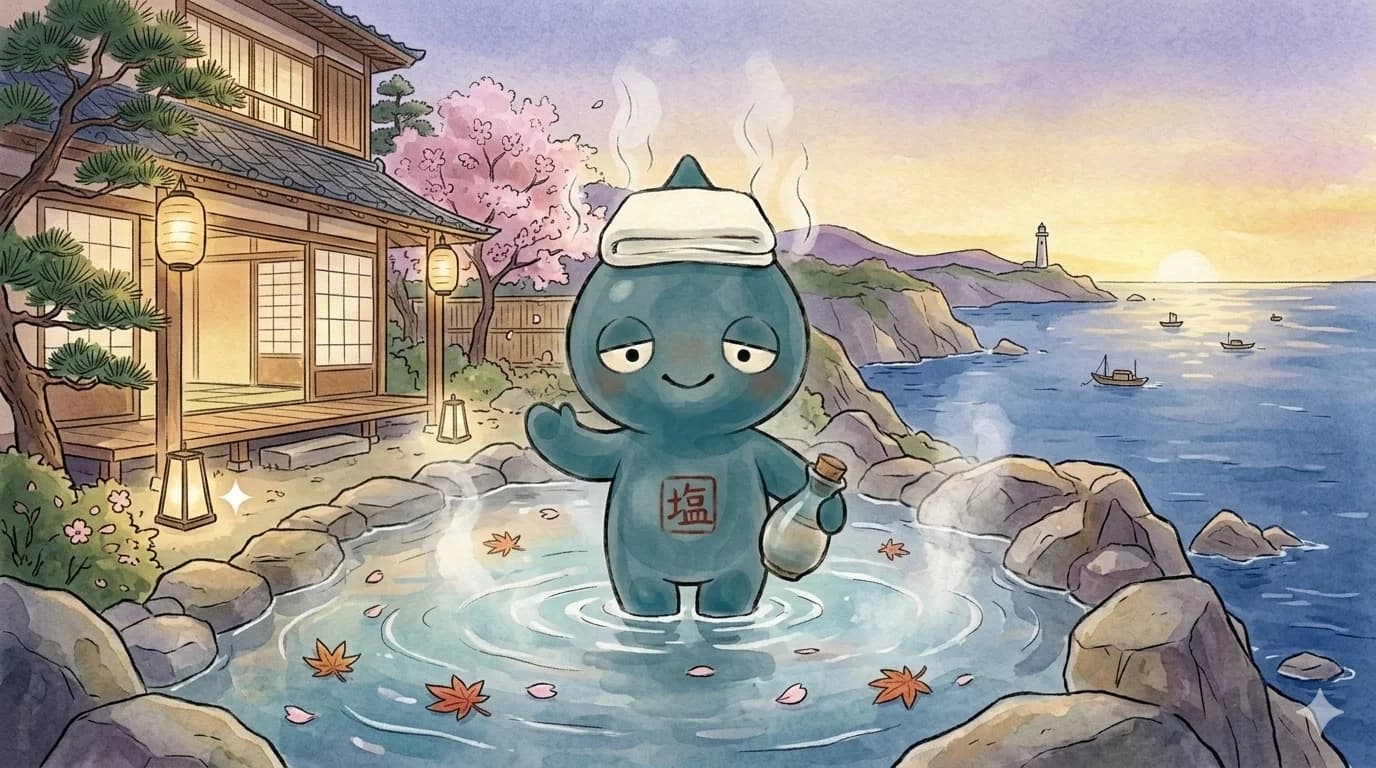
Salt is said to adjust osmotic pressure at the wound, aiding antisepsis and tissue repair — known as the "wound spring"
Said to soften and cleanse the skin; famed as the "beautiful skin spring"
Traditionally called the "wound spring" and "drinking spring"; said to promote circulation and tissue repair
CO₂ absorbed through skin is said to dilate peripheral vessels, boosting blood and oxygen supply around the wound site
Onsen minerals involved in wound healing
Said to balance osmotic pressure at the wound and support antisepsis and tissue repair.
The core of the "wound spring" — said to tighten skin and promote tissue repair.
Said to dilate peripheral vessels and raise blood and oxygen supply around the wound.
How hot springs are thought to aid wound healing
The salt in chloride springs balances osmotic pressure at the wound and curbs bacterial growth, while the calcium and sulfate ions of sulfate springs encourage skin tightening and tissue repair. In carbon dioxide springs, CO₂ absorbed through the skin widens peripheral vessels, increasing the blood flow that delivers oxygen and nutrients to the wound area. Together these are thought to create an environment in which wounds heal more readily.
Filter on the map & mineral viewer
Filter by the relevant spring types and find onsen you like from the map or list. Compare analysis details with the mineral viewer.
Precautions for bathing with wounds
- Deep wounds, suspected infections, and post-suture wounds are contraindicated — get medical clearance firstBathing with serious wounds poses a significant risk of infection or delayed healing. Onsen water, while mineral-rich, is not sterile and can introduce bacteria into deep tissues. Always consult your doctor before bathing to ensure your wound is stable enough for onsen therapy.
- Ask your doctor whether a superficial, closed wound is safe for bathingEven for minor cuts where the skin appears closed, it's crucial to get a professional medical opinion. A doctor can properly assess if the epidermal barrier is sufficiently healed to prevent irritation or infection from the onsen's mineral components and heat.
- Keep soaks short (5–10 min) to prevent the wound from becoming waterloggedProlonged exposure to hot water can cause the skin around the wound to become overly soft and saturated, a state known as maceration. This weakens the healing tissue, delays closure, and can increase the risk of the wound reopening or becoming infected.
- Pat dry gently with a clean towel and protect the wound after bathingAfter your bath, proper aftercare is essential to support healing. Gently pat the area dry with a fresh, clean towel to avoid irritating the new skin, and allow the wound to air-dry completely before applying a protective dressing. This helps prevent bacterial growth in a moist environment.
Related Onsen Facilities















INTERACTIVE TOOLS
Tools available only on this site
Rank the best onsen for your symptom
Rank onsens whose spring types are indicated for Wound Healing using analysis-sheet data, then jump straight to booking sites by area.
See ranked picks →Filter qualifying onsens on the interactive map
Plot only hot springs with spring types indicated for Wound Healing on a nationwide map. Secondary filters available for distance and lodging category.
Open on map →Quick path from onsen pages to booking sites
From related onsen pages indicated for Wound Healing, jump to Agoda, Rakuten Travel, Booking.com, and other booking sites in a single click.
View related onsens →Visualize chemical basis with real numbers (pH, minerals, temperature)
Filter spring types indicated for Wound Healing on /explore, then refine by pH, temperature, and natural-flow status. Make decisions on actual measurements (metasilicic mg/kg, pH, temperature) — not AI-generated approximations.
Refine by real data →* Booking links on each onsen page (Agoda, Rakuten Travel, Booking.com, etc.) contain affiliate links. Please check each booking site for the latest terms and pricing.
Choose a ryokan by how you bathe
Onsen towns are often rural with patchy Wi-Fi and limited public transport. Sort out data, tours and a car before you go.
- Japan eSIMAiralo
- Japan eSIMYesim
- Tours, passes & transfersGetYourGuide
- Tours, passes & transfersKKday
- Car rentalDiscover Cars
Includes affiliate links
References
Explore Spring Types for This Condition
Related Articles