Rules for the Changing Room (Dressing Room)
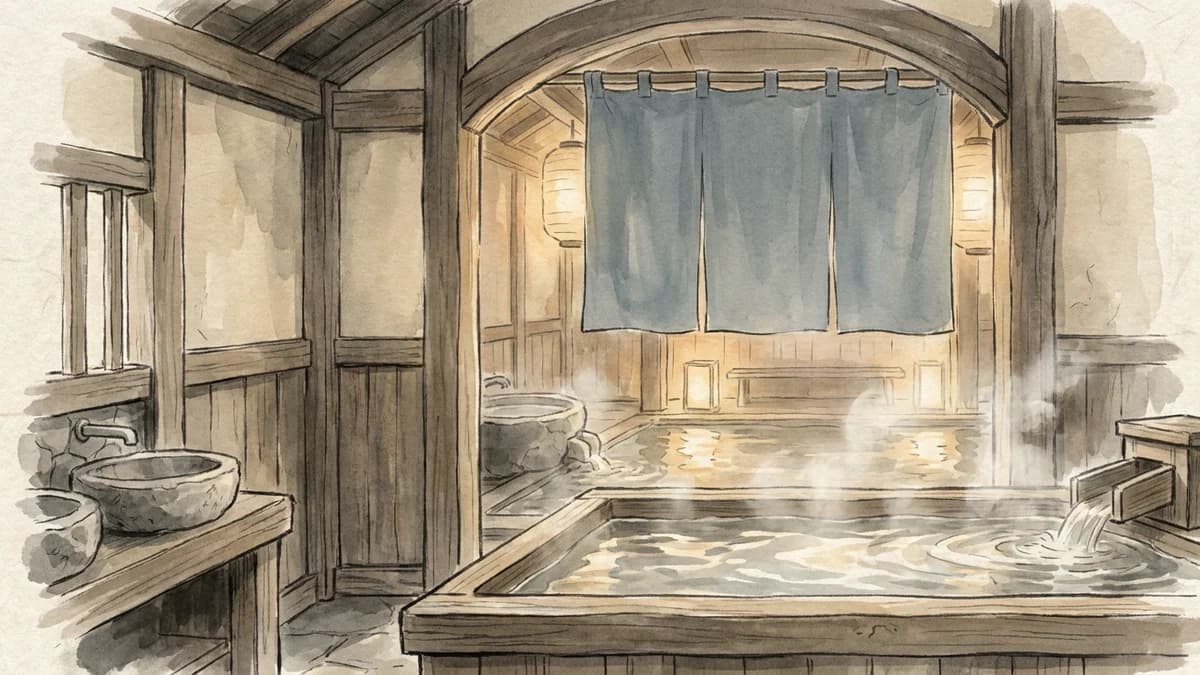
Before entering the bathing area, you must pass through the changing room (脱衣所, datsu-i-jo). Store all valuables in the provided lockers. Cameras, smartphones, and any device with a camera are not permitted in the changing room or bathing area — this protects the privacy of other bathers.
- Lock valuables, phones, and cameras in the locker before enteringMost facilities prohibit bringing phones, cameras, or other smart devices into the changing room to protect the privacy of all guests. Use the provided lockers to store these items along with any other valuables for safekeeping.
- Keep your belongings tidy in your basket so they do not inconvenience othersChanging rooms are a shared space, so be considerate of those around you. Place your clothes and personal items neatly inside your designated basket to avoid taking up extra space or mixing them with others' belongings.
- Dry your body thoroughly with your towel before stepping from the wet bathing area back into the dry changing roomTo keep the changing room floor dry and safe, please wipe off as much water as possible before re-entering from the bathing area. This simple step prevents slippery floors and helps maintain a clean, comfortable environment for everyone.
Before Entering the Bath: Rinse First (Kakеyu)
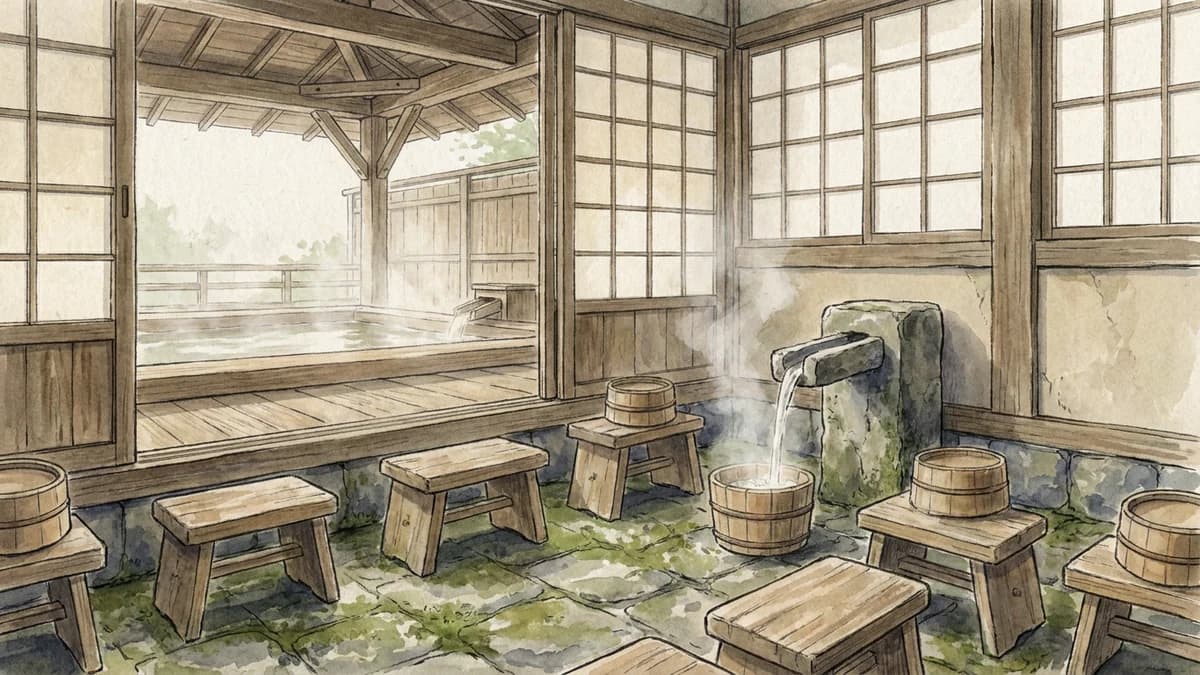
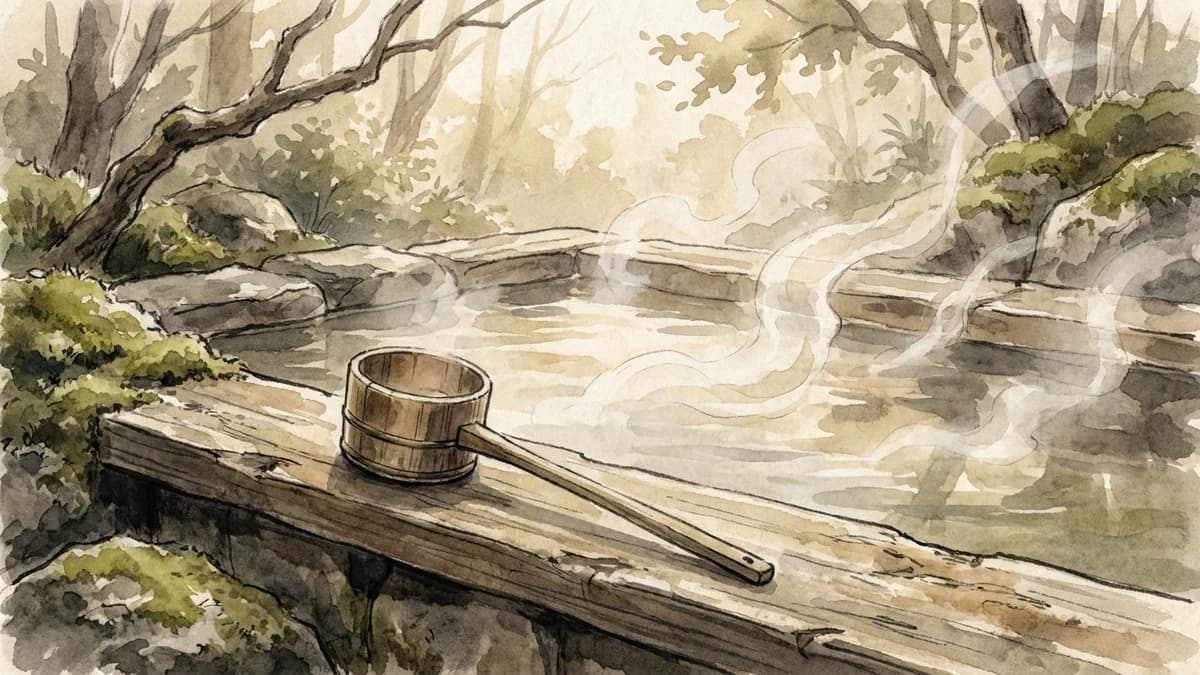
Always rinse your entire body before stepping into the communal bath. This is called kake-yu (掛け湯). Using the shower or a wooden bucket (桶, oke) at the washing area, pour water from your feet upward to your shoulders. This removes dirt and grime, and helps your body adjust to the hot water temperature — preventing sudden cardiac stress.
Using the Washing Stations
- Rinse the faucet and showerhead before and after useThis is a simple act of courtesy in a shared bathing space. A quick rinse before you begin ensures the station is clean for your own use. Rinsing again after you finish washes away any soap or hair, leaving the area tidy for the next person.
- Keep shampoo and soap lather contained — do not splash neighboursWashing stations are often arranged close to one another. Be mindful of where you aim the showerhead and how you lather up to avoid splashing soapy water onto the people next to you. It's a key part of showing consideration for fellow bathers.
- Do not occupy a washing station for an extended period; be mindful of others waitingEspecially during busy times, washing stations are a limited resource. Please be considerate of others who may be waiting for a spot to open up. Wash efficiently and avoid monopolizing a station for an extended period.
- Rinse the stool and bucket before returning them to their placeBefore you leave the washing station, give the small stool and bucket you used a thorough rinse with hot water. This removes any soap residue and hair, leaving them clean for the next bather. Return them to their original position.
Bathing in the Communal Bath
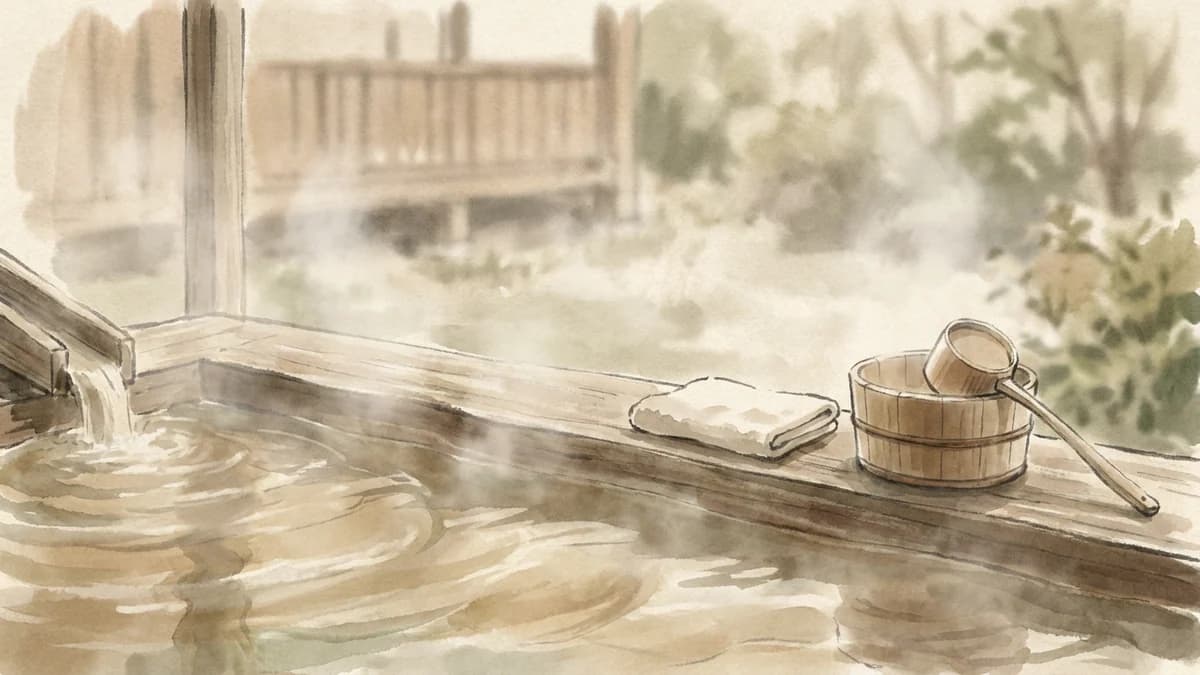
- Never put your towel into the bath water — this is unhygienic and prohibitedFor reasons of hygiene, your small wash towel must not touch the shared bath water. Instead, you can place it on your head—a popular and practical method—or leave it on the side of the bath.
- Do not use soap or shampoo inside the bathThe bathtub is strictly for soaking, not for washing your body. All scrubbing and rinsing with soap must be done beforehand in the designated washing area to keep the onsen water pure.
- Keep voices low; the onsen is a place of relaxation for everyoneAn onsen is a shared space for quiet contemplation and relaxation, not a swimming pool. Please be considerate of other bathers by keeping conversations brief and at a very low volume.
- Avoid monopolising space in the bath, especially during busy periodsOnsen are for everyone to enjoy, so be mindful of the space you occupy, especially in smaller tubs. Avoid stretching out or staying in one spot for too long when others are waiting to enter.
Choose a ryokan by how you bathe
Onsen towns are often rural with patchy Wi-Fi and limited public transport. Sort out data, tours and a car before you go.
- Japan eSIMAiralo
- Japan eSIMYesim
- Tours, passes & transfersGetYourGuide
- Tours, passes & transfersKKday
- Car rentalDiscover Cars
Includes affiliate links
References
EXPLORE RELATED TOPICS
Related Articles