History of Mixed Bathing in Japan
Mixed-gender bathing (konyoku, 混浴) was the norm in Japan until the Edo period. With the Meiji-era drive toward Westernisation, gender-separated baths became the standard, and mixed bathing facilities have since declined significantly. Today, konyoku onsen are a rare and cherished part of traditional Japanese hot spring culture.
Modern Mixed Bathing Styles
- Bathing suit / yu-ami-gi style: Guests wear a dedicated bathing garment (yu-ami-gi) or swimsuit — the most accessible format for international visitorsIn this modern style, all guests are required to wear either a personal swimsuit or a special rental garment called a yu-ami-gi. This approach makes the mixed-bathing experience more comfortable and accessible for a wider audience, including international visitors unfamiliar with traditional nude bathing.
- Bath towel style: Some facilities allow women to wrap themselves in a bath towel while bathingAt these establishments, women are permitted to wrap a large bath towel around themselves for modesty before entering and while soaking in the water. This is a common courtesy offered to make the experience more comfortable in a mixed-gender environment. Men are typically expected to follow traditional nude bathing etiquette.
- Traditional nude style: Found at some historically significant rural facilities; becoming increasingly rareThis is the original form of mixed bathing, rooted in a long history where bathing was a natural, communal activity. Guests bathe completely nude, following centuries of tradition. While this style is now increasingly rare, it can still be found at some historic, often rural, onsen that preserve this cultural practice.
Rules for Gender-Separated Baths
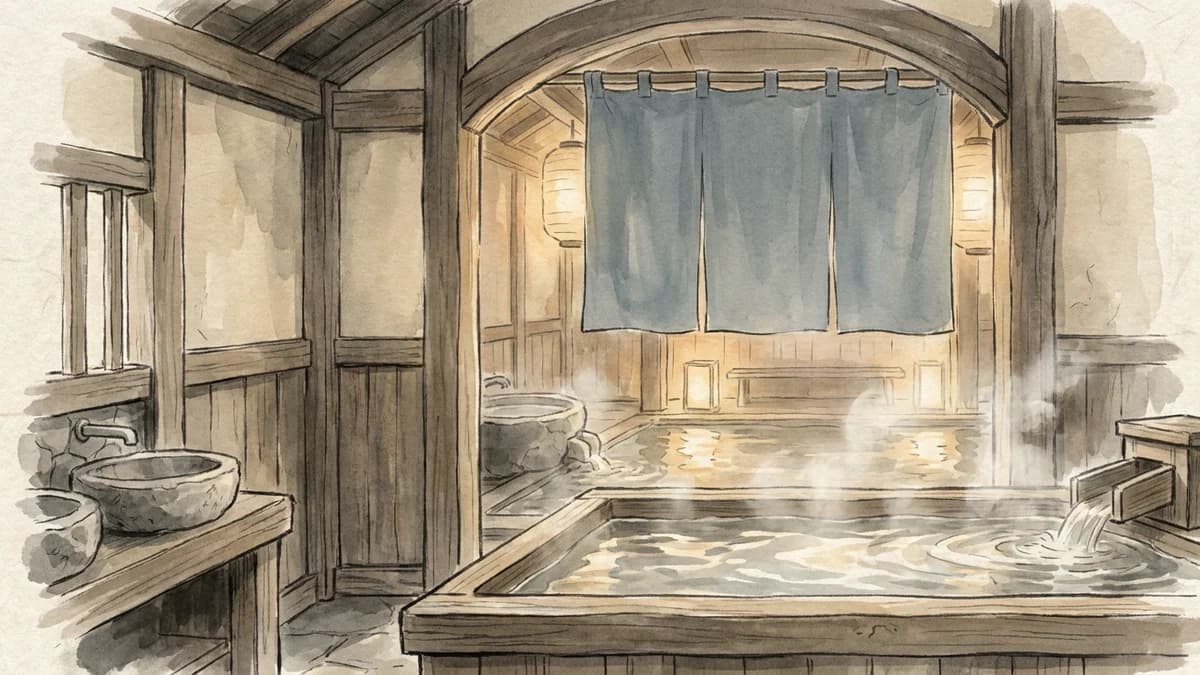
- Baths are divided into male (blue / ♂ sign) and female (red / ♀ sign) sections — always check the sign at the entranceMost Japanese bathing facilities have separate areas for men and women. The men's entrance is typically marked with the color blue and the symbol ♂, while the women's is marked with red and ♀. Confirming these signs is the first step to respecting bathhouse etiquette.
- Some facilities operate a rotation system (入れ替え制, irekae-sei) where male and female baths switch at a set time — check the schedule posted at the entranceThis system, known as irekae-sei, allows all guests to enjoy the different baths a facility may offer, such as ones with unique views. The times when access switches between men and women are clearly posted, so be sure to check the schedule at the entrance to know when to go.
- Entering the wrong bath is a serious breach of etiquette; verify the signage before stepping inAccidentally entering the bath designated for the opposite gender is considered a major mistake. Always double-check the color-coding and symbols on the curtains or signs at the entrance, especially if the facility uses a time-based rotation system for its baths.
Choose a ryokan by how you bathe
Curious about mixed bathing? See ryokan whose mixed baths we checked against their own pages, with bathing-wrap rules and women-only hours. Prefer to bathe together in private? A ryokan with a private bath works too.
Plan your onsen trip
Onsen towns are often rural with patchy Wi-Fi and limited public transport. Sort out data, tours and a car before you go.
- Japan eSIMAiralo
- Japan eSIMYesim
- Tours, passes & transfersGetYourGuide
- Tours, passes & transfersKKday
- Car rentalDiscover Cars
Includes affiliate links
References
Related Articles