MINERALS
Mineral Guide
Metasilicic acid and other key minerals
20 ARTICLES

Metasilicic Acid: The "Beauty Spring" Standard Mineral & Top 5 Onsen
Metasilicic acid (H₂SiO₃) is a natural moisturizer also found in skincare lotions. Hot springs containing more than 50mg/kg are called "beauty springs" — leaving skin hydrated long after bathing. This is one of the therapeutic spring criteria in Japan's Mineral Spring Analysis Guideline (Table 1-1).

Sodium ion: Main Effects & Top 5
Sodium ion (Na⁺) is the key component of chloride and bicarbonate springs. It forms a thin salt film on the skin, locking in warmth long after bathing.
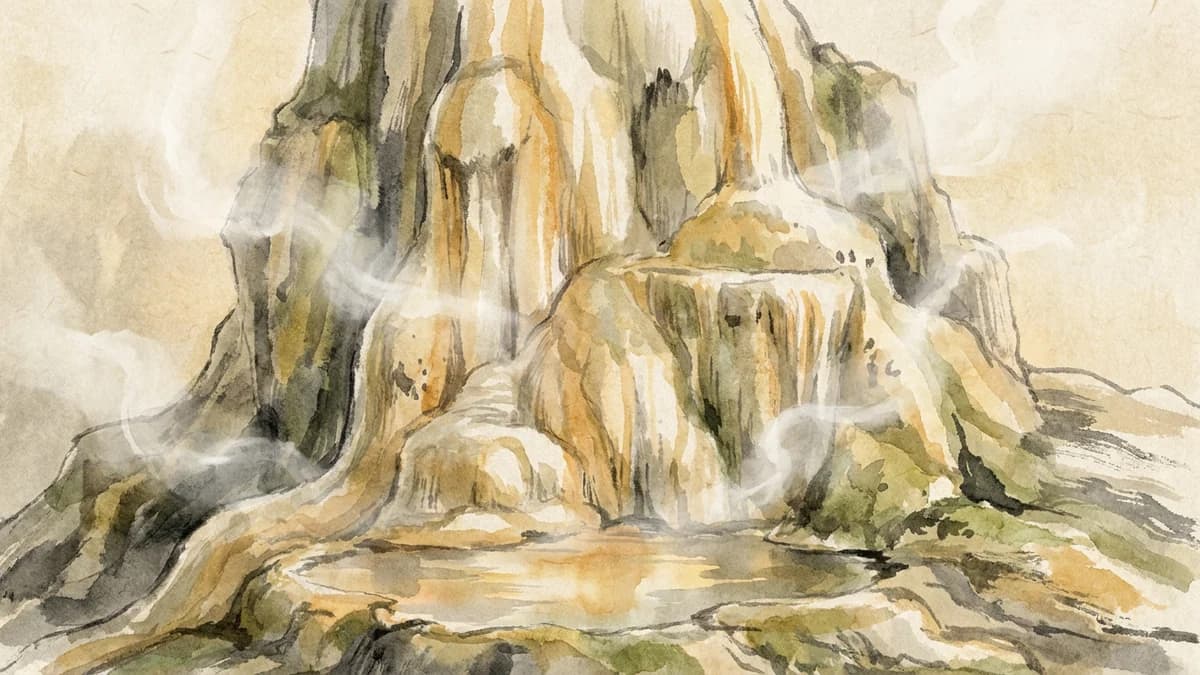
Calcium ion: Main Effects & Top 5
Calcium ion (Ca²⁺) exerts an astringent action that tightens the skin. It is also said to help soothe flushing and inflammation after bathing.

Magnesium ion: Main Effects & Top 5
Magnesium ion (Mg²⁺) is easily absorbed transdermally during bathing and is said to help relax muscle stiffness and support skin hydration.

Iron ion: Main Effects & Top 5
Iron(II) ion (Fe²⁺) is the marker of iron-rich springs. The water turns yellow-brown to red-brown when exposed to air, offering strong heat retention.

Sulfide ion: Main Effects & Top 5
Sulfide ions (S²⁻, HS⁻) are the key components of sulfur springs. They are said to have strong antibacterial action on the skin surface.

Bicarbonate ion: Main Effects & Top 5
Bicarbonate ion (HCO₃⁻) — the same ingredient as baking soda — gently removes old skin cells and sebum for silky-smooth skin. Known as the "beauty spring" (美人の湯).

Sulfate ion: Main Effects & Top 5
Sulfate ion (SO₄²⁻) is the main component of sulfate springs. Known as the "wound spring," it lists cuts as an indication and is said to moisturize and soothe.

Chloride ion: Main Effects & Top 5
Chloride ion (Cl⁻) is the main component of chloride springs. Like sea salt, it forms a thin film on the skin trapping heat, earning the nickname "hot spring" (熱の湯).

Fluoride ion: Main Effects & Top 5
Fluoride ion (F⁻) is best known as the cavity-preventing mineral, but in hot springs it is also said to have a gentle antibacterial action on the skin. Drinking quantity limits apply.

Iodide ion: Main Effects & Top 5
Iodide ion (I⁻) at ≥ 10 mg/kg classifies the spring as an "iodine spring." Common in non-volcanic springs, it is said to have antibacterial action, and high cholesterol is listed as a drinking indication.

Bromide ion: Main Effects & Top 5
Bromide ion (Br⁻) is found alongside chloride in sea-derived springs. It is said to be absorbed through the skin and calm nervous tension.

Radon: Main Effects & Top 5
Radon (Rn) is a natural radioactive gas. Hot springs with trace amounts are classified as "radioactive springs," indicated for gout and rheumatoid arthritis; their hormesis effect is under study.
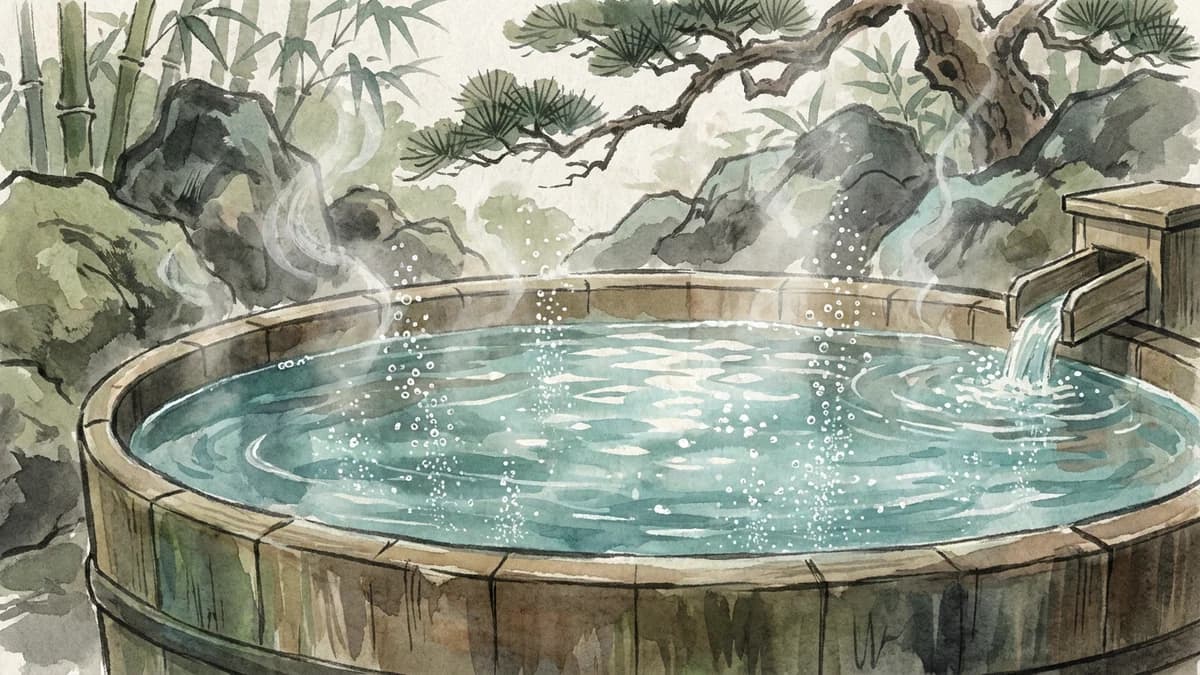
Free carbon dioxide: Main Effects & Top 5
Hot springs with ≥ 1,000 mg/kg of free CO₂ are classified as "CO₂ springs." CO₂ bubbles cling to the skin, are absorbed transdermally, and are said to dilate peripheral blood vessels.

Aluminum ion: Main Effects & Top 5
Aluminum ion (Al³⁺) is the key component of acidic springs. Its strong astringent action tightens the skin and has traditionally been used for oily skin and skin troubles.

Manganese ion: Main Effects & Top 5
Hot springs containing manganese ion (Mn²⁺) at ≥ 10 mg/kg are rare in Japan. This trace element keeps the stratum corneum supple and supports the skin's antioxidant defense.

Strontium ion: Main Effects & Top 5
Strontium ion (Sr²⁺) is a rare trace element with calcium-like properties. Its gentle astringent action tightens the skin.

Carbonate ion: Main Effects & Top 5
Carbonate ion (CO₃²⁻) is the key component of alkaline hot springs. Its strong alkalinity gently dissolves surface proteins — the true source of the famous "silky" feel.

Metaboric acid: Main Effects & Top 5
Metaboric acid (HBO₂) is a trace component with gentle antibacterial and anti-inflammatory action. It keeps the skin surface clean and is often found alongside acidic springs.

Free hydrogen sulfide: Main Effects & Top 5
Free hydrogen sulfide (H₂S) is the source of the rotten-egg aroma unique to sulfur springs. Absorbed via both skin and inhalation, it is said to dilate peripheral blood vessels.