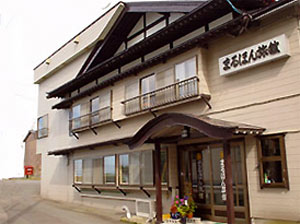
Esan Onsen
Analysis UnverifiedEsan Onsen Ryokan sits in Kashiwano, Hakodate, at the foot of the active volcano Mt. Esan, and keeps the air of a traditional healing inn. It is said to have begun when an earlier generation gathered the springs they found into a hand-dug basin, and today the naturally flowing source still pours from a single inlet into wooden tubs and over their edges. The water is nearly clear with a faint yellow-green tinge, a scent of iron and a sharp acidity, and white deposits form around the inlet. It is a strongly acidic sulfate spring rare in Hokkaido, and because the water is lukewarm the inn closes in winter.
The bar length shows how abundant each component is compared to thresholds that make it "distinctive" (therapeutic spring standards, beauty spring criteria, etc.).
Strong astringent action that tightens skin. A key component of acidic springs, suited to oily or acne-prone skin.
An iron-rich spring whose water turns yellow-brown to red-brown when exposed to air. Strong heat retention.
A natural moisturizer also used in skincare lotions. Forms a thin veil on the skin to reduce moisture loss after bathing.
A trace component with gentle antibacterial and anti-inflammatory action.
Oxidized iron. Tints the water reddish-brown, lending a visually dramatic, "powerful" bath feel.
Scores are calculated from mineral analysis data based on the Mineral Spring Analysis Guidelines (Ministry of Environment, Japan). They are unrelated to facility atmosphere or service quality.
▸Note
The temperature, pH and component values shown here are based on the hot spring analysis (source). Actual values in the bath may differ depending on heating, dilution, recycling and filtration. Please check current usage status at the facility.
This is a strongly acidic pH 2.2 water. It stings if it gets in your eyes, so be careful, and rinse off with the plain tap water afterwards. Remove jewelry, which can discolor, and use tap water rather than the spring water with soap, as it will not lather.
With 5.0 mg/kg hydrogen ion giving strong acidity and 2551 mg/kg sulfate firming the skin, this water may support immune system stimulation, while 88.9 mg/kg ferrous iron makes it an iron-bearing spring that helps with rejuvenation during a long, lukewarm soak.
Because the water is strongly acidic, people with sensitive skin or cuts may feel irritation. Avoid long soaks and rinse with tap water afterwards. The inn operates seasonally, so call ahead to confirm it is open.
※ See the analysis data below for detailed contraindications
ANALYSIS DATAView all analysis fields ▼
Source Info
- Source name
- Esan Onsen
- Spring type
- Acidic Iron(II,III)-containing Aluminum-Calcium Sulfate Hot Spring
- Source temperature
- 40.2℃
- pH
- 2.2
- Flow rate
- 134 L/min
- Flow type
- 自然湧出
- Osmotic pressure
- 低張性
Analysis Document
- Analysis date
- 2020-09-30
- Analyst organization
- 株式会社環境科学研究所
Cations
- Hydrogen ion H⁺
- 5.0 mg/kg
- Sodium ion Na⁺
- 35.3 mg/kg
- Potassium ion K⁺
- 10.1 mg/kg
- Ammonium ion NH₄⁺
- 2.7 mg/kg
- Magnesium ion Mg²⁺
- 29.4 mg/kg
- Calcium ion Ca²⁺
- 271 mg/kg
- Aluminum ion Al³⁺
- 292 mg/kg
- Manganese ion Mn²⁺
- 1.8 mg/kg
- Iron(II) ion Fe²⁺
- 88.9 mg/kg
- Iron(III) ion Fe³⁺
- 30.8 mg/kg
- Zinc ion Zn²⁺
- 0.20 mg/kg
- Lead ion Pb²⁺
- not detected
- Copper ion Cu²⁺
- 0.00 mg/kg
- Cadmium ion Cd²⁺
- not detected
- Total cations
- 0.77 mg/kg
Anions
- Fluoride ion F⁻
- 3.6 mg/kg
- Chloride ion Cl⁻
- 135 mg/kg
- Hydrogen sulfide ion HS⁻
- 0.00 mg/kg
- Thiosulfate ion S₂O₃²⁻
- 0.00 mg/kg
- Sulfate ion SO₄²⁻
- 2551 mg/kg
- Bicarbonate ion HCO₃⁻
- 0.00 mg/kg
- Carbonate ion CO₃²⁻
- 0.00 mg/kg
- Hydrogen sulfate HSO₄⁻
- 542 mg/kg
- Dihydrogen phosphate H₂PO₄⁻
- 0.90 mg/kg
- Total anions
- 3.2 mg/kg
Undissociated Components
- Sulfuric acid H₂SO₄
- 8.7 mg/kg
- Arsenious acid HAsO₂
- 1.5 mg/kg
- Metasilicic acid H₂SiO₃
- 206 mg/kg
- Metaboric acid HBO₂
- 20.0 mg/kg
- Total undissociated
- 0.24 mg/kg
Dissolved Gas
- Free carbon dioxide CO₂
- 110 mg/kg
- Free hydrogen sulfide H₂S
- 0.00 mg/kg
- Total dissolved gas
- 0.11 mg/kg
Totals
- Total dissolved substances
- 4.2 mg/kg
- Component total
- 4.3 mg/kg
- Evaporation residue
- 4.2 mg/kg
Usage
- Usage status
- Unknown
Indications & Contraindications
- Bathing indications
- Atopic dermatitis, Plaque psoriasis, Epidermal suppuration, Impaired glucose tolerance (diabetes), Cuts and grazes, Peripheral circulatory failure, Poor circulation, Depression, Xeroderma
- General indications
- High blood pressure (mild), Rheumatoid arthritis, Autonomic instability, Insomnia, Chronic pain or stiffness in muscles and joints, Muscle stiffness due to motor paralysis, Gastrointestinal dysfunction
- Contraindications
- Acute illness (especially with fever), Active tuberculosis, Malignant tumors, Severe heart disease, Respiratory failure, Renal failure, Bleeding disorders, Severe anemia, Any actively progressing illness, Pregnancy (especially early and late stages), Sensitive skin or mucous membranes, eye conditions (acidic springs)
Drinking
- Drinkability
- Not drinkable