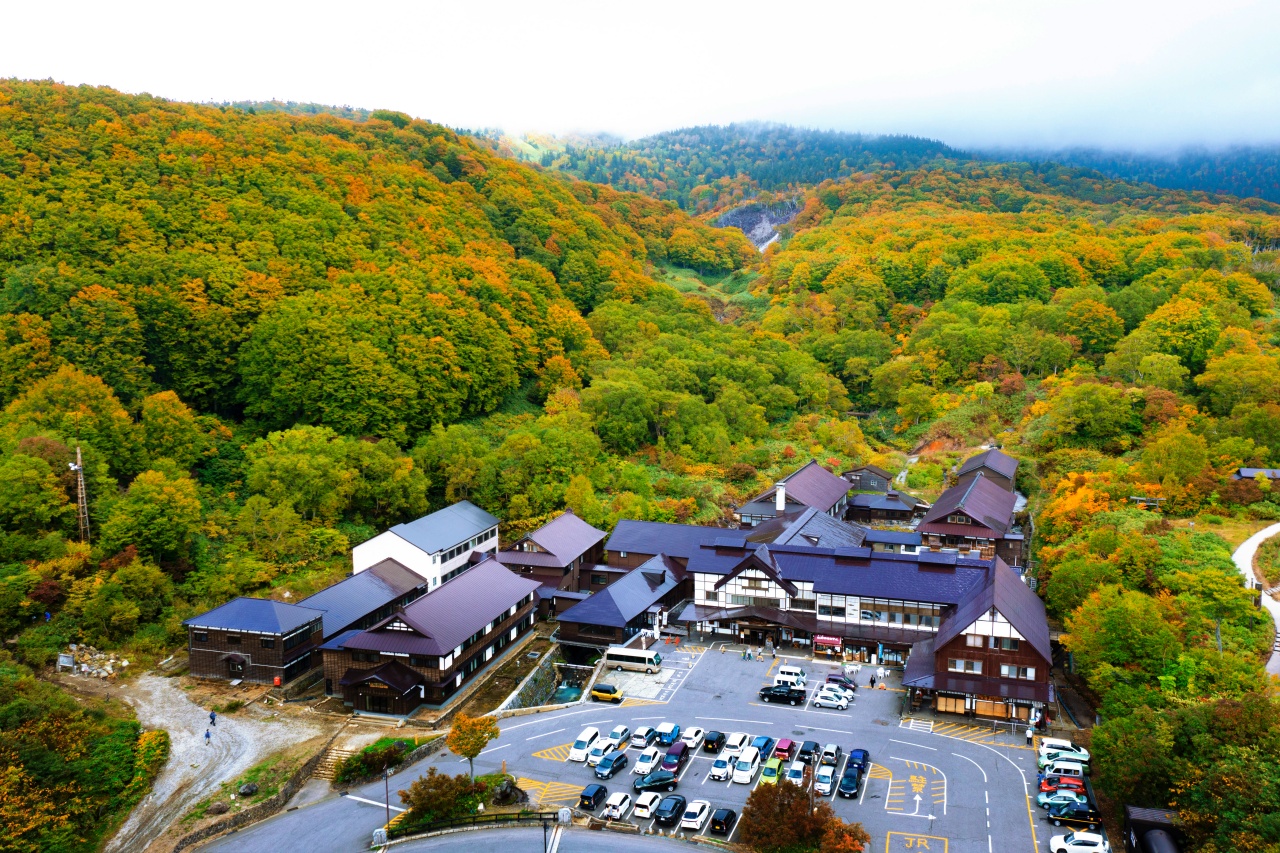
Shimofuro Onsen Oyu
Analysis UnverifiedThe Oyu source of Shimofuro Onsen carries a sulfur scent so strong that the place name is said to come from the Ainu word "shumafura," meaning "smelly rock." Recorded as "Yumoto" on a Muromachi-period map and bathed in by a Nanbu domain lord in 1656, this pH 2.4 acidic water turns milky as its sulfur flakes swirl, leaving a brisk, tightening touch and a lingering saline warmth. It suits those who wish to steep quietly in a strong sulfur spring within a port town that once thrived as a herring fishermen's spa.
The bar length shows how abundant each component is compared to thresholds that make it "distinctive" (therapeutic spring standards, beauty spring criteria, etc.).
Undissociated boric acid with antibacterial action that keeps the skin surface clean.
The source of the distinctive sulfur smell. Dilates blood vessels via skin and inhalation to strongly boost circulation.
A natural moisturizer also used in skincare lotions. Forms a thin veil on the skin to reduce moisture loss after bathing.
- Sulfur21.2 mg/kg
- Feel
- Smells like boiled eggs; the water may turn milky white or blue-green.
- Said to
- Said to be strongly antibacterial and to promote circulation. Bathing indications include atopic dermatitis and chronic eczema.
- Note
- With sensitive skin, rinse with fresh water after bathing. Remove silver jewelry—it tarnishes.
- Acidic (pH)pH 2.4
- Feel
- May tingle on the skin; tastes sour.
- Said to
- Said to be strongly antibacterial. Bathing indications include atopic dermatitis and plaque psoriasis.
- Note
- Can irritate sensitive skin—rinse with fresh water after bathing. Keep it out of your eyes.
- Chloride (salt)1064 mg/kg
- Feel
- Tastes salty; the warmth lasts after you get out.
- Said to
- Salt is said to form a film on the skin that keeps in heat and moisture. Bathing indications include cuts, poor circulation and dry skin.
- Note
- May sting cuts. Strong salty water can tire you—avoid long soaks.
- Sulfate812 mg/kg
- Feel
- Your skin feels moist; the water may taste slightly bitter.
- Said to
- Said to retain heat well and help heal cuts. Bathing indications include cuts and dry skin.
- Note
- It warms you well—do not stay in too long.
- Metasilicic acid133 mg/kg
- Feel
- Your skin may feel smoother.
- Said to
- 50 mg/kg or more is said to mark a “skin-beautifying spring”; it is also used in skincare.
- Note
- The “skin-beautifying” label is a common rule of thumb, not a legal standard.
- Source temperature64℃
- Feel
- The source is 42°C or hotter; the bath may be on the hot side.
- Said to
- Heat is said to boost circulation and warm the body.
- Note
- Older people and those with high blood pressure or heart conditions should avoid baths of 42°C or more. Keep soaks short.
Effects are general descriptions based on the Ministry of the Environment’s indications by spring type, not a guarantee.
Scores are calculated from mineral analysis data based on the Mineral Spring Analysis Guidelines (Ministry of Environment, Japan). They are unrelated to facility atmosphere or service quality.
▸Note
The temperature, pH and component values shown here are based on the hot spring analysis (source). Actual values in the bath may differ depending on heating, dilution, recycling and filtration. Please check current usage status at the facility.
With pH 2.4 acidity and hydrogen sulfide, this water can irritate sensitive skin, so keep each soak to about five to ten minutes. Rinse with fresh water afterward and remove silver jewelry, which the sulfur can tarnish.
Combining pH 2.4 acidity with 22.55 mg/kg of free hydrogen sulfide, this sulfur spring is valued for balneotherapy and traditionally associated with immune system stimulation. Its 1,064 mg/kg of chloride leaves a saline film that offers restorative warmth long after bathing on chilly days.
Avoid long soaks in this strongly acidic sulfur spring, and take care if your skin or mucous membranes are sensitive. Mind hydrogen sulfide in poorly ventilated spaces.
※ See the analysis data below for detailed contraindications
ANALYSIS DATAView all analysis fields ▼
Source Info
- Source name
- Shimofuro Onsen Oyu
- Spring type
- Acidic Sulfur-containing Sodium Chloride and Sulfate Spring (hydrogen sulfide type)
- Source temperature
- 64℃
- pH
- 2.4
Analysis Document
- Analysis date
- 2002-02-13
Cations
- Hydrogen ion H⁺
- 6.5 mg/kg
- Lithium ion Li⁺
- 0.90 mg/kg
- Sodium ion Na⁺
- 643 mg/kg
- Potassium ion K⁺
- 84.2 mg/kg
- Ammonium ion NH₄⁺
- 1.0 mg/kg
- Magnesium ion Mg²⁺
- 39.4 mg/kg
- Calcium ion Ca²⁺
- 160 mg/kg
- Aluminum ion Al³⁺
- 5.5 mg/kg
- Manganese ion Mn²⁺
- 2.4 mg/kg
- Iron(II) ion Fe²⁺
- 3.7 mg/kg
- Total cations
- 947 mg/kg
Anions
- Fluoride ion F⁻
- 1.9 mg/kg
- Chloride ion Cl⁻
- 1064 mg/kg
- Sulfate ion SO₄²⁻
- 812 mg/kg
- Iodide ion I⁻
- 8.5 mg/kg
- Hydrogen sulfate HSO₄⁻
- 177 mg/kg
- Hydrogen phosphate HPO₄²⁻
- 0.60 mg/kg
- Total anions
- 2064 mg/kg
Undissociated Components
- Metasilicic acid H₂SiO₃
- 133 mg/kg
- Metaboric acid HBO₂
- 155 mg/kg
- Total undissociated
- 287 mg/kg
Dissolved Gas
- Free carbon dioxide CO₂
- 290 mg/kg
- Free hydrogen sulfide H₂S
- 22.6 mg/kg
- Total dissolved gas
- 313 mg/kg
Totals
- Total dissolved substances
- 3298 mg/kg
- Component total
- 3611 mg/kg
Usage
- Usage status
- Unknown
Indications & Contraindications
- Bathing indications
- Atopic dermatitis, Plaque psoriasis, Epidermal suppuration, Impaired glucose tolerance (diabetes), Chronic eczema, Cuts and grazes, Peripheral circulatory failure, Poor circulation, Depression, Xeroderma
- General indications
- High blood pressure (mild), Rheumatoid arthritis, Autonomic instability, Insomnia, Chronic pain or stiffness in muscles and joints, Muscle stiffness due to motor paralysis, Gastrointestinal dysfunction
- Contraindications
- Acute illness (especially with fever), Active tuberculosis, Malignant tumors, Severe heart disease, Respiratory failure, Renal failure, Bleeding disorders, Severe anemia, Any actively progressing illness, Pregnancy (especially early and late stages), Sensitive skin or mucous membranes, eye conditions (acidic springs), Severe chronic dermatitis (sulphur springs)
Drinking
- Drinkability
- Not drinkable