Safety Precautions for Children in Hot Springs
- Water temperature: Children's skin is thinner and more sensitive than adults'. Look for baths set to 38–40°C (100–104°F) — the cooler end of the typical onsen rangeA child's body is less adept at regulating temperature, and their thinner skin makes them more sensitive to heat. Sticking to baths in the 38–40°C range ensures a comfortable and safe experience, preventing overheating or discomfort.
- Bathing time: Limit each dip to 5–10 minutes to prevent overheating. Exit, cool down, hydrate, and re-enter if desiredChildren can easily become overheated or lightheaded (a condition known as nobose in Japanese) in hot water. Short, supervised soaks of 5–10 minutes followed by breaks are essential for preventing heat-related distress and ensuring a pleasant experience.
- Age restrictions: Many large communal baths (dai-yokujō) do not permit infants under approximately 3 years old — check the facility policyFor reasons of safety and hygiene, many onsen facilities prohibit infants and toddlers from entering the main communal baths. It is always best to confirm the specific age policies of an onsen before visiting to ensure your child will be admitted.
- Children in nappies / diapers: Communal baths are not permitted; book a private family bath insteadFor hygiene reasons, children who are not yet toilet-trained are not allowed in shared public baths. The best alternative is to reserve a private family bath (kazoku-buro), which allows your family to enjoy the hot spring experience together in a clean, private setting.
How to Choose a Family-Friendly Facility
- Look for facilities advertising 「お子様歓迎」(children welcome) or 「家族風呂あり」(private family bath available)These signs are a clear indicator that a facility is prepared for families and their unique needs. Many onsen have age restrictions or prohibit children in diapers from using the main public baths, making a private family bath an essential amenity.
- Simple springs (tanjun-onsen) and chloride springs are the gentlest on children's skinThese spring types are considered less stimulating and are a good choice for a child's first onsen experience. Their mild properties provide a gentle warming effect without being harsh on delicate skin, reducing the risk of irritation.
- Avoid sulphur springs and acidic springs for young children — the higher mineral concentration and acidity can irritate sensitive skinThe distinct properties of these springs, while beneficial for some, can be too intense for young children. Their strong acidity or high sulphur content may cause irritation or discomfort on a child's thinner, more sensitive skin.
- Bring sandals or waterproof shoes for outdoor baths to prevent slipping on wet stone surfacesOutdoor bath areas are often paved with natural stone, which becomes very slippery when wet and can be cold on the feet. Having appropriate footwear helps prevent dangerous falls and keeps your child comfortable when walking around the perimeter.
Choose a ryokan by how you bathe
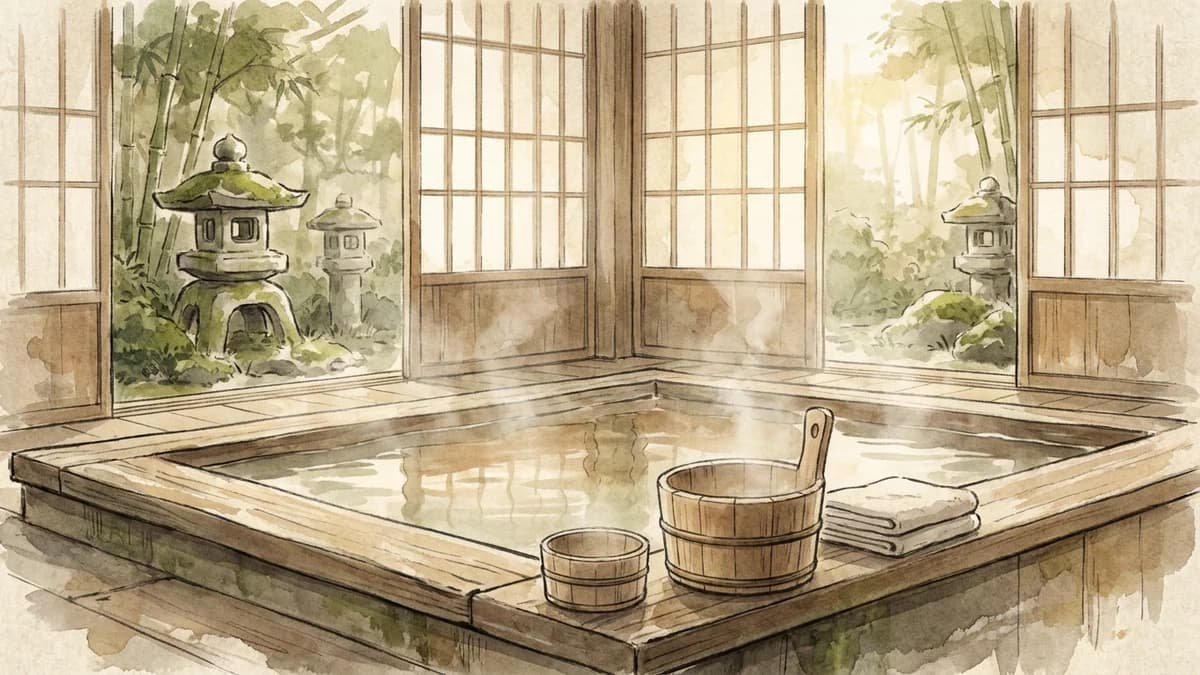
Travelling with children? A private bath lets the whole family bathe together.
Plan your onsen trip
Onsen towns are often rural with patchy Wi-Fi and limited public transport. Sort out data, tours and a car before you go.
- Japan eSIMAiralo
- Japan eSIMYesim
- Tours, passes & transfersGetYourGuide
- Tours, passes & transfersKKday
- Car rentalDiscover Cars
Includes affiliate links
References
Related Articles