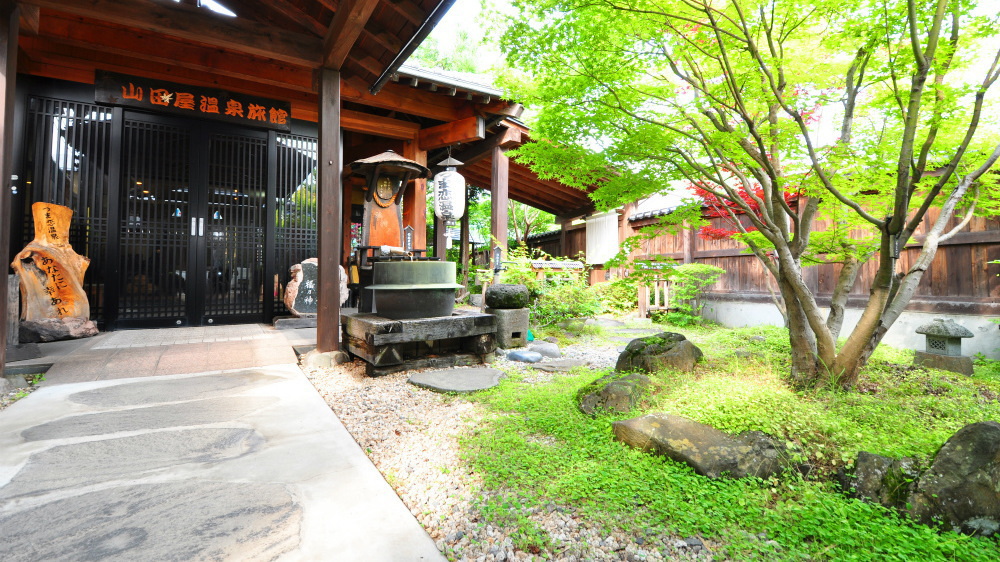
Irinoyu

Analysis Unverified
入之湯
Gentle Gypsum Spring in the Mist

The Irinoyu source rises in the mountains of Joshinetsu Kogen National Park near Usui Pass, at Kirizumi Onsen, a spa said to date back to the Kamakura period. In the Meiji era Kirizumi flourished as a summer retreat visited by statesmen and writers. About 300 liters a minute gush up naturally, and the lukewarm water, close to body temperature, lets fine bubbles linger on the skin. It suits anyone who wants to steep slowly in the quiet of the mountains and lose track of time.

AI Generated
硫塩
SPRING TYPE
Sulfate Spring

Moisturizes the skin and forms a protective barrier, producing a deeply moisturizing effect. Can also soothe inflammations and help the skin heal.

See features & indications▾
Bathing indications
Cuts and grazesPeripheral circulatory failurePoor circulationDepressionXeroderma
Drinking indications
Biliary tract diseaseDyslipidemia (high cholesterol)Constipation

※ Only at facilities permitted to serve drinking water. 200–500 mL/day recommended.

Definition :Primary anion: sulfate ion.
Source: 環境省「あんしん・あんぜんな温泉利用のいろは」(監修:日本温泉気候物理医学会) ↗Read full article
TEMPERATURE
38.9℃
Warm Spring
Mildly warm. Gentle on the skin and ideal for long soaks.
KEY MINERALS

The bar length shows how abundant each component is compared to thresholds that make it "distinctive" (therapeutic spring standards, beauty spring criteria, etc.).

Sulfate ionSee detail
1160 mg/kg

Soothes the skin and gently improves circulation.

Calcium ionSee detail
473 mg/kg

Gentle astringent action that conditions the skin.

Metasilicic acidSee detail
37.6 mg/kg

A natural moisturizer that leaves a hydrated feel on the skin.

Metaboric acidSee detail
1.3 mg/kg

A trace component with gentle antibacterial and anti-inflammatory action.

Strontium ionSee detail
1.5 mg/kg

A rarely-found trace element with a gentle tightening action.

CHARACTER · COMPOSITION PROFILE
1234StimulationBactericidalSkin BeautyHeat RetentionRelaxation

Scores are calculated from mineral analysis data based on the Mineral Spring Analysis Guidelines (Ministry of Environment, Japan). They are unrelated to facility atmosphere or service quality.

USAGE
Free-Flowing Onsen
Pure spring water — no dilution, no recirculation
HeatedNo
DilutedNo
RecycledNo
FilteredNo
DisinfectedNo
AdditivesNo
▸Note

The temperature, pH and component values shown here are based on the hot spring analysis (source). Actual values in the bath may differ depending on heating, dilution, recycling and filtration. Please check current usage status at the facility.

EFFECTS
Spring-specific indications (bathing)
Cuts and grazesPeripheral circulatory failurePoor circulationDepressionXeroderma
General indications (bathing)
High blood pressure (mild)Rheumatoid arthritisAutonomic instabilityInsomniaChronic pain or stiffness in muscles and jointsMuscle stiffness due to motor paralysisGastrointestinal dysfunction
Contraindications
Acute illness (especially with fever)Active tuberculosisMalignant tumorsSevere heart diseaseRespiratory failureRenal failureBleeding disordersSevere anemiaAny actively progressing illnessPregnancy (especially early and late stages)
BATHING TIPS
AI Generated

At 38.9°C the water is mild enough for long, unhurried soaks of 20 to 30 minutes. Take short breaks in between, and keep warm after bathing in the colder months.

EFFECT STORY
AI Generated

Rich in sulfate at 1160 mg/kg, this calcium sulfate spring has long been known as a "wound-healing" bath in Japanese balneotherapy. At a gentle 38.9°C it is easy on the body, traditionally associated with helping relieve pain and stiffness while encouraging deep relaxation in the quiet mountains.

CAUTIONS
AI Generated

Avoid bathing with acute illness (especially fever), active tuberculosis or serious heart disease. Even in lukewarm water, keep warm after long soaks.

※ See the analysis data below for detailed contraindications

ANALYSIS DATAView all analysis fields ▼

Source Info

Source name
Irinoyu
Spring type
Calcium Sulfate Hot Spring
Source temperature
38.9℃
Flow rate
300 L/min
Flow type
自然湧出
Osmotic pressure
低張性

Analysis Document

Analysis date
2008-11-18
Analyst organization
社団法人群馬県薬剤師会 環境衛生試験センター

Cations

Sodium ion Na⁺
55.5 mg/kg
Potassium ion K⁺
0.94 mg/kg
Magnesium ion Mg²⁺
1.0 mg/kg
Calcium ion Ca²⁺
473 mg/kg
Aluminum ion Al³⁺
< 0.05 mg/kg
Manganese ion Mn²⁺
0.09 mg/kg
Iron(II) ion Fe²⁺
< 0.01 mg/kg
Strontium ion Sr²⁺
1.5 mg/kg
Total cations
0.53 mg/kg

Anions

Fluoride ion F⁻
0.30 mg/kg
Chloride ion Cl⁻
39.2 mg/kg
Hydrogen sulfide ion HS⁻
0.30 mg/kg
Sulfate ion SO₄²⁻
1160 mg/kg
Bicarbonate ion HCO₃⁻
18.3 mg/kg
Total anions
1.2 mg/kg

Undissociated Components

Metasilicic acid H₂SiO₃
37.6 mg/kg
Metaboric acid HBO₂
1.3 mg/kg
Total undissociated
0.04 mg/kg

Dissolved Gas

Free carbon dioxide CO₂
5.3 mg/kg
Free hydrogen sulfide H₂S
0.00 mg/kg
Total dissolved gas
0.01 mg/kg

Totals

Total dissolved substances
1.8 mg/kg

Usage

Heating
No
Dilution
No
Recycle / Filter
No
Additives
No
Disinfection
No

Indications & Contraindications

Bathing indications
Cuts and grazes, Peripheral circulatory failure, Poor circulation, Depression, Xeroderma
General indications
High blood pressure (mild), Rheumatoid arthritis, Autonomic instability, Insomnia, Chronic pain or stiffness in muscles and joints, Muscle stiffness due to motor paralysis, Gastrointestinal dysfunction
Contraindications
Acute illness (especially with fever), Active tuberculosis, Malignant tumors, Severe heart disease, Respiratory failure, Renal failure, Bleeding disorders, Severe anemia, Any actively progressing illness, Pregnancy (especially early and late stages)

Drinking

Drinkability
Not drinkable
FACILITY INFO
AI draft (unverified)
Official site
Hours
For day-trip bathing hours, we recommend confirming by phone. Hours may vary depending on the season and circumstances.
Closed days: Irregular holidays (Please inquire in advance)
Transit
Approximately 30 minutes by car from JR Yokokawa Station (JR Yokokawa Eki). Approximately 35 minutes from Kan-etsu Expressway (Kan-etsu-do) / Joshin-etsu Expressway (Joshin-etsu-do) Matsuidamyogi Interchange (Matsuidamyogi IC). Guests staying overnight can arrange pick-up service from the nearest station or parking lot (advance reservation required). It's a 30-minute walk from the parking lot to the inn (uphill path). If traveling by train, pick-up from Yokokawa Station is a shared service with fixed times, so please confirm with the inn in advance. In winter, please park your car at the Kirizumi Onsen Entrance (Kirizumi Onsen Iriguchi) on National Route 18 (Kokudo 18-go-sen), and the inn's car will provide pick-up. The parking lot has no mobile phone signal, so you need to call the inn from a drive-in about 20 minutes before to request pick-up.
Parking
Free parking available (approx. 50 cars). It's a 30-minute walk from the parking lot to the inn (uphill path). Pick-up service from the parking lot requires advance reservation by 12:00 PM the day before your stay. The parking lot has no mobile phone signal.
Day use fee
¥700Elementary school students: 300 yen. Bathing with a private resting room is 1,500 yen (up to 3 hours / reservation required).
Facilities
Separate indoor baths for men and women
House rules
To protect the natural environment, please take your trash with you. Our facility operates on a self-service basis. We recommend bringing your own hairdryer. Rooms do not have keys.
This information may change without notice. Please contact the facility directly for accurate details.
How Long to Stay (Toji)
Start with 2 nights / 3 days

Japan’s Ministry of the Environment notes that even a short stay refreshes you. For a full therapeutic cure, around 2–3 weeks is the guideline.

More on toji length
Stay at this hotel
PR

Kin Yu Kan

From¥16,500/ person / night (tax incl.)
4.6(273)

Approx. lowest rate (varies by date & guests)

Book on Rakuten Travel

Powered by Rakuten Travel

✨ The descriptions, catch phrases, and translations on this page are generated by AI (Claude). pH, temperature, and component values are OCR-extracted from the official analysis report. Learn more