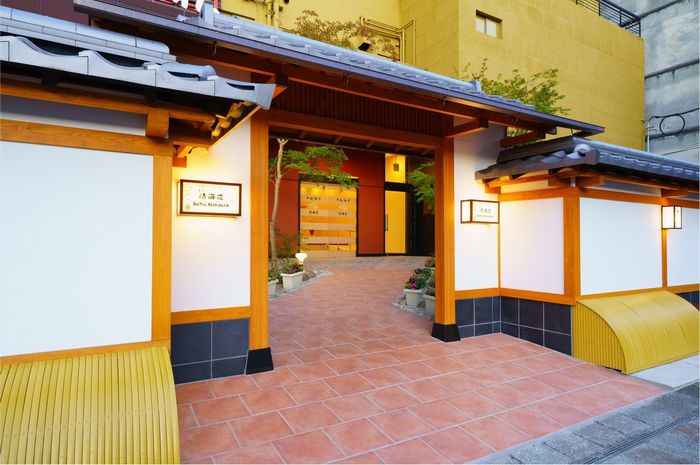
Takegawara Onsen (Otoko-yu)
Analysis UnverifiedThis historic onsen has been a beloved symbol of Beppu since the Meiji era. Rich in chloride and bicarbonate ions, its defining characteristic is a gentle warmth that envelops the skin. The long-lasting warmth you feel after bathing is like wearing a coat of the spring itself. It's recommended for those seeking to heal daily fatigue and refresh mind and body, or for anyone wishing to spend a relaxing time immersed in historical charm. Enjoy a moment touching the heart of traditional Japanese onsen culture.
The bar length shows how abundant each component is compared to thresholds that make it "distinctive" (therapeutic spring standards, beauty spring criteria, etc.).
A natural moisturizer also used in skincare lotions. Forms a thin veil on the skin to reduce moisture loss after bathing.
A trace component with gentle antibacterial and anti-inflammatory action.
Transdermal absorption gently supports skin hydration and muscle relaxation.
Scores are calculated from mineral analysis data based on the Mineral Spring Analysis Guidelines (Ministry of Environment, Japan). They are unrelated to facility atmosphere or service quality.
▸Note
The temperature, pH and component values shown here are based on the hot spring analysis (source). Actual values in the bath may differ depending on heating, dilution, recycling and filtration. Please check current usage status at the facility.
The water is hot at 48.8°C, so acclimate your body with 'kake-yu' (dousing) before entering. As a chloride spring with high heat retention, avoid long soaks and try 'bungatsu-yoku' (split bathing) with repeated short dips. For best results, don't rinse off with a shower after bathing to let the minerals remain on your skin.
With a mildly alkaline pH of 7.5, the abundant bicarbonate ions (475.0 mg/kg) gently exfoliate old skin cells, leading to silky skin. Additionally, chloride ions form a veil on the skin, providing restorative warmth that helps prevent post-bath chills, making it ideal for those sensitive to the cold. It's the perfect bath for a day when you want to soothe travel fatigue and seek deep relaxation.
The spring water is hot, so be careful not to overheat and remember to stay hydrated. If you have sensitive skin, it is recommended to rinse lightly with fresh water after bathing.
※ See the analysis data below for detailed contraindications
ANALYSIS DATAView all analysis fields ▼
Source Info
- Source name
- Takegawara Onsen (Otoko-yu)
- Spring type
- Sodium-Calcium-Magnesium Chloride and Bicarbonate Hot Spring
- Old spring type name
- 含土類一食塩泉
- Source temperature
- 48.8℃
- pH
- 7.5
- Flow type
- Pumped
- Osmotic pressure
- Hypotonic
Analysis Document
- Analysis date
- 2019-03-04
- Analyst organization
- 公益社団法人大分県薬剤師会
- Registration No.
- 大分県第3号
Cations
- Lithium ion Li⁺
- 1.1 mg/kg
- Sodium ion Na⁺
- 181 mg/kg
- Potassium ion K⁺
- 27.9 mg/kg
- Ammonium ion NH₄⁺
- 0.30 mg/kg
- Magnesium ion Mg²⁺
- 59.2 mg/kg
- Calcium ion Ca²⁺
- 102 mg/kg
- Manganese ion Mn²⁺
- 1.0 mg/kg
- Iron(II) ion Fe²⁺
- 0.70 mg/kg
- Lead ion Pb²⁺
- 0.00 mg/kg
- Strontium ion Sr²⁺
- 0.60 mg/kg
- Barium ion Ba²⁺
- 0.20 mg/kg
- Copper ion Cu²⁺
- 0.00 mg/kg
- Cadmium ion Cd²⁺
- 0.00 mg/kg
- Total cations
- 0.37 mg/kg
Anions
- Fluoride ion F⁻
- 0.08 mg/kg
- Chloride ion Cl⁻
- 353 mg/kg
- Sulfate ion SO₄²⁻
- 68.7 mg/kg
- Bicarbonate ion HCO₃⁻
- 475 mg/kg
- Bromide ion Br⁻
- 1.2 mg/kg
- Total anions
- 0.90 mg/kg
Undissociated Components
- Sulfuric acid H₂SO₄
- 0.00 mg/kg
- Phosphoric acid H₃PO₄
- 0.00 mg/kg
- Arsenious acid HAsO₂
- 0.10 mg/kg
- Metasilicic acid H₂SiO₃
- 214 mg/kg
- Metaboric acid HBO₂
- 3.7 mg/kg
- Total undissociated
- 0.22 mg/kg
Dissolved Gas
- Free carbon dioxide CO₂
- 17.6 mg/kg
- Free hydrogen sulfide H₂S
- 0.00 mg/kg
- Total dissolved gas
- 0.02 mg/kg
Trace Components
- Radon Rn
- 0 Bq/kg
Totals
- Total dissolved substances
- 1.5 mg/kg
- Component total
- 1.5 mg/kg
- Evaporation residue
- 1.3 mg/kg
Usage
- Heating
- Yes(源泉温度が53度以上の高温のため、浴槽温度を43度前後に調節している)
- Dilution
- No
- Recycle / Filter
- No
- Additives
- No
- Disinfection
- No
Indications & Contraindications
- Bathing indications
- Cuts and grazes, Peripheral circulatory failure, Poor circulation, Depression, Xeroderma
- General indications
- High blood pressure (mild), Rheumatoid arthritis, Autonomic instability, Insomnia, Chronic pain or stiffness in muscles and joints, Muscle stiffness due to motor paralysis, Gastrointestinal dysfunction
- Contraindications
- Acute illness (especially with fever), Active tuberculosis, Malignant tumors, Severe heart disease, Respiratory failure, Renal failure, Bleeding disorders, Severe anemia, Any actively progressing illness, Pregnancy (especially early and late stages)
Drinking
- Drinkability
- Not drinkable