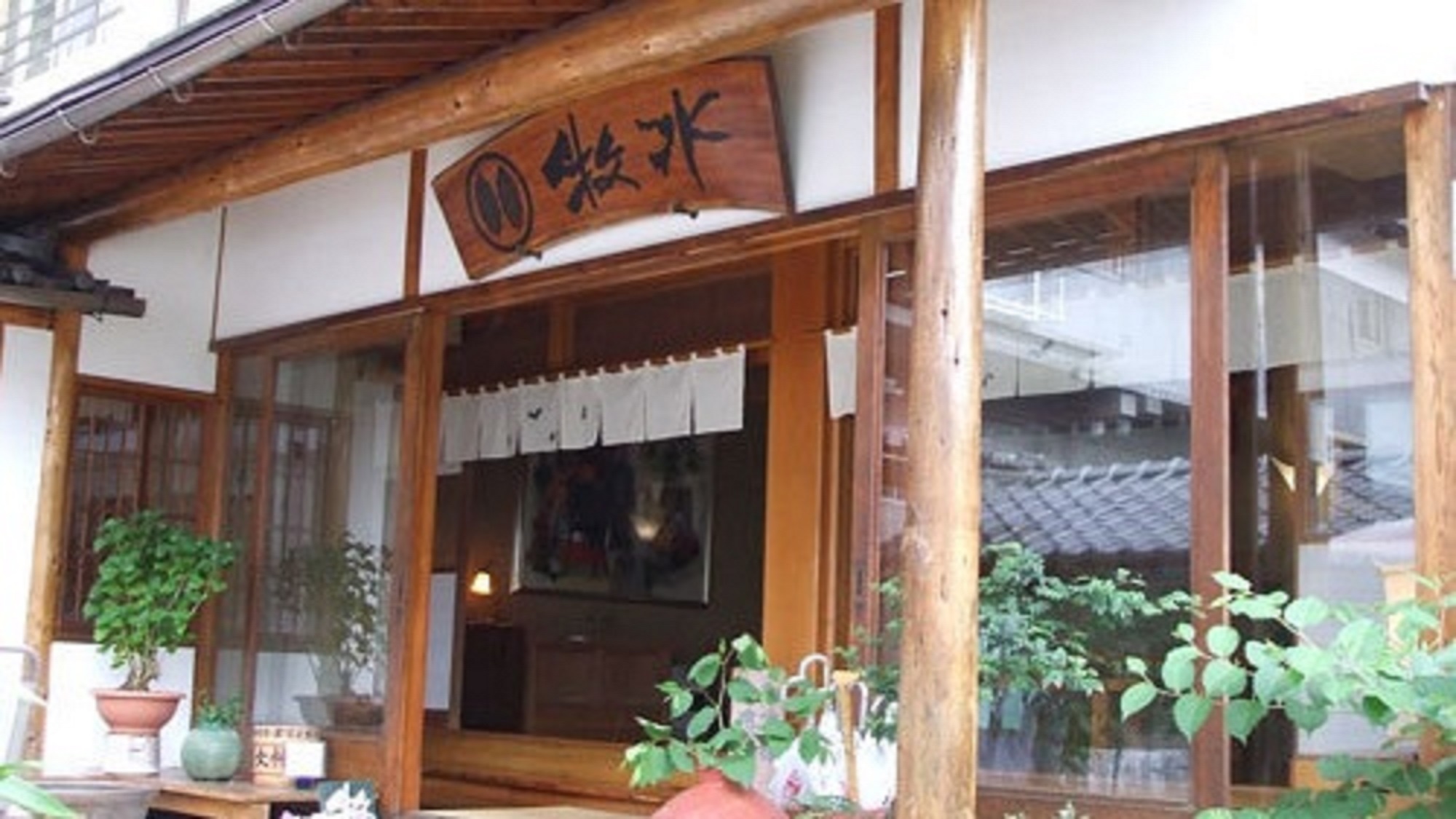
Takanoyu
Analysis UnverifiedTakanoyu rises by its own pressure from a drilled well on the northern foot of Mount Asama, right beside the Agatsuma Line, and travels about 80 meters by pipe to the baths. Its signature is balance: chloride, sulfate and bicarbonate dissolve in nearly equal measure, so one soak offers the warmth of a salt spring, the softness of a sulfate spring and the smoothness of a bicarbonate spring. Iron leaves brown deposits on the spouts and turns the water a cloudy green-brown on contact with air, a generous spring made for chilly highland nights.
The bar length shows how abundant each component is compared to thresholds that make it "distinctive" (therapeutic spring standards, beauty spring criteria, etc.).
A natural moisturizer also used in skincare lotions. Forms a thin veil on the skin to reduce moisture loss after bathing.
A trace component with gentle antibacterial and anti-inflammatory action.
Transdermal absorption gently supports skin hydration and muscle relaxation.
Scores are calculated from mineral analysis data based on the Mineral Spring Analysis Guidelines (Ministry of Environment, Japan). They are unrelated to facility atmosphere or service quality.
▸Note
The temperature, pH and component values shown here are based on the hot spring analysis (source). Actual values in the bath may differ depending on heating, dilution, recycling and filtration. Please check current usage status at the facility.
At 42.2°C the source is heated before it reaches the tub, so the area near the spout can feel hot. Stir the water before entering and sit away from the spout if needed; the neutral water is gentle on skin, so skip a heavy rinse afterward.
With 637 mg/kg of chloride forming a light film on the skin, the water offers restorative warmth, while 657 mg/kg of sulfate is traditionally associated with helping relieve pain; 129 mg/kg of metasilicic acid adds a smooth after-bath feel.
Because the water is heated, it can run hot near the spout, so check the temperature before entering. It warms strongly, so avoid overly long soaks and drink water often.
※ See the analysis data below for detailed contraindications
ANALYSIS DATAView all analysis fields ▼
Source Info
- Source name
- Takanoyu
- Spring type
- Sodium-Magnesium Chloride, Sulfate and Bicarbonate Hot Spring
- Source temperature
- 42.2℃
- pH
- 7.2
- Flow rate
- 93 L/min
- Flow type
- 掘削自噴
- Osmotic pressure
- 低張性
Analysis Document
- Analysis date
- 2013-10-16
- Analyst organization
- 一般社団法人 群馬県薬剤師会(環境衛生試験センター)
- Registration No.
- 群馬薬第2号
Cations
- Sodium ion Na⁺
- 519 mg/kg
- Potassium ion K⁺
- 74.1 mg/kg
- Magnesium ion Mg²⁺
- 108 mg/kg
- Calcium ion Ca²⁺
- 141 mg/kg
- Aluminum ion Al³⁺
- < 0.05 mg/kg
- Manganese ion Mn²⁺
- 0.41 mg/kg
- Iron(II) ion Fe²⁺
- 3.3 mg/kg
- Lead ion Pb²⁺
- < 0.005 mg/kg
- Copper ion Cu²⁺
- 0.00 mg/kg
- Total cations
- 0.85 mg/kg
Anions
- Fluoride ion F⁻
- < 0.1 mg/kg
- Chloride ion Cl⁻
- 637 mg/kg
- Sulfate ion SO₄²⁻
- 657 mg/kg
- Bicarbonate ion HCO₃⁻
- 534 mg/kg
- Carbonate ion CO₃²⁻
- 0.30 mg/kg
- Bromide ion Br⁻
- 0.50 mg/kg
- Total anions
- 1.8 mg/kg
Undissociated Components
- Metasilicic acid H₂SiO₃
- 129 mg/kg
- Metaboric acid HBO₂
- 6.9 mg/kg
- Total undissociated
- 0.14 mg/kg
Dissolved Gas
- Free carbon dioxide CO₂
- 72.6 mg/kg
- Free hydrogen sulfide H₂S
- 0.00 mg/kg
- Total dissolved gas
- 0.07 mg/kg
Totals
- Total dissolved substances
- 2.8 mg/kg
- Component total
- 2.9 mg/kg
- Evaporation residue
- 2.6 mg/kg
Usage
- Heating
- Yes(温泉手帖(2021-10-21記事)『季節により加温と記載があったけど、実際は常に加温してる』『加温あり 加水循環消毒なし』。源泉42.2℃・引き湯約80mのため(同記事)。)
- Dilution
- No
- Recycle / Filter
- No
- Additives
- No
- Disinfection
- No
Indications & Contraindications
- Bathing indications
- Cuts and grazes, Peripheral circulatory failure, Poor circulation, Depression, Xeroderma
- General indications
- High blood pressure (mild), Rheumatoid arthritis, Autonomic instability, Insomnia, Chronic pain or stiffness in muscles and joints, Muscle stiffness due to motor paralysis, Gastrointestinal dysfunction
- Contraindications
- Acute illness (especially with fever), Active tuberculosis, Malignant tumors, Severe heart disease, Respiratory failure, Renal failure, Bleeding disorders, Severe anemia, Any actively progressing illness, Pregnancy (especially early and late stages)
Drinking
- Drinkability
- Not drinkable