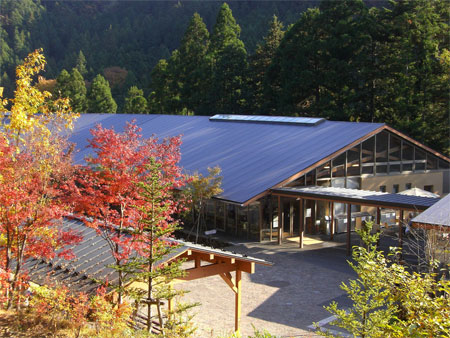
Ryusenji Spring
Analysis UnverifiedEmerging from beneath Hachioji, Tokyo, Ryusenji Onsen is nestled in the nature-rich Katakura-cho. This alkaline spring, boasting a pH of 8.6, is renowned for its exquisitely silky skin. Its gentle warmth delicately envelops the body, promoting deep relaxation and easing away mental and physical tension. After your bath, it leaves your skin feeling wonderfully smooth and imparts a sense of light rejuvenation. It truly serves as an urban oasis for contemporary individuals seeking respite from daily stress.
The bar length shows how abundant each component is compared to thresholds that make it "distinctive" (therapeutic spring standards, beauty spring criteria, etc.).
A trace component with gentle antibacterial and anti-inflammatory action.
- Alkaline (pH)pH 8.6
- Feel
- Feels slippery and silky on the skin.
- Said to
- Said to remove old skin cells and excess sebum.
- Note
- Skin can dry out afterwards—moisturize after bathing.
Effects are general descriptions based on the Ministry of the Environment’s indications by spring type, not a guarantee.
Scores are calculated from mineral analysis data based on the Mineral Spring Analysis Guidelines (Ministry of Environment, Japan). They are unrelated to facility atmosphere or service quality.
▸Note
The temperature, pH and component values shown here are based on the hot spring analysis (source). Actual values in the bath may differ depending on heating, dilution, recycling and filtration. Please check current usage status at the facility.
With a modest spring temperature of 25.7°C, heated bathing is standard at the facility. To fully appreciate the silky, alkaline texture of the water, begin with brief 3–10 minute immersions; as your body adjusts, gradually extend sessions to 15–20 minutes. After bathing, gently dab—rather than rinse—the mineral residue with a towel to preserve the skin's lasting smoothness.
This weakly alkaline spring (pH 8.7) delivers sodium ions at 224.3 mg/kg and bicarbonate ions at 207.3 mg/kg, gently dissolving aged skin cells and revealing a radiant, silken complexion. Metasilicic acid (40.3 mg/kg) excels in moisture retention, making it especially welcome for those battling dryness. Officially recognized for easing autonomic instability, insomnia, and depressive states, this water companions modern life's stress and sleep disruptions with genuine therapeutic warmth.
Those experiencing fever, malignancy, severe cardiac or renal conditions, or active gastrointestinal bleeding should refrain from bathing. Avoid immersion after alcohol consumption or during states of exhaustion; should dizziness or unease arise, exit the bath promptly and recline to recover.
※ See the analysis data below for detailed contraindications
ANALYSIS DATAView all analysis fields ▼
Source Info
- Source name
- Ryusenji Spring
- Spring type
- Alkaline simple spring (Hypotonic, Alkaline, Low temperature spring)
- Source temperature
- 25.7℃
- pH
- 8.6
- Flow rate
- 116 L/min
- Flow type
- Pumped
- Osmotic pressure
- Hypotonic
Analysis Document
- Analysis date
- 2025-10-10
- Analyst organization
- ケー・エス環境研究所株式会社 東京支店
- Registration No.
- 3東京都温泉分析第5号
Cations
- Hydrogen ion H⁺
- 0.00 mg/kg
- Sodium ion Na⁺
- 224 mg/kg
- Potassium ion K⁺
- 3.2 mg/kg
- Magnesium ion Mg²⁺
- 1.1 mg/kg
- Calcium ion Ca²⁺
- 6.6 mg/kg
- Aluminum ion Al³⁺
- 0.00 mg/kg
- Manganese ion Mn²⁺
- 0.00 mg/kg
- Iron(II) ion Fe²⁺
- 0.00 mg/kg
- Iron(III) ion Fe³⁺
- 0.00 mg/kg
- Total cations
- 237 mg/kg
Anions
- Fluoride ion F⁻
- 0.40 mg/kg
- Chloride ion Cl⁻
- 252 mg/kg
- Sulfate ion SO₄²⁻
- 2.0 mg/kg
- Bicarbonate ion HCO₃⁻
- 207 mg/kg
- Carbonate ion CO₃²⁻
- 6.2 mg/kg
- Sulfide ion S²⁻
- 0.00 mg/kg
- Total anions
- 468 mg/kg
Undissociated Components
- Metasilicic acid H₂SiO₃
- 40.3 mg/kg
- Metaboric acid HBO₂
- 19.4 mg/kg
- Total undissociated
- 59.7 mg/kg
Dissolved Gas
- Free carbon dioxide CO₂
- 0.90 mg/kg
- Free hydrogen sulfide H₂S
- 0.00 mg/kg
- Total dissolved gas
- 0.90 mg/kg
Totals
- Total dissolved substances
- 765 mg/kg
- Component total
- 766 mg/kg
- Evaporation residue
- 660 mg/kg
Usage
- Heating
- Yes
- Dilution
- No
- Recycle / Filter
- Recycled / Filtered
- Additives
- No
- Disinfection
- Yes
Indications & Contraindications
- Bathing indications
- Autonomic instability, Insomnia, Depression
- General indications
- High blood pressure (mild), Rheumatoid arthritis, Chronic pain or stiffness in muscles and joints, Muscle stiffness due to motor paralysis, Gastrointestinal dysfunction
- Contraindications
- Acute illness (especially with fever), Active tuberculosis, Malignant tumors, Severe heart disease, Respiratory failure, Renal failure, Bleeding disorders, Severe anemia, Any actively progressing illness, Pregnancy (especially early and late stages)
Drinking
- Drinkability
- Not drinkable