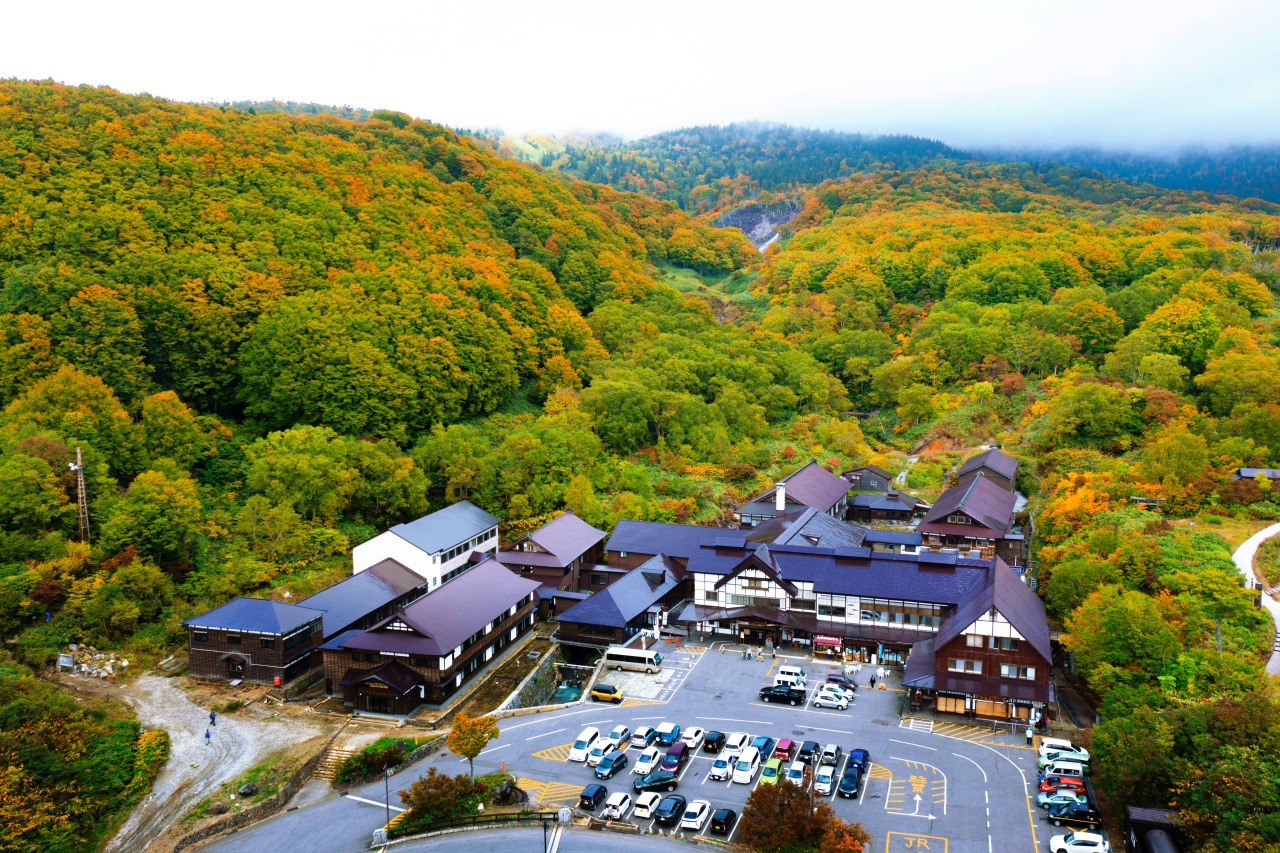
Obuki
Analysis UnverifiedObuki is the roaring source at the heart of the steaming geothermal field of Tamagawa Onsen, on the southern slopes of Hachimantai. Its output from a single vent is often said to be the largest in Japan, and the fumarole field around it has long produced mineral deposits and the rare hokutolite stone. Every bath in the spa draws on this one source, served either straight or cut with fresh water. At pH 1.13 the water tingles sharply on the skin while warming the body to the core, and it has welcomed long-stay therapeutic bathers for generations, a spring for those who want to meet nature at full strength.
The bar length shows how abundant each component is compared to thresholds that make it "distinctive" (therapeutic spring standards, beauty spring criteria, etc.).
Strong astringent action that tightens skin. A key component of acidic springs, suited to oily or acne-prone skin.
Mild antibacterial action keeps the skin clean. Trace transdermal absorption supports tooth and bone health.
Undissociated boric acid with antibacterial action that keeps the skin surface clean.
An iron-rich spring whose water turns yellow-brown to red-brown when exposed to air. Strong heat retention.
A natural moisturizer also used in skincare lotions. Forms a thin veil on the skin to reduce moisture loss after bathing.
Scores are calculated from mineral analysis data based on the Mineral Spring Analysis Guidelines (Ministry of Environment, Japan). They are unrelated to facility atmosphere or service quality.
▸Note
The temperature, pH and component values shown here are based on the hot spring analysis (source). Actual values in the bath may differ depending on heating, dilution, recycling and filtration. Please check current usage status at the facility.
At pH 1.13 the water is very harsh on the skin, so start with short soaks and get used to it in the diluted baths first. Keep it away from your eyes and any cuts, and rinse off with fresh water before leaving to avoid skin irritation.
With 74.56 mg/kg of hydrogen ion and a pH of 1.13, this strongly acidic spring is traditionally associated with immune system stimulation. Its 3134 mg/kg of chloride holds warmth in the body, while 2217 mg/kg of free carbon dioxide may support circulation and rejuvenation after bathing.
Because of the strong acidity, people with sensitive skin, the elderly and small children should avoid long soaks and watch for skin irritation. The source is very hot, and any drinking water must be diluted with fresh water.
※ See the analysis data below for detailed contraindications
ANALYSIS DATAView all analysis fields ▼
Source Info
- Source name
- Obuki
- Spring type
- Acidic Carbon dioxide-containing Iron (II) Chloride Hot Spring
- Old spring type name
- 塩化物泉、二酸化炭素泉、含鉄泉、酸性泉
- Source temperature
- 97.3℃
- pH
- 1.13
- Osmotic pressure
- 低張性
Analysis Document
- Analysis date
- 2014-12-26
- Analyst organization
- 株式会社 秋田県分析化学センター
- Registration No.
- 秋田県第2号
Cations
- Hydrogen ion H⁺
- 74.6 mg/kg
- Lithium ion Li⁺
- < 0.1 mg/kg
- Sodium ion Na⁺
- 40.7 mg/kg
- Potassium ion K⁺
- 26.4 mg/kg
- Ammonium ion NH₄⁺
- 0.10 mg/kg
- Magnesium ion Mg²⁺
- 33.6 mg/kg
- Calcium ion Ca²⁺
- 107 mg/kg
- Aluminum ion Al³⁺
- 142 mg/kg
- Manganese ion Mn²⁺
- 1.4 mg/kg
- Iron(II) ion Fe²⁺
- 112 mg/kg
- Iron(III) ion Fe³⁺
- < 0.1 mg/kg
- Zinc ion Zn²⁺
- 0.60 mg/kg
- Lead ion Pb²⁺
- 0.95 mg/kg
- Strontium ion Sr²⁺
- 0.20 mg/kg
- Barium ion Ba²⁺
- 0.40 mg/kg
- Copper ion Cu²⁺
- < 0.1 mg/kg
- Cadmium ion Cd²⁺
- 0.01 mg/kg
- Total cations
- 0.54 mg/kg
Anions
- Fluoride ion F⁻
- 59.5 mg/kg
- Chloride ion Cl⁻
- 3134 mg/kg
- Sulfate ion SO₄²⁻
- 330 mg/kg
- Bromide ion Br⁻
- 3.3 mg/kg
- Iodide ion I⁻
- 1.5 mg/kg
- Hydrogen sulfate HSO₄⁻
- 825 mg/kg
- Hydrogen thiosulfate HS₂O₃⁻
- < 0.1 mg/kg
- Nitrate ion NO₃⁻
- < 0.1 mg/kg
- Total anions
- 4.4 mg/kg
Undissociated Components
- Sulfuric acid H₂SO₄
- 154 mg/kg
- Phosphoric acid H₃PO₄
- 3.1 mg/kg
- Arsenious acid HAsO₂
- 2.9 mg/kg
- Metasilicic acid H₂SiO₃
- 449 mg/kg
- Metaboric acid HBO₂
- 68.0 mg/kg
- Total undissociated
- 0.68 mg/kg
Dissolved Gas
- Free carbon dioxide CO₂
- 2217 mg/kg
- Free hydrogen sulfide H₂S
- 0.30 mg/kg
- Total dissolved gas
- 2.2 mg/kg
Totals
- Total dissolved substances
- 5.6 mg/kg
- Component total
- 7.8 mg/kg
Usage
- Heating
- No
- Dilution
- No
- Recycle / Filter
- No
- Additives
- No
- Disinfection
- No
Indications & Contraindications
- Bathing indications
- Atopic dermatitis, Plaque psoriasis, Epidermal suppuration, Impaired glucose tolerance (diabetes), Cuts and grazes, Peripheral circulatory failure, Poor circulation, Autonomic instability, Depression, Xeroderma
- General indications
- High blood pressure (mild), Rheumatoid arthritis, Insomnia, Chronic pain or stiffness in muscles and joints, Muscle stiffness due to motor paralysis, Gastrointestinal dysfunction
- Contraindications
- Acute illness (especially with fever), Active tuberculosis, Malignant tumors, Severe heart disease, Respiratory failure, Renal failure, Bleeding disorders, Severe anemia, Any actively progressing illness, Pregnancy (especially early and late stages), Sensitive skin or mucous membranes, eye conditions (acidic springs)
Drinking
- Drinkability
- Not drinkable
- Drinking notes
- Drinking is permitted, but due to the extreme acidity, it must be diluted with fresh water at least 7-fold to raise the pH above 3 before consumption. Limit intake to around 100 mL at a time, with a daily total of 200-500 mL.