Nozawa Onsen Hotel Private Spring
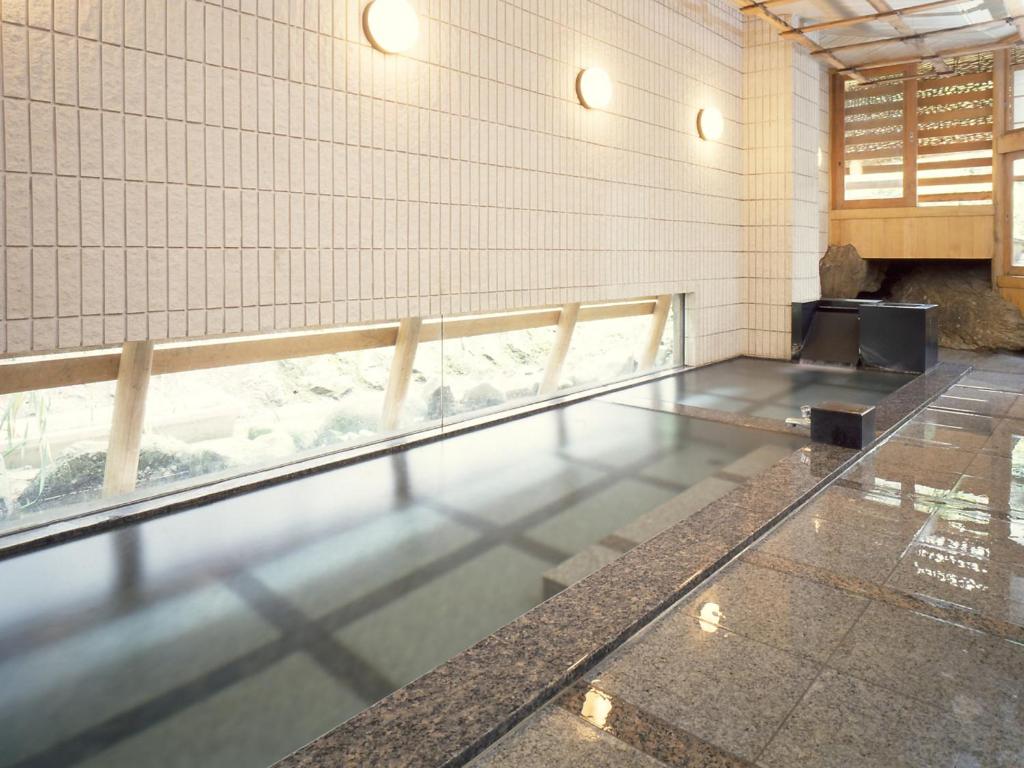
Analysis UnverifiedThis private spring in Nozawa Onsen first served a humble bathhouse for therapeutic stays in the Taisho era. Sulfate is its main component, joined by chloride, calcium and hydrosulfide, giving a mineral-rich water whose color shifts from lapis blue to milky white with the seasons and the hour. Because the freshly emerged water flows straight into the baths, it keeps its freshness. Long favored by guests seeking relief for cuts and bruises, it suits travelers who want to rest their bodies slowly and deeply.
The bar length shows how abundant each component is compared to thresholds that make it "distinctive" (therapeutic spring standards, beauty spring criteria, etc.).
The source of the distinctive sulfur smell. Dilates blood vessels via skin and inhalation to strongly boost circulation.
A natural moisturizer also used in skincare lotions. Forms a thin veil on the skin to reduce moisture loss after bathing.
A trace component with gentle antibacterial and anti-inflammatory action.
Scores are calculated from mineral analysis data based on the Mineral Spring Analysis Guidelines (Ministry of Environment, Japan). They are unrelated to facility atmosphere or service quality.
▸Note
The temperature, pH and component values shown here are based on the hot spring analysis (source). Actual values in the bath may differ depending on heating, dilution, recycling and filtration. Please check current usage status at the facility.
With over 1,000 mg/kg of dissolved minerals, this sulfate spring can be strong, so start with 5–10 minute soaks and rest between dips. Rinse lightly afterward if the sulfur scent lingers.
Rich in sulfate at 308.7 mg/kg, this spring has long been used in traditional therapeutic stays for cuts and bruises and may help relieve pain. Metasilicic acid at 168 mg/kg leaves a pleasant feeling of silky skin after bathing.
Sulfur compounds may tarnish silver and other metal jewelry. The water is mineral-rich, so avoid long soaks and do not bathe after drinking or when unwell.
※ See the analysis data below for detailed contraindications
ANALYSIS DATAView all analysis fields ▼
Source Info
- Source name
- Nozawa Onsen Hotel Private Spring
- Spring type
- Sodium Sulfate Spring
- Osmotic pressure
- 低張性
Analysis Document
- Analysis date
- 1998-05-13
- Analyst organization
- 社団法人長野県薬剤師協会検査センター
Cations
- Lithium ion Li⁺
- 0.08 mg/kg
- Sodium ion Na⁺
- 222 mg/kg
- Potassium ion K⁺
- 5.5 mg/kg
- Magnesium ion Mg²⁺
- 0.20 mg/kg
- Calcium ion Ca²⁺
- 59.4 mg/kg
- Aluminum ion Al³⁺
- 0.40 mg/kg
- Strontium ion Sr²⁺
- 0.40 mg/kg
- Barium ion Ba²⁺
- 0.20 mg/kg
- Total cations
- 0.29 mg/kg
Anions
- Fluoride ion F⁻
- 1.1 mg/kg
- Chloride ion Cl⁻
- 126 mg/kg
- Hydrogen sulfide ion HS⁻
- 32.2 mg/kg
- Sulfate ion SO₄²⁻
- 309 mg/kg
- Bicarbonate ion HCO₃⁻
- 112 mg/kg
- Bromide ion Br⁻
- 0.70 mg/kg
- Iodide ion I⁻
- 0.10 mg/kg
- Total anions
- 0.58 mg/kg
Undissociated Components
- Metasilicic acid H₂SiO₃
- 168 mg/kg
- Metaboric acid HBO₂
- 10.5 mg/kg
- Total undissociated
- 0.18 mg/kg
Dissolved Gas
- Free carbon dioxide CO₂
- 5.4 mg/kg
- Free hydrogen sulfide H₂S
- 7.3 mg/kg
- Total dissolved gas
- 0.01 mg/kg
Totals
- Component total
- 1.1 mg/kg
Usage
- Usage status
- Unknown
Indications & Contraindications
- Bathing indications
- Cuts and grazes, Peripheral circulatory failure, Poor circulation, Depression, Xeroderma, Atopic dermatitis, Plaque psoriasis, Chronic eczema, Epidermal suppuration
- General indications
- High blood pressure (mild), Rheumatoid arthritis, Autonomic instability, Insomnia, Chronic pain or stiffness in muscles and joints, Muscle stiffness due to motor paralysis, Gastrointestinal dysfunction
- Contraindications
- Acute illness (especially with fever), Active tuberculosis, Malignant tumors, Severe heart disease, Respiratory failure, Renal failure, Bleeding disorders, Severe anemia, Any actively progressing illness, Pregnancy (especially early and late stages), Severe chronic dermatitis (sulphur springs)
Drinking
- Drinkability
- Not drinkable