Tange Onsen
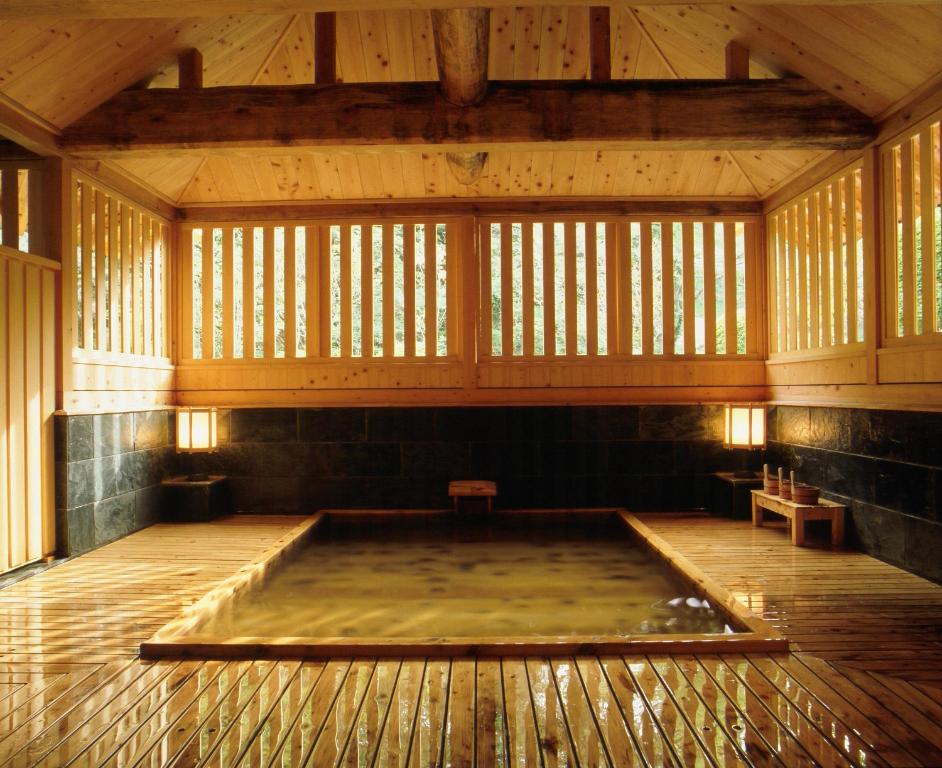
Analysis UnverifiedTange Onsen is a young spring that rose in the early Heisei era in the mountains between Shima and Sawatari, along the rushing Tange River. Piped a few hundred meters from its well, the water is a gentle alkaline spring rich in calcium and sulfate. Naturally lukewarm, it carries fine white mineral flakes, and suits long, quiet soaks to the roar of the nearby stream.
The bar length shows how abundant each component is compared to thresholds that make it "distinctive" (therapeutic spring standards, beauty spring criteria, etc.).
A trace component with gentle antibacterial and anti-inflammatory action.
Scores are calculated from mineral analysis data based on the Mineral Spring Analysis Guidelines (Ministry of Environment, Japan). They are unrelated to facility atmosphere or service quality.
▸Note
The temperature, pH and component values shown here are based on the hot spring analysis (source). Actual values in the bath may differ depending on heating, dilution, recycling and filtration. Please check current usage status at the facility.
The source is a lukewarm 34.5°C, so tubs mixing heated water and raw spring vary in temperature from spot to spot. Near body heat, it rewards slow 20-30 minute soaks, alternating with the warmer area by the inlet.
With 704.4 mg/kg of sulfate and 276.9 mg/kg of calcium, this calcium-sulfate spring belongs to a type traditionally associated with soothing aches and may help relieve pain, while a long lukewarm soak leaves a restorative warmth that lingers after bathing.
Even lukewarm soaks take energy over time, so drink water and rest if you feel lightheaded. Those in acute illness or with serious heart or respiratory conditions should refrain or consult a doctor; avoid bathing after drinking or eating.
※ See the analysis data below for detailed contraindications
ANALYSIS DATAView all analysis fields ▼
Source Info
- Source name
- Tange Onsen
- Spring type
- Calcium Sulfate Hot Spring
- Source temperature
- 34.5℃
- pH
- 8.8
- Flow rate
- 137.5 L/min
- Flow type
- 動力揚湯
- Osmotic pressure
- 低張性
Analysis Document
- Analysis date
- 2014-07-09
- Analyst organization
- 株式会社エオネックス
- Registration No.
- 石川県第3号
Cations
- Lithium ion Li⁺
- < 0.1 mg/kg
- Sodium ion Na⁺
- 41.8 mg/kg
- Potassium ion K⁺
- 0.90 mg/kg
- Ammonium ion NH₄⁺
- < 0.1 mg/kg
- Magnesium ion Mg²⁺
- 0.40 mg/kg
- Calcium ion Ca²⁺
- 277 mg/kg
- Aluminum ion Al³⁺
- < 0.1 mg/kg
- Manganese ion Mn²⁺
- < 0.1 mg/kg
- Iron(II) ion Fe²⁺
- < 0.1 mg/kg
- Iron(III) ion Fe³⁺
- < 0.1 mg/kg
- Lead ion Pb²⁺
- < 0.01 mg/kg
- Strontium ion Sr²⁺
- 0.30 mg/kg
- Barium ion Ba²⁺
- < 0.1 mg/kg
- Copper ion Cu²⁺
- < 0.01 mg/kg
- Total cations
- 0.32 mg/kg
Anions
- Fluoride ion F⁻
- 0.30 mg/kg
- Chloride ion Cl⁻
- 43.4 mg/kg
- Hydrogen sulfide ion HS⁻
- 0.30 mg/kg
- Thiosulfate ion S₂O₃²⁻
- < 0.1 mg/kg
- Sulfate ion SO₄²⁻
- 704 mg/kg
- Bicarbonate ion HCO₃⁻
- 12.5 mg/kg
- Carbonate ion CO₃²⁻
- 2.3 mg/kg
- Bromide ion Br⁻
- < 0.1 mg/kg
- Iodide ion I⁻
- < 0.1 mg/kg
- Sulfide ion S²⁻
- < 0.1 mg/kg
- Total anions
- 0.76 mg/kg
Undissociated Components
- Arsenious acid HAsO₂
- < 0.1 mg/kg
- Metasilicic acid H₂SiO₃
- 23.5 mg/kg
- Metaboric acid HBO₂
- 0.70 mg/kg
- Total undissociated
- 0.02 mg/kg
Dissolved Gas
- Free carbon dioxide CO₂
- 0.10 mg/kg
- Free hydrogen sulfide H₂S
- < 0.1 mg/kg
- Total dissolved gas
- 0.00 mg/kg
Totals
- Total dissolved substances
- 1.1 mg/kg
- Component total
- 1.1 mg/kg
- Evaporation residue
- 1.1 mg/kg
Usage
- Heating
- Yes
- Dilution
- No
- Recycle / Filter
- No
- Additives
- No
- Disinfection
- No
Indications & Contraindications
- Bathing indications
- Cuts and grazes, Peripheral circulatory failure, Poor circulation, Depression, Xeroderma
- General indications
- High blood pressure (mild), Rheumatoid arthritis, Autonomic instability, Insomnia, Chronic pain or stiffness in muscles and joints, Muscle stiffness due to motor paralysis, Gastrointestinal dysfunction
- Contraindications
- Acute illness (especially with fever), Active tuberculosis, Malignant tumors, Severe heart disease, Respiratory failure, Renal failure, Bleeding disorders, Severe anemia, Any actively progressing illness, Pregnancy (especially early and late stages)
Drinking
- Drinkability
- Not drinkable