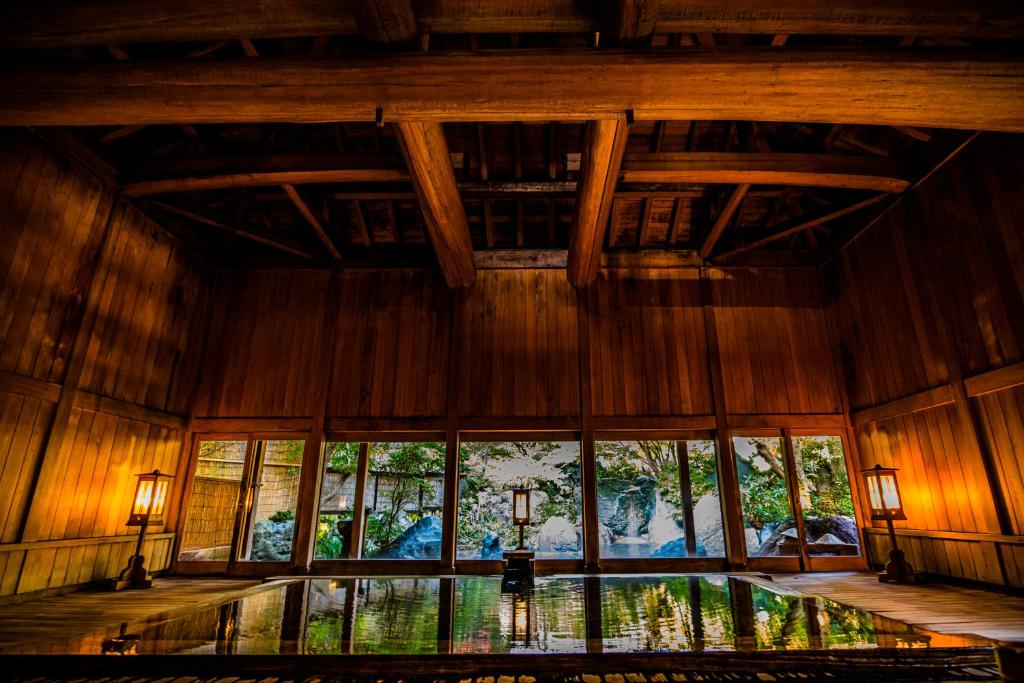
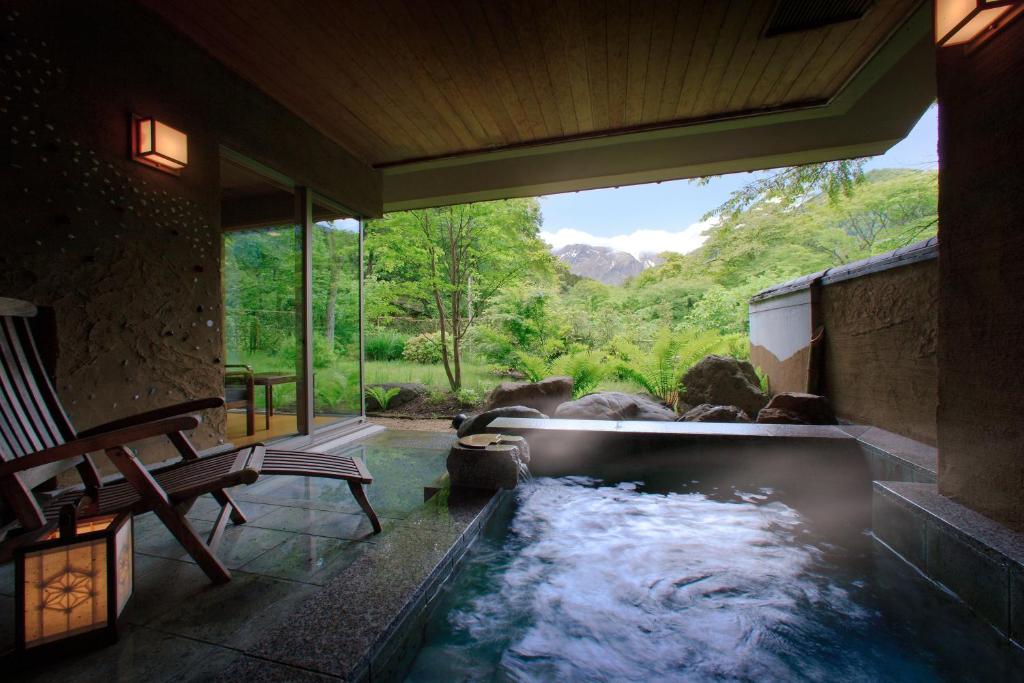
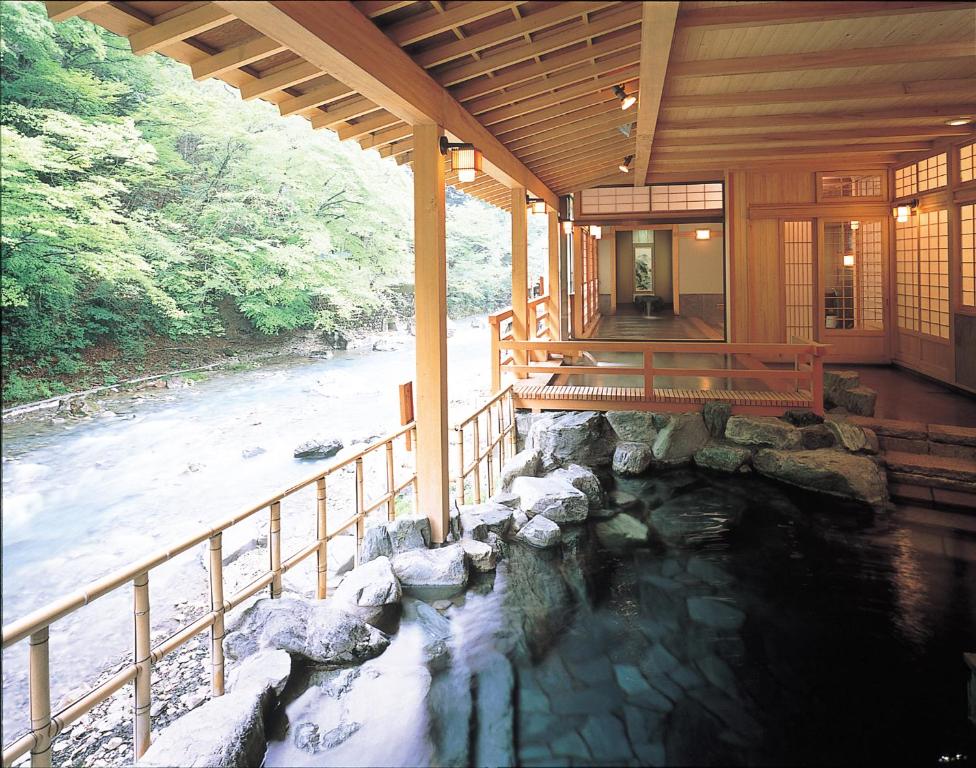
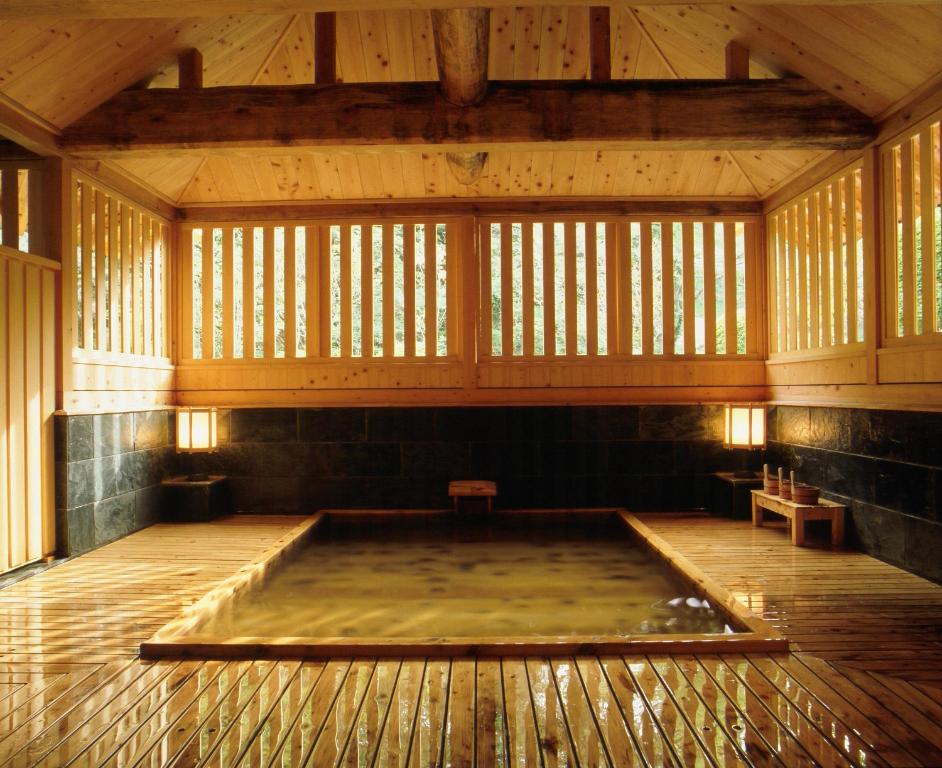
Kuboyu Spring (Yujuku Onsen)
Analysis UnverifiedNestled along the Tone River, Yujuku Onsen has been a beloved hot spring in a quiet post town, cherished by travelers and literati since the Edo period. Its waters, smooth as silk, envelop the skin in a veil of moisture, offering a truly silky skin experience. This restorative warmth penetrates deep into the body's core, gently releasing daily tensions and promoting deep relaxation. It is a renowned spring for those seeking rejuvenation and a peaceful recuperation amidst the tranquil mountain scenery, with its comforting warmth lingering long after bathing.
The bar length shows how abundant each component is compared to thresholds that make it "distinctive" (therapeutic spring standards, beauty spring criteria, etc.).
A trace component with gentle antibacterial and anti-inflammatory action.
- Sulfate693 mg/kg
- Feel
- Your skin feels moist; the water may taste slightly bitter.
- Said to
- Said to retain heat well and help heal cuts. Bathing indications include cuts and dry skin.
- Note
- It warms you well—do not stay in too long.
- Metasilicic acid60.6 mg/kg
- Feel
- Your skin may feel smoother.
- Said to
- 50 mg/kg or more is said to mark a “skin-beautifying spring”; it is also used in skincare.
- Note
- The “skin-beautifying” label is a common rule of thumb, not a legal standard.
- Source temperature59.1℃
- Feel
- The source is 42°C or hotter; the bath may be on the hot side.
- Said to
- Heat is said to boost circulation and warm the body.
- Note
- Older people and those with high blood pressure or heart conditions should avoid baths of 42°C or more. Keep soaks short.
Effects are general descriptions based on the Ministry of the Environment’s indications by spring type, not a guarantee.
Scores are calculated from mineral analysis data based on the Mineral Spring Analysis Guidelines (Ministry of Environment, Japan). They are unrelated to facility atmosphere or service quality.
▸Note
The temperature, pH and component values shown here are based on the hot spring analysis (source). Actual values in the bath may differ depending on heating, dilution, recycling and filtration. Please check current usage status at the facility.
Sulfate-rich springs like this are generally gentle on skin and easy to enter. Since the source temperature reaches 59.1°C, facilities carefully reduce it to 41.0°C for safe immersion. Begin with short 3–10 minute sessions; afterward, refrain from rinsing away bath minerals—let them linger on your skin to maximize moisture retention and warmth. Hydrate generously before and after bathing.
With an alkaline pH of 8.0 and abundant sulfate ions (693 mg/kg), these waters address arterial hardening through vascular-wall interaction while treating chronic dermatological conditions, burns, and minor wounds. At a mild 1.31 g/kg total mineralization, this hypotonic spring imposes minimal bodily stress, making it ideal for post-recovery phases, fatigue relief, and days when cold sensitivity troubles you.
Avoid bathing if you have acute illness, malignancy, severe cardiac disease, renal failure, hemorrhagic disorders, or pregnancy (especially early or late stages). Those with hypertension, cardiac conditions, or advanced arterial hardening should avoid water above 42°C.
※ See the analysis data below for detailed contraindications
ANALYSIS DATAView all analysis fields ▼
Source Info
- Source name
- Kuboyu Spring (Yujuku Onsen)
- Spring type
- Sodium Calcium Sulfate Spring
- Source temperature
- 59.1℃
- pH
- 8
- Osmotic pressure
- Hypotonic
Analysis Document
- Analysis date
- 1993-08-06
- Analyst organization
- 群馬県衛生環境研究所
- Registration No.
- 群馬案第1号
Cations
- Sodium ion Na⁺
- 227 mg/kg
- Potassium ion K⁺
- 4.6 mg/kg
- Magnesium ion Mg²⁺
- 0.50 mg/kg
- Calcium ion Ca²⁺
- 156 mg/kg
- Aluminum ion Al³⁺
- 0.21 mg/kg
- Manganese ion Mn²⁺
- 0.04 mg/kg
- Iron(II) ion Fe²⁺
- 0.01 mg/kg
- Total cations
- 388 mg/kg
Anions
- Fluoride ion F⁻
- 4.1 mg/kg
- Chloride ion Cl⁻
- 120 mg/kg
- Sulfate ion SO₄²⁻
- 693 mg/kg
- Bicarbonate ion HCO₃⁻
- 20.4 mg/kg
- Carbonate ion CO₃²⁻
- 0.00 mg/kg
- Total anions
- 838 mg/kg
Undissociated Components
- Metasilicic acid H₂SiO₃
- 60.6 mg/kg
- Metaboric acid HBO₂
- 6.1 mg/kg
- Total undissociated
- 66.7 mg/kg
Dissolved Gas
- Free carbon dioxide CO₂
- 14.1 mg/kg
- Free hydrogen sulfide H₂S
- 0.00 mg/kg
- Total dissolved gas
- 14.1 mg/kg
Totals
- Component total
- 1310 mg/kg
- Evaporation residue
- 1372 mg/kg
Usage
- Heating
- No
- Dilution
- Yes(Water is added because the source spring temperature is high.)
- Recycle / Filter
- No
- Additives
- No
- Disinfection
- No
Indications & Contraindications
- Bathing indications
- Cuts and grazes, Peripheral circulatory failure, Poor circulation, Depression, Xeroderma
- General indications
- High blood pressure (mild), Rheumatoid arthritis, Autonomic instability, Insomnia, Chronic pain or stiffness in muscles and joints, Muscle stiffness due to motor paralysis, Gastrointestinal dysfunction
- Contraindications
- Acute illness (especially with fever), Active tuberculosis, Malignant tumors, Severe heart disease, Respiratory failure, Renal failure, Bleeding disorders, Severe anemia, Any actively progressing illness, Pregnancy (especially early and late stages)
Drinking
- Drinkability
- Not drinkable