Kuraoki, Kajika and Senju Mixed Source
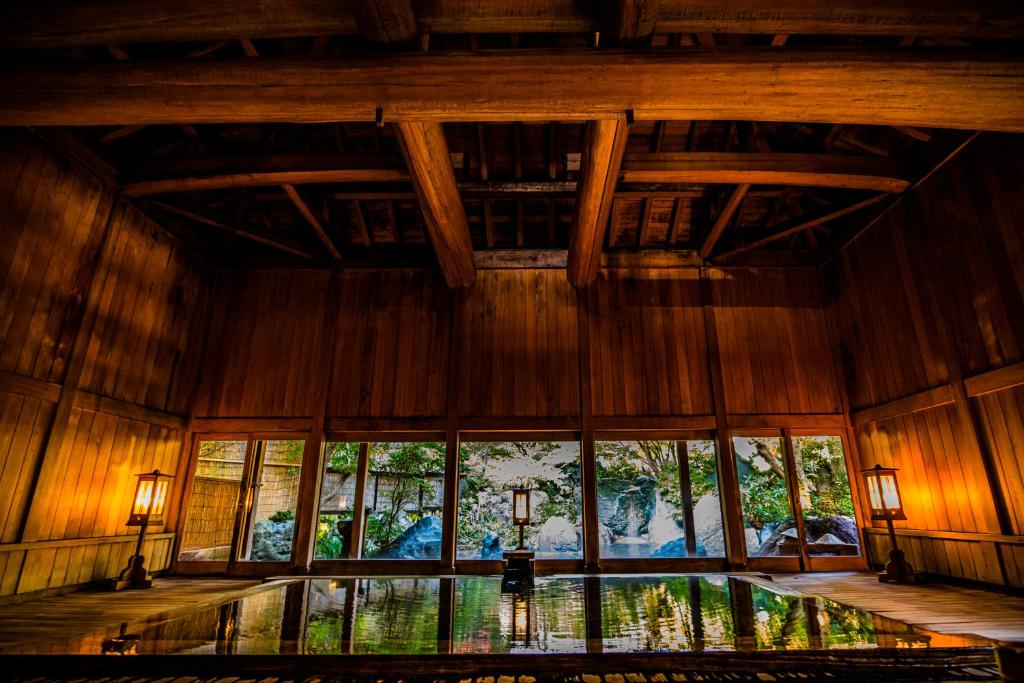
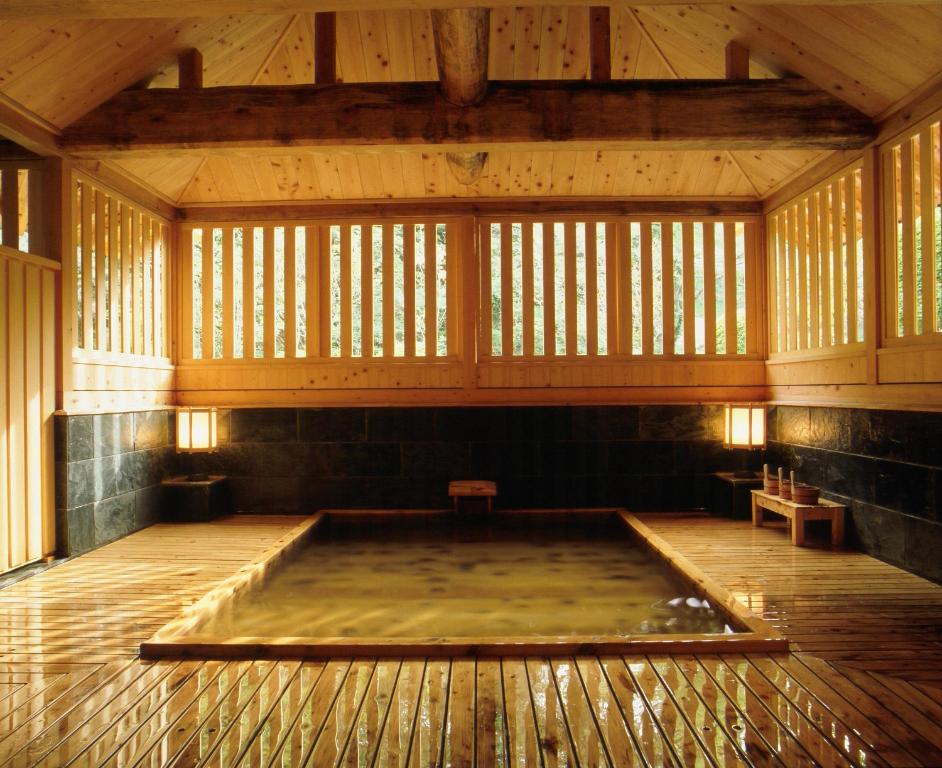
Analysis UnverifiedTanigawa Onsen rises along a clear mountain stream at the foot of Mount Tanigawa and has long been called "Mimosuso no Yu", after a legend that the goddess Konohanasakuya-hime turned the river into hot water by washing the hem of her robe. This water is a blend of three pumped sources of differing temperatures. Clear and colourless, balanced between sulfate and chloride, it wraps the body softly and suits those who wish to soak quietly while gazing at snowy or verdant river views.
The bar length shows how abundant each component is compared to thresholds that make it "distinctive" (therapeutic spring standards, beauty spring criteria, etc.).
A trace component with gentle antibacterial and anti-inflammatory action.
Scores are calculated from mineral analysis data based on the Mineral Spring Analysis Guidelines (Ministry of Environment, Japan). They are unrelated to facility atmosphere or service quality.
▸Note
The temperature, pH and component values shown here are based on the hot spring analysis (source). Actual values in the bath may differ depending on heating, dilution, recycling and filtration. Please check current usage status at the facility.
With a source temperature of 41.4°C, close to body heat, the water suits slow 15–20 minute soaks. Its chloride content keeps warmth lingering afterward, so towel off promptly and rehydrate.
Rich in 682 mg/kg of sulfate and 259 mg/kg of calcium, sulfate springs have long been valued for balneotherapy. Chloride forms a light film on the skin, offering restorative warmth that lingers long after you leave the bath on snowy Tanigawa nights.
This mildly alkaline water is gentle, but its chloride keeps the body warm after bathing, so avoid overly long soaks and stay hydrated. The water may be heated in winter.
※ See the analysis data below for detailed contraindications
ANALYSIS DATAView all analysis fields ▼
Source Info
- Source name
- Kuraoki, Kajika and Senju Mixed Source
- Spring type
- Calcium-Sodium Sulfate and Chloride Hot Spring
- Source temperature
- 41.4℃
- pH
- 8.4
- Flow type
- 動力揚湯
- Osmotic pressure
- 低張性
Analysis Document
- Analysis date
- 2015-05-26
- Analyst organization
- 一般社団法人群馬県薬剤師会 環境衛生試験センター
- Registration No.
- 群馬薬第2号
Cations
- Sodium ion Na⁺
- 130 mg/kg
- Potassium ion K⁺
- 3.5 mg/kg
- Magnesium ion Mg²⁺
- 0.74 mg/kg
- Calcium ion Ca²⁺
- 259 mg/kg
- Aluminum ion Al³⁺
- 0.06 mg/kg
- Manganese ion Mn²⁺
- 0.21 mg/kg
- Iron(II) ion Fe²⁺
- 0.36 mg/kg
- Lead ion Pb²⁺
- < 0.005 mg/kg
- Copper ion Cu²⁺
- < 0.002 mg/kg
- Total cations
- 0.39 mg/kg
Anions
- Fluoride ion F⁻
- 1.5 mg/kg
- Chloride ion Cl⁻
- 150 mg/kg
- Sulfate ion SO₄²⁻
- 682 mg/kg
- Bicarbonate ion HCO₃⁻
- 8.5 mg/kg
- Carbonate ion CO₃²⁻
- 3.0 mg/kg
- Total anions
- 0.84 mg/kg
Undissociated Components
- Metasilicic acid H₂SiO₃
- 43.6 mg/kg
- Metaboric acid HBO₂
- 10.6 mg/kg
- Total undissociated
- 0.05 mg/kg
Dissolved Gas
- Free carbon dioxide CO₂
- 0.00 mg/kg
- Free hydrogen sulfide H₂S
- 0.00 mg/kg
- Total dissolved gas
- 0.00 mg/kg
Totals
- Total dissolved substances
- 1.3 mg/kg
- Component total
- 1.3 mg/kg
- Evaporation residue
- 1.4 mg/kg
Usage
- Heating
- Yes
- Dilution
- No
- Recycle / Filter
- No
- Additives
- No
- Disinfection
- No
Indications & Contraindications
- Bathing indications
- Cuts and grazes, Peripheral circulatory failure, Poor circulation, Depression, Xeroderma
- General indications
- High blood pressure (mild), Rheumatoid arthritis, Autonomic instability, Insomnia, Chronic pain or stiffness in muscles and joints, Muscle stiffness due to motor paralysis, Gastrointestinal dysfunction
- Contraindications
- Acute illness (especially with fever), Active tuberculosis, Malignant tumors, Severe heart disease, Respiratory failure, Renal failure, Bleeding disorders, Severe anemia, Any actively progressing illness, Pregnancy (especially early and late stages)
Drinking
- Drinkability
- Not drinkable